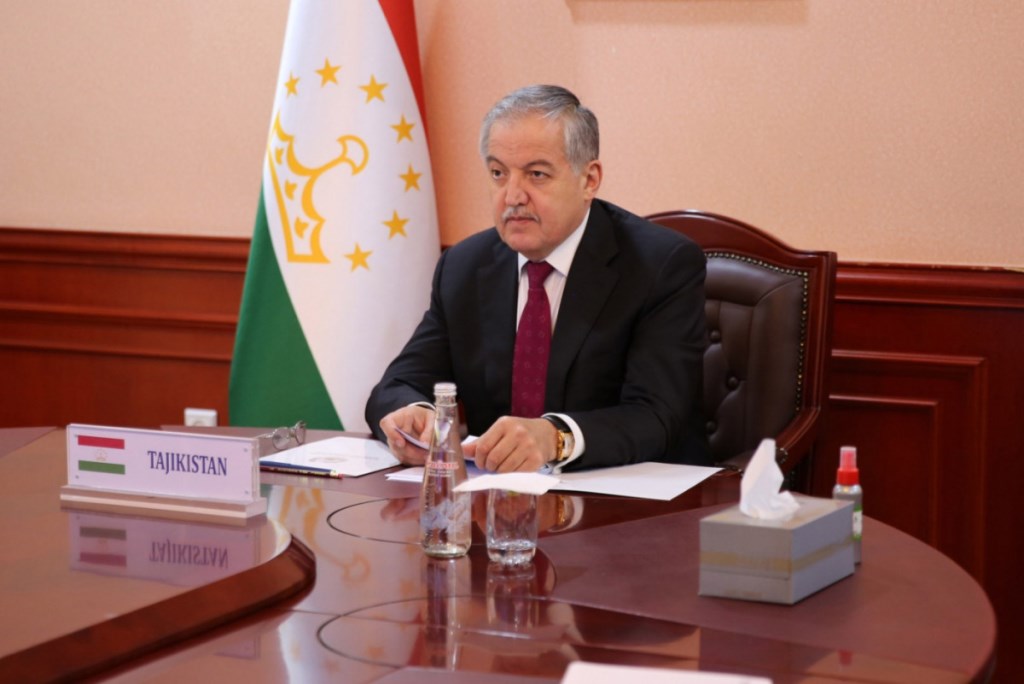
Tajik Foreign Minister Sirojiddin Muhriddin participated in a high-level video conference on Belt and Road international cooperation that took place on June 18.
The theme of the event was "Strengthening the Belt and Road International Cooperation and Jointly Fighting COVID-19.”
Presided over by Chinese State Councilor and Foreign Minister Wang Yi, the meeting reportedly brought together foreign ministers or ministerial officials from 26 countries of Asia, Africa, Europe and Latin America. Senior officials from the United Nations and the World Health Organization also attended the meeting.
The main objective of the meeting, jointly organized by the Chinese Ministry of Foreign Affairs, the National Development and Reform Commission, the Ministry of Commerce and the National Health Commission, was in implementing the consensus of the Second Belt and Road Forum for International Cooperation, promoting Belt and Road partners to strengthen international cooperation in fighting the pandemic, carrying out experience exchange and policy coordination for the resumption of work and production, and promoting high-quality joint pursuit of the Belt and Road Initiative.
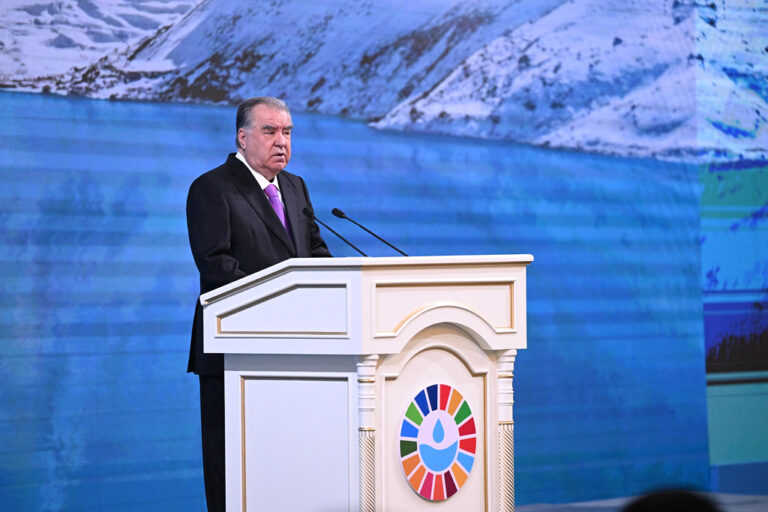
Speaking at the meeting, Tajik foreign minister said: ‘’Today more than ever it is important to take effective joint measures to prevent the further spread of the coronavirus infection and restore sustainable socioeconomic development of our countries.”
Muhriddin also expressed gratitude to China and other countries as well as UN agencies and international financial institutions for support and assistance provided to Tajikistan in fighting the COVID-19 outbreak.
A joint statement adopted at the meeting, in particular, says the COVID-19 pandemic poses a serious threat to human health, safety and well-being as well as the socio-economic development of our countries and the world at large.
The meeting participants noted that they recognized the central role of the United Nations system in catalyzing and coordinating the comprehensive global response to control and contain the spread of COVID-19 as well as the efforts of Member States therein, and acknowledge in this regard the key leadership role of the World Health Organization.
They agreed that there was no place for any form of discrimination, stigmatization, racism and xenophobia in their response to the pandemic.
They also call for investment in building sound and resilient health related infrastructures, including the development of telemedicine.
The meeting participants noted that they “support a universal, rules-based, open, transparent and non-discriminatory multilateral trading system with WTO at its core.” They call for stabilizing the regional and the global industrial chains and supply chains, ensuring the continued flow of goods, services and personnel, as well as assisting the industries and economies adversely affected by COVID-19.