30 of 650 Tajiks brought from the Kazakh-Uzbek border have reportedly been diagnosed with COVID-19. All of them have been admitted to the Sughd central regional hospital in Khujand.
A source within the Sughd health sector says, “They did not have any symptoms of novel coronavirus but their test results were positive, that is they have an asymptomatic form of COVID-19. They are young people, aged 30 to 36.”
“The remaining 620 Tajik nationals returned from the Kazakh-Uzbek border are currently in other hospitals in the province under the supervision of doctors because they were in contact with those 30 people infected with COVID-19,” the source added.
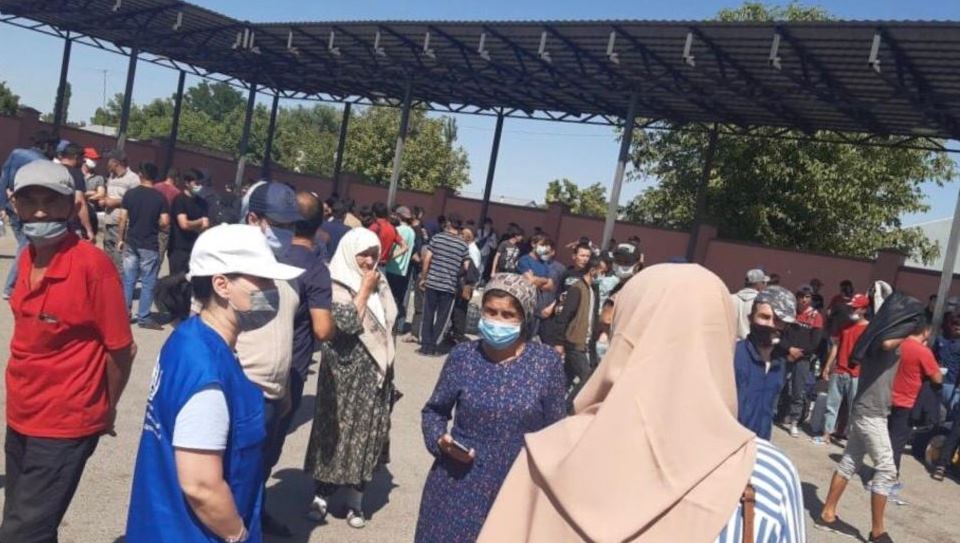
Recall, the International Organization for Migration (IOM), an intergovernmental organization that provides services and advice concerning migration to governments and migrants, on June 19 supported the voluntary return home of hundreds of Tajik migrants stranded at the Kazak-Uzbek border due to restrictions imposed in the wake of COVID-19.
According to IOM, the group of 650 people were mainly migrant workers, and included women, children and students. In the afternoon of June 19, they prepared to board buses funded by IOM to make the journey from the border crossing at Zhibek Zholi, through Uzbekistan, to Khujand, the capital of Tajik northern province of Sughd.
They are just some of the tens of thousands of migrant workers in Central Asia who have lost their jobs due to the pandemic. Many have come from the Russian Federation, Kazakhstan and even further afield.
Over a quarter of the returning migrants were reportedly between 15 and 24 years of age including 100 Tajik students from Kazakh universities. Fifteen percent of the group were women and girls, according to IOM.
While most of the migrants had only been waiting a few days to get across the border, some had been there for weeks, with little or no shelter and sanitation.
The 180-kilometer journey was coordinated with the governments of Kazakhstan, Uzbekistan, and Tajikistan. IOM provided food, water and hygiene items for the migrants over the past few days while the logistics and paperwork were organized.
The governments of the United States and Norway provided funds, with UNICEF also contributing.