The Government of Tajikistan and the Asian Development Bank have signed a grant agreement for 50 million U.S. dollars. The grant will be awarded to help the Government of Tajikistan mitigate the adverse economic and social impacts of the coronavirus disease (COVID-19) pandemic.
The agreement was inked by Tajik Finance Minister Faiziddin Qahhorzoda and ADB Country Director for Tajikistan Dr. Pradeep Srivastava here on June 23.
Recall, the Asian Development Bank approved the US$50 million grant to help Tajikistan strengthen the health sector, expand its social assistance program, ensure food security, and support MSMEs amid the COVID-19 pandemic on June 18.
COVID-19 has significantly weakened Tajikistan's economy causing sharp reductions in remittances, international trade, and foreign direct investment. The transport, tourism, retail, and finance industries in particular have experienced slowdowns. Poor and vulnerable groups are most at risk from the economic shock caused by the pandemic and containment measures.
To mitigate the adverse impacts of COVID-19, the government approved the COVID-19 Country Preparedness and Response Plan and countercyclical measures. This includes a health sector and social protection package to assist the poor and vulnerable, and economic measures to ensure food security and safeguard small businesses most at risk.
Delivered under ADB’s COVID-19 Active Response and Expenditure Support (CARES) Program, the grant will provide budget support to the government and help fund its comprehensive response plan and countercyclical measures.
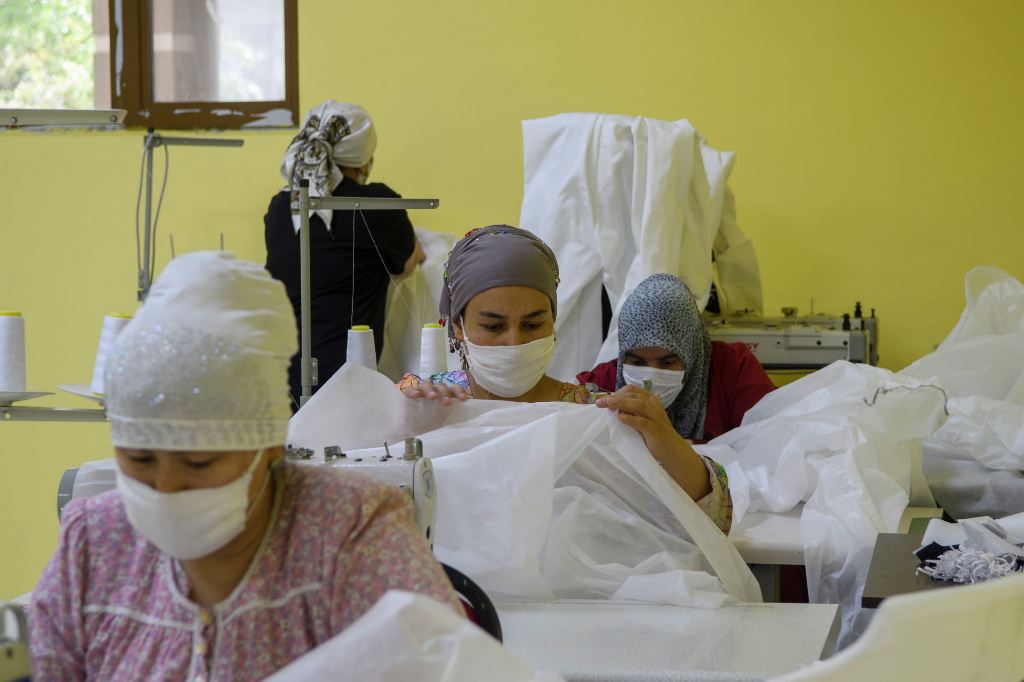
The CARES Program will support the government in scaling up the availability of medical supplies and establishing quarantine facilities in at least 14 hospitals nationwide with separate wards for women and men. Salary increases will be provided for all frontline COVID-19 medical personnel, of which at least 80% are women.
ADB’s financing will also support the government in extending its targeted social assistance program to at least 207,000 poor households, including an additional one-time cash transfer. Food security will be ensured through food price monitoring and controls, and provision of agricultural inputs for farmers to increase production. Subsidized lending and tax relief will be extended to affected micro, small, and medium-sized enterprises, of which at least 24% are women-led.
ADB will mobilize technical assistance to support CARES Program implementation and help strengthen the government’s financial management, monitoring and evaluation, and reporting systems.
The CARES Program is funded through the COVID-19 pandemic response option (CPRO) under ADB’s Countercyclical Support Facility. CPRO was established as part of ADB’s $20 billion expanded assistance for developing member countries’ COVID-19 response announced on 13 April.
In March, ADB provided a $100,000 grant to help Tajikistan procure urgently needed medical supplies, including personal protective equipment for medical personnel. ADB is also preparing a socioeconomic study to assess post-COVID-19 priority needs in Tajikistan to be incorporated into ADB’s pipeline of projects.