In mountainous regions with limited agricultural lands, rugged topography, and large gradients, the preservation of agrobiodiversity and an appreciation of traditional knowledge about food systems are essential ingredients of a sustainable future, therefore, the University of Central Asia’s Mountain Societies Research Institute (MSRI) has begun to engage in food systems research in Kyrgyzstan, Tajikistan and Afghanistan, according to the Aga Khan Development Network (AKDN).
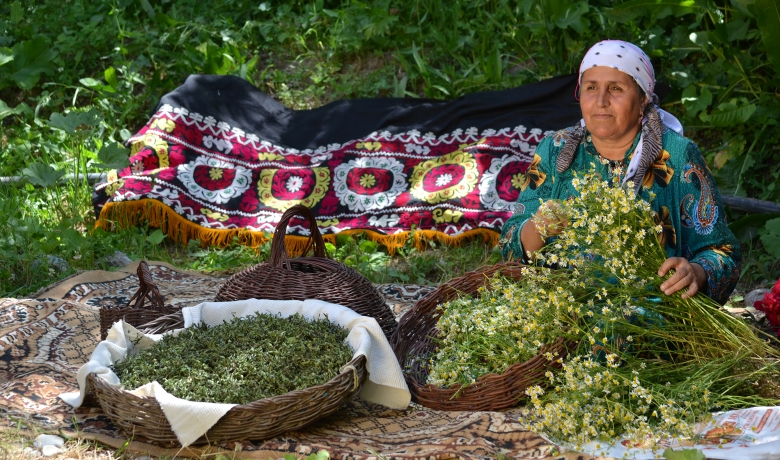
A study of medicinal and aromatic plants in the Pamir Mountains reportedly revealed that these are crucial components of traditional local food systems, contributing critically to the nutritional security and resilience of households in times of crop failure or other hardship. Medicinal and aromatic plants, which consist of a vast array of woody plants and herbs used for medical treatment or human consumption, are typically defined within traditional knowledge systems.
AKDN notes that when formal medical services are absent due to war or conflict, medicinal and aromatic plants may further play a critical role in people's health strategies, supplementing or often substituting for modern or Western treatments. These plants can also be used as a form of currency, exchanged between poor rural households as well as with more affluent, urban, or migrant households.
Medicinal and aromatic plants occurring in mountainous Badakhshan were revealed to be in high demand, but their collection and sale are generally unsystematic and most activities in this informal sector lack professionalization. Furthermore, cultivation of these plants on private land is not recognized as a viable livelihood strategy, largely due to the scarcity of agricultural land, informal governance structures, and weak regulatory frameworks, which limit the benefits that can be derived from medicinal and aromatic cultivation. Under current conditions, there appears to be little incentive for people to invest in and care for the plant resources.
These initial findings point to the need to develop a more enabling integrative medicinal and aromatic plants strategy that incorporates conservation of traditional knowledge with a mapping of these plants and other natural resources as well as environmental and socioeconomic impact assessments.
Development research on food systems at MSRI, writ large, is now established and set to continue. This research includes the documentation, protection, and strengthening of agrobiodiversity and its utilization—and of traditional knowledge and practice systems more generally. All these processes will be further supported by cross-sectoral collaborations and broad partnerships with mountain communities, other research institutions, and private-sector partners working together to promote more sustainable food systems in the mountains of Central Asia.