Central Asian migrants worst hit by coronavirus job losses in Russia, says RANEPA report

Labor migrants were almost twice as likely as Russians to lose their jobs during the coronavirus pandemic, new research has found. A survey conducted by conducted by the Russian Presidential Academy of National Economy and Public Administration (RANEPA) says that some 40% of Central Asian labor migrants working in Russia reported that they were permanently […]

Labor migrants were almost twice as likely as Russians to lose their jobs during the coronavirus pandemic, new research has found.

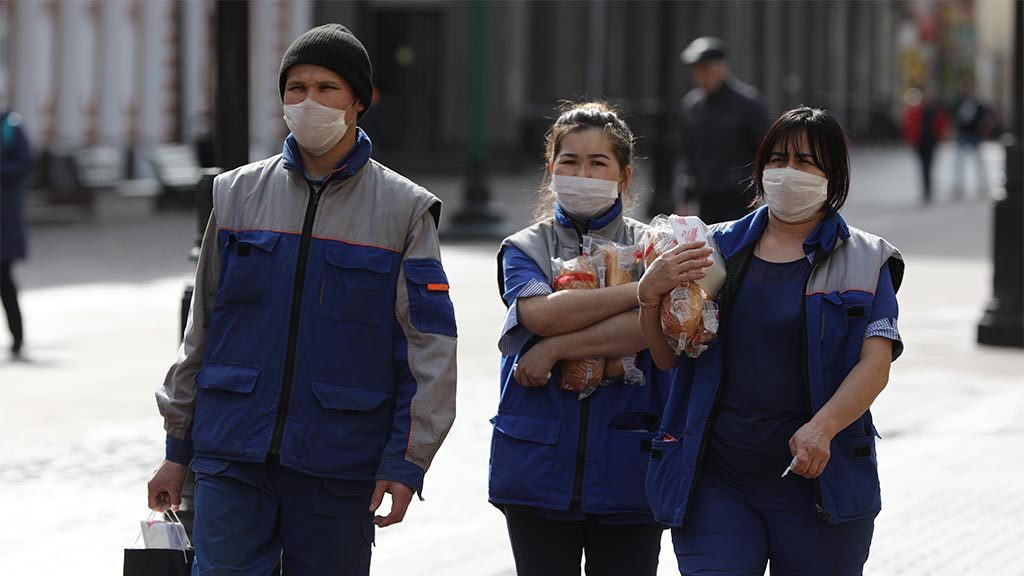
A survey conducted by conducted by the Russian Presidential Academy of National Economy and Public Administration (RANEPA) says that some 40% of Central Asian labor migrants working in Russia reported that they were permanently laid off during the quarantine period, while 23% of Russians reportedly said the same.

Adding those who kept their jobs, but were put on unpaid leave during Russia’s non-working period — from late March until mid-May — a total of 75% of Central Asian migrants were not working at the height of the pandemic, compared to 48% of Russians.

Amid widespread job losses and the cancellation of most international flights, migrants took to waiting at airports for the chance to get a ticket on a special repatriation flight, or queuing outside embassies in central Moscow for help in finding a way back home.

The survey also revealed that “labor migrants were more aware of the danger of the coronavirus than locals,” and more likely to agree with the government’s policies to contain the spread, despite the high number of job losses.

Migrant workers were reportedly also more likely to seek medical help if they thought they had Covid-19 symptoms — 75% called a doctor, compared to 55% of Russians — and more strongly disagreed with the notion that the coronavirus was no more deadly than a typical winter flu.


Join us on social media!

Article translations:

Related Article

Оби зулол
Tenisi
Оби зулол

Most Read

Коммерсбонк Точикистон

Recent Articles

RZD announces the restoration of passenger services between Moscow and Dushanbe

Direct rail services between the capitals of Russia and Tajikistan were suspended in March 2020 due to the COVID-19 pandemic.

#AP30/Stories. “Selam! Heller nichek?” How Tatars live today in Sughd province

On the 30th anniversary of "Asia-Plus," we continue to publish reports that remain relevant even after years. This story was told in 2021, and since then, little has changed in the life of the Tatar community in Tajikistan.

15,000 cameras, drones, and robots: how technology monitors pilgrims in Mecca and Medina

During Hajj 2026, Mecca and Medina were under unprecedented digital control.

Another child in Dushanbe removed from family and sent to boarding school

The Ministry of Internal Affairs reports that the parents did not pay adequate attention to the child.

Emomali Rahmon instructs to address issues in seed production following criticism of the industry

Issues have been noted with certification, seed quality, and the material and technical base of the industry.

Water, climate, and a $130 billion deficit: seven key outcomes of the Water Conference in Dushanbe

At the forum, countries and international organizations discussed new mechanisms for cooperation, investments, and technologies that are essential for addressing the global water crisis.

Eskhata Bank introduces a new generation children’s wallet

"Eshkata Bank" has created a full-fledged digital platform that helps children aged 7 to 16 learn how to manage money.