The Asian Development Bank (ADB) will award a 105 million USD grant to Tajikistan in the framework of the Power Sector Development Program (PSDP), Deputy Minister of Energy and Water Resources, Jamshed Shoimzoda, told reporters in Dushanbe on July 13.
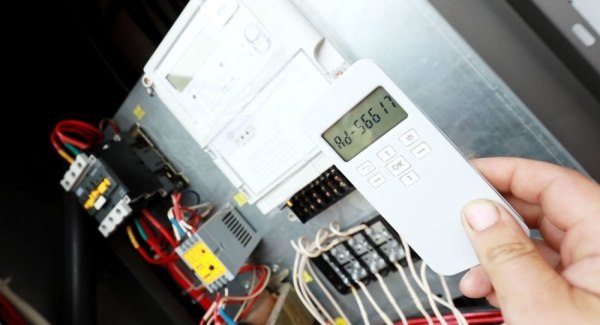
According to him, the advanced billing system will be introduced, first of all, in Dushanbe, Panjakent, Isfara, Konibodom, Buston and Danghara.
“70 million USD will be spent to reduce power losses, 15 million SUD will be spent for the Open Joint-Stock Company (OJSC) Power Distribution Networks and 20 million USD will be spent to support the national budget,” the deputy minister said.
He further noted that the European Bank for Reconstruction and Development (EBRD) had expressed support for implementation of the Power Sector Development Program, offering preferential loans for 25 million USD.
The proposed Power Sector Development Program will accelerate the implementation of on-going reforms and restore financial sustainability of the power sector in Tajikistan. ADB has supported Tajikistan power sector reforms through the ongoing Sector Operation Performance Improvements (SOPI) program, which has built the basis for the fundamental reform program of PSDP that includes unbundling of the vertically integrated power utility company, restructuring of the utility's excessive liabilities, establishment of a regulator, adoption of a tariff methodology, and establishment of a new centralized cash control system among unbundled entities. As a part of reforms and institutional capacity building, a newly established power distribution company will be given a 5-year management contract. Investments in the retail advanced metering system in Dushanbe and 6 other cities will also fill the key deficiencies in the sector's power loss accounting and bill collection systems.
Tajikistan’s power sector is comprised of the vertically integrated power utility company, Barqi Tojik, three independent power producers (IPPs), and a concession in the Gorno-Badakhshan Autonomous Region (GBAO) combining power generation and distribution.
Barqi Tojik is fully owned by the Government. It owns and operates most of the electricity generating plants and is also responsible for electricity transmission, dispatch, and distribution services to around 8 million people in all regions of the country except for GBAO.
Two of the IPPs – Sangtuda-1 and Sangtuda-2 hydropower plants (HPPs) – were constructed with investments from Russian and Iranian state-owned companies, and supply electricity to Barqi Tojik under 20-year power purchase agreements (PPAs). Third IPP – Roghun HPP – is under construction.
Pamir Energy Company (PEC) generates and supplies electricity to around 200,000 people in GBAO under 25-year concession agreement
It is to be noted that Tajikistan’s power utility company is now in a difficult financial state. The process of restructuring of Barqi Tojik is reportedly under way and Barqi Tojik is expected to be divided into three independent companies: 1) generation; 2) transmission business; and 3) distribution.