



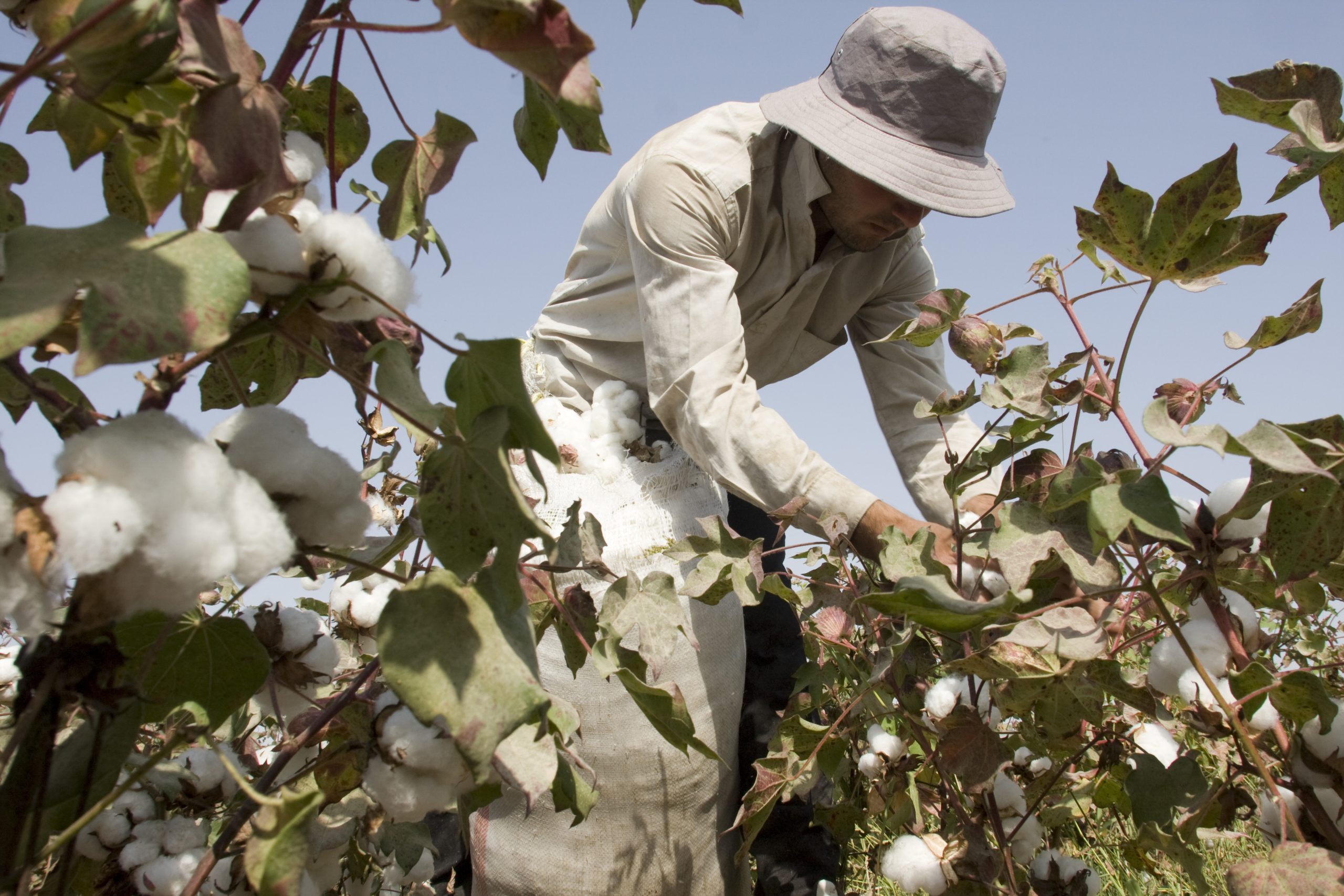
“Is it true that after the work of the Chinese, even the weed does not grow in the fields?” Such a question was asked at a news conference given by senior representatives of the Ministry of Agriculture in Dushanbe on July 13.
Two Tajik-Sino joint ventures, namely Juntai Khatlon Sin Silu (phonetically spelled) and Vodii Zarrin (Golden Valley), have operated in the Tajik southern province of Khatlon, yielding cotton on an area of more than 10,000 hectares, and journalists were interested in how Chinese farmers have used agricultural fields in Tajikistan.
Answering this question, Tajik Minister of Agriculture, Amonullo Salimzoda, in particular noted that Chinese farmers used modern technologies for growing agricultural plants, applying drip irrigation.
“Applying modern agricultural practices, Chinese farmers yield 3-3.5 tons of cotton per hectare,” the minister said.
Recall, the agricultural ministries of Tajikistan and China signed an agreement in July 2010, under which farmers from China’s Xinjiang-Uyghur Autonomous Region (XUAR) were supposed to use modern technology of plastic film mulching cultivation of cotton on 60 hectares of cotton fields in Bokhtar (currently Kushoniyon) district of the Khatlon province. Besides, 1,000 hectares of farmland in Khatlon’s Qumsangir (currently Jaihun) district were allocated to plastic film mulching cultivation of rice.
In 2012, Tajik authorities reportedly allowed Chinese farmers to rent hundreds of hectares of land in Khatlon’s Rumi (currently Balkhi) and Yovon districts.
Meanwhile, some Tajik analysts say China is not actually interested in rehabilitating agricultural land in Tajikistan that has been damaged by erosion but wants to expand Chinese influence by setting up a base on Tajik territory.






