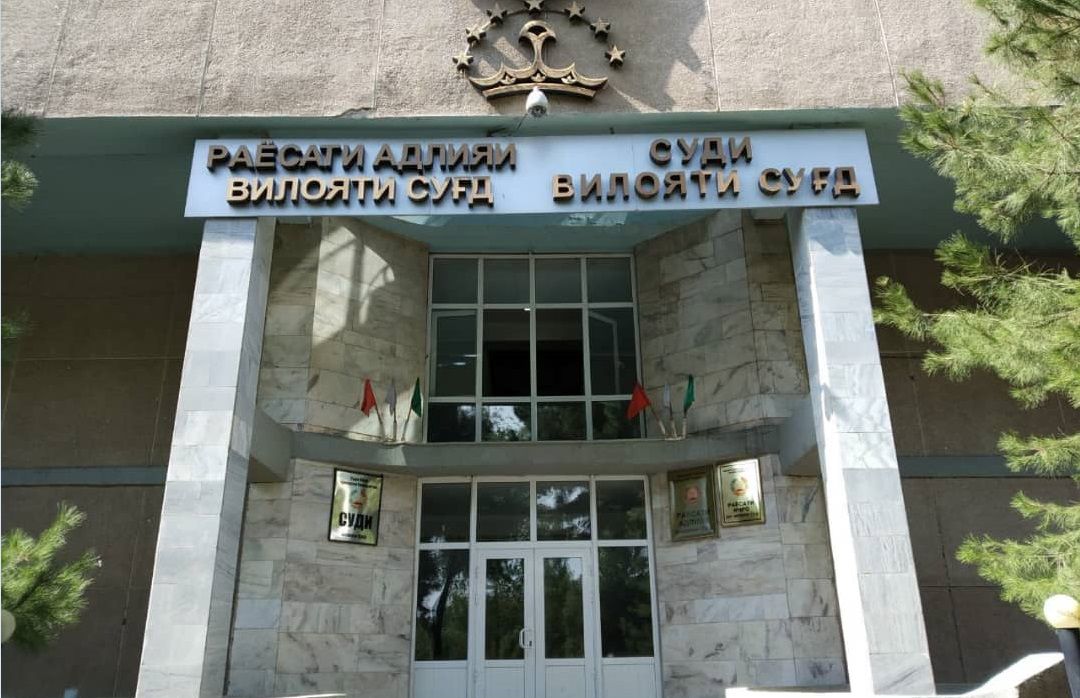
A trial of a group of residents of the Sughd province suspected of being members of the banned Muslim Brotherhood group has begun in Khujand.
The Sughd regional court has begun consideration of criminal proceedings instituted against 21 local residents suspected of being members of the Muslim Brotherhood group.
“They are charged with public calls for extremist activities and public justification of extremism (Article 307 (1) of Tajikistan’s Penal Code) and organizing an extremist group (Article 307 (2) of Tajikistan’s Penal Code),” an official source at the Sughd regional court told Asia-Plus in an interview.
According to him, the defendants are residents of the cities of Khujand, Isfara and Istaravshan as well as the Bobojon-Ghafourov district.
“They had studied at religious schools abroad,” the source said, noting the suspected also include university teachers.
In January 2000, more than 100 residents of the Sughd province were reportedly questioned as witnesses on the Muslim Brotherhood case.
Recall, about 20 imams were arrested in the northern province of Sughd in 2016 for allegedly being members of the movement. They were accused of receiving funds from abroad and of spreading Muslim Brotherhood ideology in Tajikistan, ultimately seeking to overthrow the secular government in Tajikistan.
Meanwhile, the trial of 116 suspected members of the banned Muslim Brotherhood group, including 114 nationals of Tajikistan and two citizens of Egypt is going on Dushanbe. They face charges of financing crimes of a terrorist nature (Article 179 (2) of Tajikistan’s Penal Code), public calls for extremist activities and public justification of extremism (Article 307 (1) of Tajikistan’s Penal Code), organizing an extremist group (Article 307 (2) of Tajikistan’s Penal Code) and organizing activities of an extremist group (Article 307 (3) of Tajikistan’s Pena Code).
The arrests of suspected members of the Muslim Brotherhood group began in Tajikistan in January this year. The suspects have been detained in dozens of raids as Tajik authorities uncovered an alleged Muslim Brotherhood cell operating in the capital, Dushanbe, as well as in the Sughd and Khatlon provinces. Tajik police have reportedly arrested 113 people on suspicion of being members of the Muslim Brotherhood group.
The Muslim Brotherhood is a Sunni Islamist organization founded in Egypt in 1928 by the Islamic scholar Hassan al-Banna.
The group's teachings have spread internationally and have influenced various Islamic groups, movements, and parties around the world — some of which do not use the same name.
The group claims to be peaceful but has been banned in many countries as an extremist organization.
Tajik authorities banned the Muslim Brotherhood as an extremist group in 2006 and it faces a similar ban in Central Asian neighbors Kazakhstan, Turkmenistan, and Uzbekistan. It is not banned in Kyrgyzstan.
It is considered a terrorist organization in Tajikistan, Syria, Egypt, Libya, Saudi Arabia, Bahrain, the United Arab Emirates, and Russia but not in the United States or other Western countries.