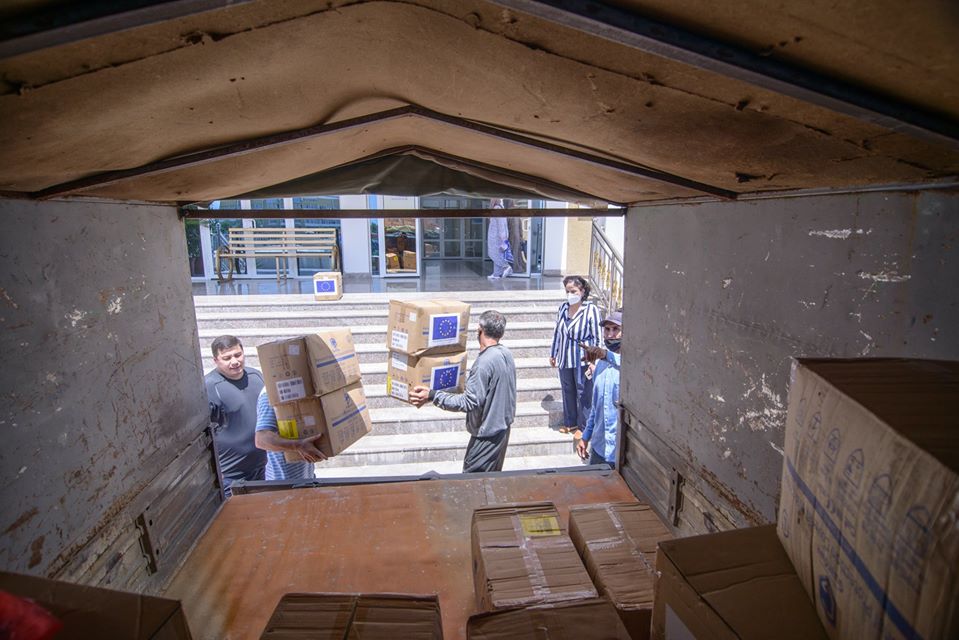
On Wednesday July 22, as part of its Team Europe Global Response, the European Commission announced €112.2 million to strengthen health, education and social services in Tajikistan and support the country in its coronavirus response, according to the European Union Delegation to Tajikistan.
Commissioner for International Partnerships, Jutta Urpilainen said: “The coronavirus pandemic has and still continues to impact us and our partners, our citizens and economies. The European Union stands by the Tajik people with a contribution of €112 million to help Tajikistan respond to the threat of coronavirus and address longer-term health and socio-economic needs. Tajikistan will be able to increase and improve its healthcare coverage, and young Tajik people will have greater access to higher quality education, even in times of crisis, and better chances of subsequent employment.”
The package consists of three interlinked programs: the Health Development Program (€52.2 million), the Quality Education Support Program II (€50 million), and Support to Civil Registry System Reform (€10 million). The first two programs contain elements (worth €46.2 million in total) that will directly support the emergency response to the pandemic, as well as boost efforts to mitigate its negative socio-economic impacts.
The Health Development Program aims to improve the accessibility and quality of integrated healthcare in Tajikistan. It will strengthen health sector governance and financing mechanisms with an emphasis on primary health care. The program will also strengthen effective infection prevention and control systems and finance critical medical supplies such as ventilators and personal protective equipment for healthcare workers.
The objective of the Quality Education Support Program II is to improve the learning outcomes and employability of young Tajiks. The program will strengthen the governance in the education sector and promote public finance management in the social sectors. It will increase access to higher quality education for all children and youth, and help improve their employment perspectives by reforming general secondary education as well as vocational education and training. Water, sanitation and hygiene activities in schools, together with increased preparedness for distance learning, will ensure better access to education, even in times of crisis.
The Support to Civil Registry System Reform program aims to make basic public services more accessible to all Tajiks. The program will help shape a public administration that can offer integrated and online public services, and ensure transparency and accountability. By facilitating better service delivery, the program will boost other EU assistance to Tajikistan.
EU-Tajikistan relations date back to 1991 when the European Commission launched the Technical Aid to the Commonwealth of Independent States. Bilateral development assistance has increased from around €20 million per year in the early 2000s to the current €33 million annually. The EU's priorities for cooperation with Tajikistan in the current programming cycle (2014-2020) are education, health and rural development. Boosting investment also remains a priority. Tajikistan is the largest recipient of EU bilateral aid in Central Asia.
The EU also supports Tajikistan through international organizations and global health initiatives to strengthen healthcare systems.