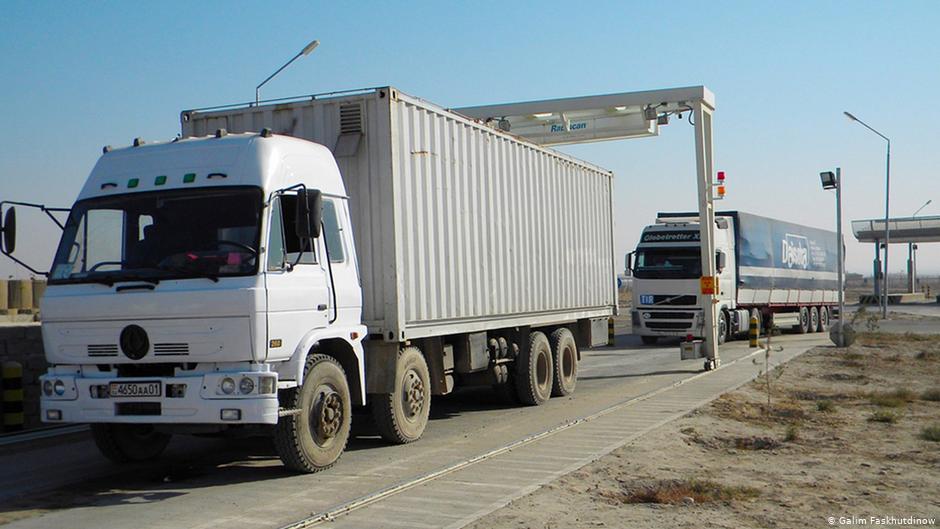
Iranian media reports say Iran has sent two cargoes from Shahid Rajaee Port in the southern port city of Bandar Abbas to Kyrgyzstan through Kyrgyzstan-Tajikistan-Afghanistan-Iran (KTAI) corridor for the first time to officially launch the mentioned corridor.
According to IRICA Director of Transit Bureau, Mostafa Ayati, the KTAI Corridor was established as a short and alternative route for sending goods from Iran's southern ports to Central Asian countries, including Afghanistan and Tajikistan, Mehr news agency reported on July 26.
The corridor has reportedly been launched by IRICA in collaboration with the International Road Transport Union (IRU), and Economic Cooperation Organization (ECO) under the framework of the TIR Convention (Convention on International Transport of Goods Under Cover of TIR Carnets), the official said.
This new route reportedly opens up the region to trade and development and will enable freight forwarders and transport operators to benefit from significant cost and time savings when transporting goods.
Citing Mr. Ayati, Tehran Times says the official inauguration of the corridor comes following a pilot transportation operation that was carried out in two stages, first through India-Chabahar-Afghanistan and then from Bandar Abbas to Tajikistan via Afghanistan in the second half of the previous Iranian calendar year (ended on March 19).
Regarding the importance of Iran's route for the transit in the region, Ayati said: "The Islamic Republic of Iran is the most economical route for the transit of goods to Central Asian countries (CIS) due to shorter access to open waters, and the development of new routes, including the KATI corridor will lead to trade development and ultimately economic growth in the region.”
According to him, the development of transit, while generating revenue and increasing employment, will lead to the expansion of regional relations.
The Convention on International Transport of Goods Under Cover of TIR Carnets (TIR Convention) is a multilateral treaty that was concluded at Geneva on November 14, 1975 to simplify and harmonize the administrative formalities of international road transport.