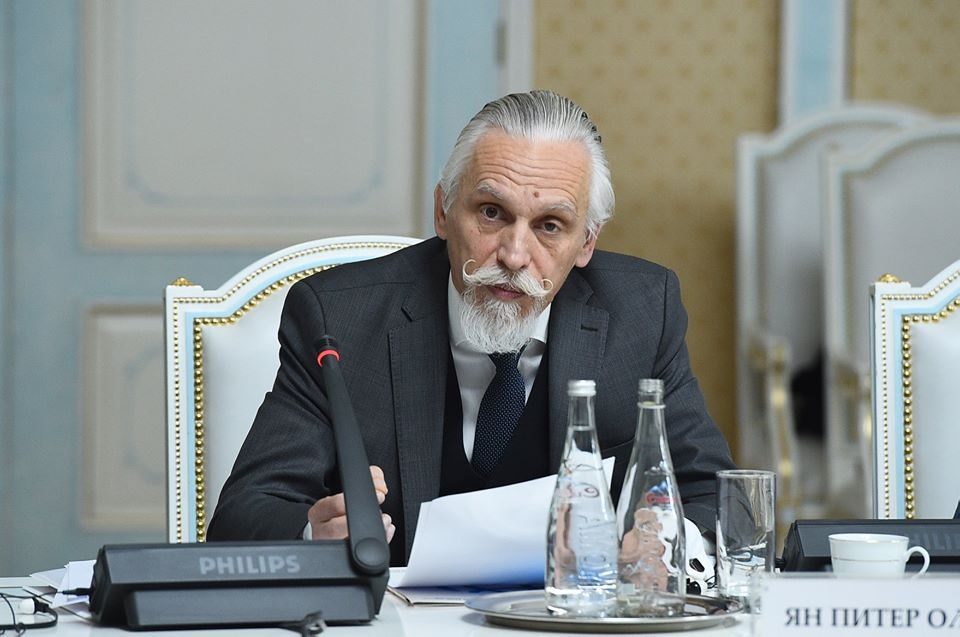
In a statement delivered at the Second Intersession Meeting of the Consultative Council on Improvement of Investment Climate under the President of Tajikistan, World Bank Country Manager for Tajikistan Jan-Peter Olters, who is also Chair of the Development Coordination Council, noted on October 14 that reliable, high-speed internet has helped to prevent service interruptions that would, otherwise, have contributed to welfare, revenue, and/or employment losses. Businesses and Governments have negotiated across the globe virtually, while families have benefitted from access to remote education and e-health services.
“We can see the ever-faster dynamism in digital innovations, including those unleashed by the COVID-19 pandemic, risking Tajikistan to fall behind further,” he said.
At the same time, Tajikistan already understands the benefits that can be derived from an encouraging regulatory environment and a transparent licensing regime, Mr. Jan-Peter Olters noted.
“During the period 2000–15, the country’s ICT sector was one of the fastest growing sectors, having contributed to socio-economic development and, indirectly, the state budget revenues,” said WB country manager. “It had been possible, with transparent licensing procedures and low licensing fees, to translate the economy’s relative weakness—low penetration rates—into an ability to attract reputable international operators. Still in early 2015, the country’s telecom regulator talked about ICT revenue growth rates to continue along the previous historic average of close to 15 percent. It thus warrants assessments and reflections on underlying reasons why—against the backdrop of a generally dynamic economy—gross revenues in the ICT sector have started to fall in subsequent years and the growth in new subscribers has started to decelerate.”
For this industry diagnostic, areas of particular significance reportedly include industry restrictions, telecom legislation, and/or tariff increases. According to him, the principal question to assess is the degree to which the changing regulatory environment and the lack of a level playing field in the market, partially reflecting the market position held by the state-owned telecom company, could have contributed to the worsening sector performance. In parallel, it would be critical to strengthen the dialogue and communication with principal operators on potential links between high tax margins and the ability to reinvest funds into the development of the 3G/4G infrastructure and general industry development.
“The objective of this industry assessment appears clear: without the development of high-speed internet, it would not be possible to permit a digital transformation, implement e-Government services, and advance mobile financial applications. Without a focus on required reforms, prices will remain amongst the highest worldwide, notwithstanding limited access and low speed,” Mr. Jan-Peter Olters.
It is to be noted that revenues of private communication operators in Tajikistan have fallen over the past five years. Thus, their revenues fell by nearly 5 million somoni in 2019 and amounted to little more than 2.4 billon somoni.
Four companies now dominate Tajikistan’s mobile communications market: Closed Joint-Stock Company (CJSC) Indigo Tajikistan (Tcell); CJSC TT-Mobile (Megafon Tajikistan); CJSC Babilon Mobile; and Tacom Ltd (ZetMobile, formerly Beeline).