The Ministry of Economic Development and Trade (MoEDT) claims that anti-crisis measures taken by the Government have helped Tajikistan avoid economic downturn.
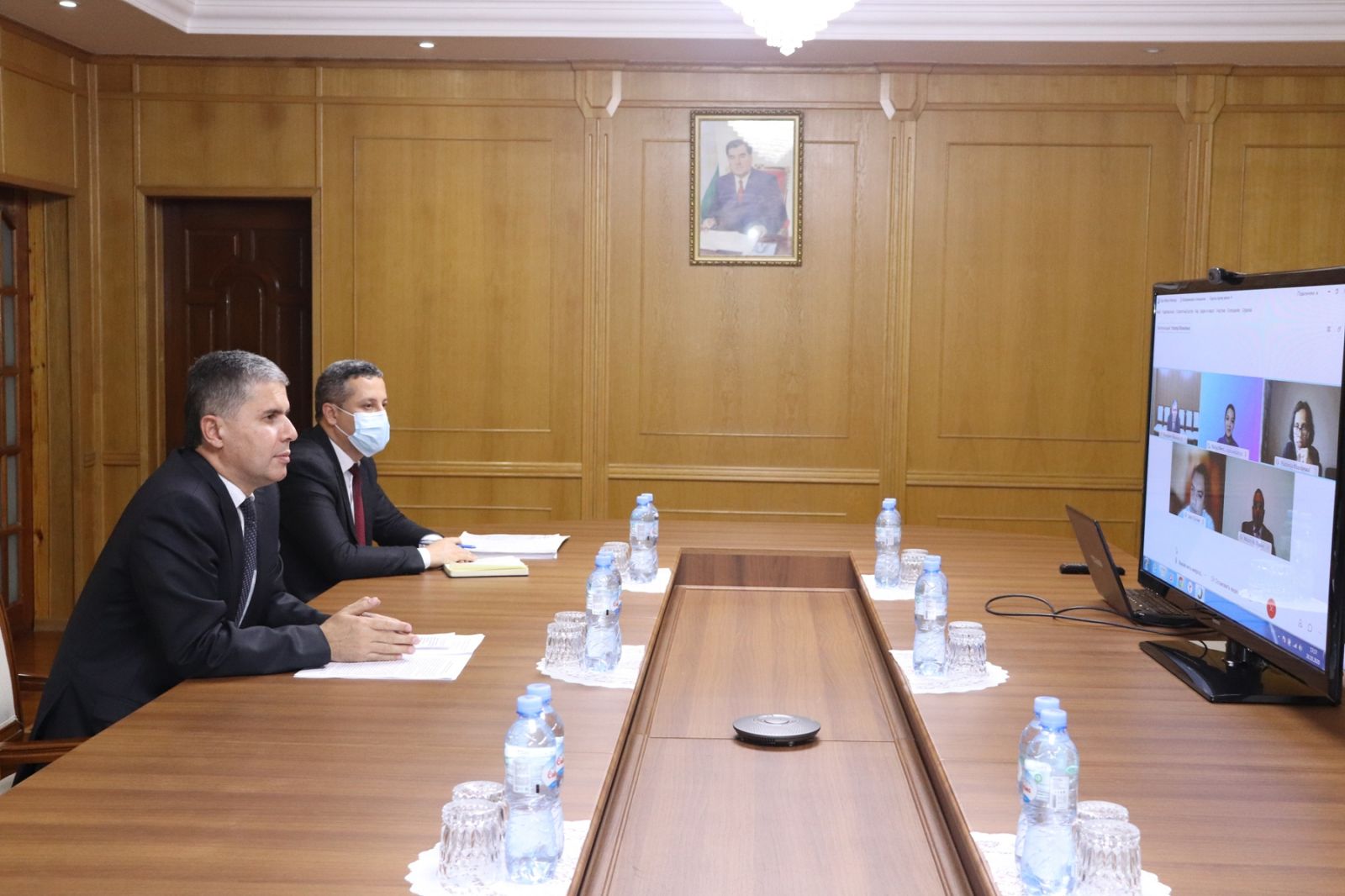
An efficiency of anti-crisis measures taken by the Government of Tajikistan were discussed at a meeting of Zavqi Zavqizoda, Minister of Economic Development and Trade of Tajikistan, and Ms. Padamja Khandelwal, Head of the International Monetary Fund (IMF) mission to Tajikistan that was held in the digital video-conference format on October 28.
The sides discussed trends in the global economy, Tajikistan’s macroeconomic indices for January-September this year and impact of internal and external risks on the country’s economy, particularly the impact of the coronavirus pandemic, according to MoEDT press center.
They reportedly also discussed the result of economic reforms and anti-crisis measures conducted by the Tajik government and issue related to further expansion of bilateral cooperation.
The minister, in particular, noted that despite measures taken by the government, negative effects of COVID-19 pandemic on the country’s economy are felt, especially in financial, trade and transportation spheres, MoEDT press center noted.
“As a result, over the first nine months of this year, the economic growth rate in Tajikistan was 4.2 percent, which is 3.0 percent fewer than in the same period last year,” Tajik minister said.
The IMF reportedly described the anti-crisis measures taken by the government to prevent the further spread of COVID-19 as effective and efficient in comparison with other countries.
Recall, Ms. Padamja Khandelwal visited Tajikistan virtually from August 18 to September 3, 2020, to hold discussions on macroeconomic developments, the government's policy response to the coronavirus shock, and policies needed to maintain macroeconomic stability and build the foundations for strong, sustainable and inclusive growth.
In a statement issued at the end of the visit, Ms. Khandelwal noted that Tajikistan is experiencing severe effects from the COVID-19 pandemic. According to her, the health impact of the pandemic has been well-contained, but trade and transportation challenges with key trading partners have affected economic activity and remittances. The external position has deteriorated, head of IMF mission to Tajikistan said. On the fiscal side, revenues have dropped sharply, posing challenges for the implementation of the revised budget for 2020, Ms. Khandelwal said.