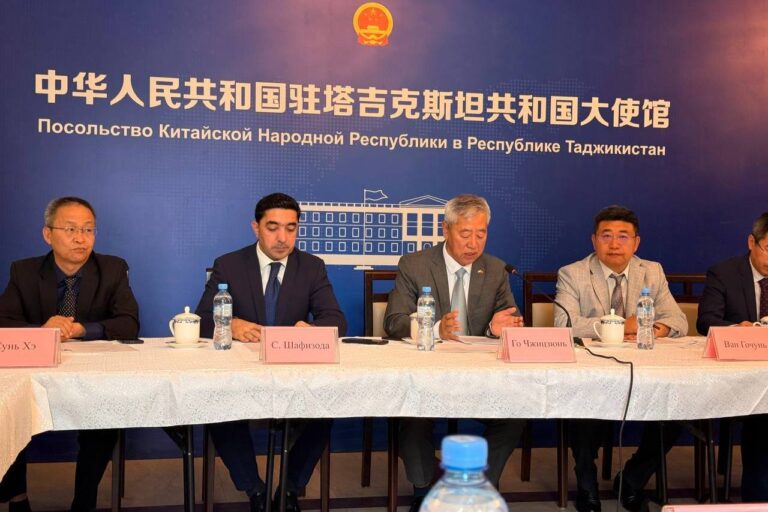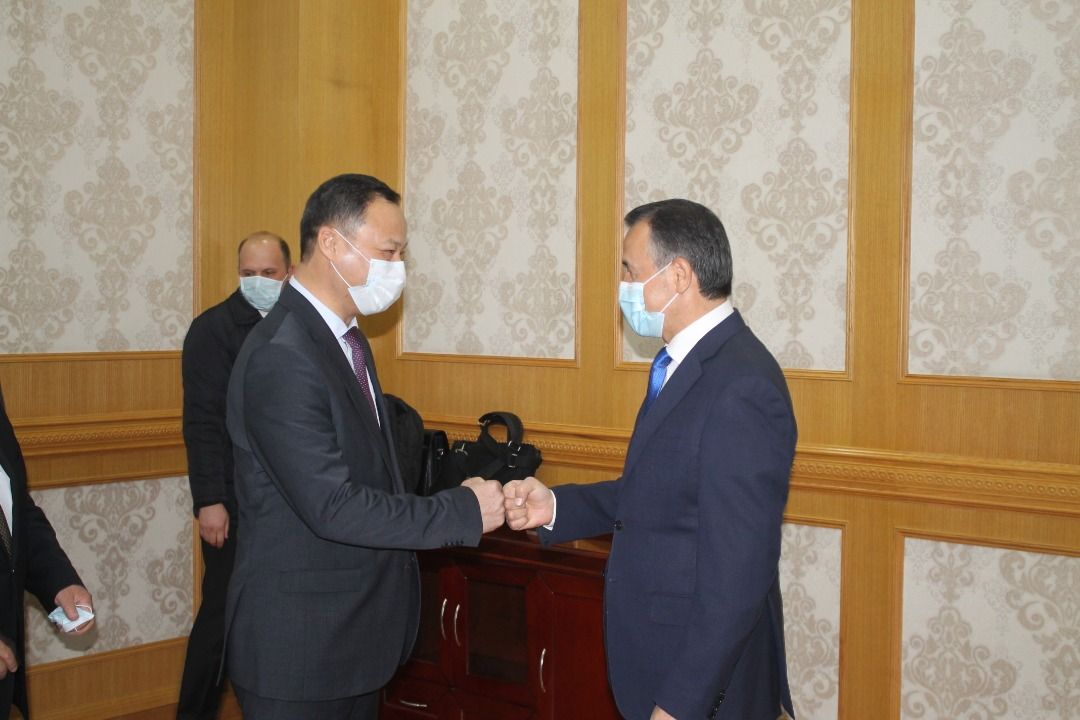
During his working visit to Tajikistan, Kyrgyz Foreign Minister Ruslan Kazakbayev met in Dushanbe with Deputy Prime Minister of Tajikistan Davlatsho Gulmahmadzoda, who is also Co-Chairman of the Kyrgyz-Tajik Intergovernmental Commission for Delimitation and Demarcation of the Kyrgyz-Tajik Border, the Ministry of Foreign Affairs of Kyrgyzstan said.
In the course of the talks, Kazakbayev reportedly emphasized the importance of intensification of work of the Intergovernmental Commission on a comprehensive review of bilateral issues and informed about the possibility of holding the next 17th session of the Intergovernmental Commission in Bishkek in the first quarter of 2021.
Kyrgyz foreign minister noted that the bilateral trade between Kyrgyzstan and Tajikistan has decreased this year due to the coronavirus pandemic. Both sides must create acceptable and mutually beneficial conditions for trade and transportation of goods, Kazakbayev said.
For his part, Gulmahmadzoda reportedly noted that Tajikistan was interested in exporting early agricultural goods to Kazakhstan and Russia through Kyrgyz territory.
The two also discussed interaction between the two countries in resolving issues of delimitation and demarcation of the mutual border and joint measures to maintain peace and stability in border areas.
It is to be noted that many border areas in Central Asia have been disputed since the collapse of the Soviet Union in 1991. The situation is particularly complicated near the numerous exclaves in the Ferghana Valley, where the borders of Tajikistan, Uzbekistan, and Kyrgyzstan meet.
The border of Tajikistan and Kyrgyzstan has been the scene of unrest repeatedly since the collapse of the former Soviet Union. The countries share 971 kilometers of border – of which only 504 kilometers has reportedly been properly delineated.
Last year alone, there were at least fourteen cases of violence, in which six Tajik nationals and one Kyrgyz citizen were killed and more than 60 other people were injured.
Tajikistan and Kyrgyzstan renewed interest in border delimitation suggests that the governments want to dedicate more attention and resources to the communities living in the Ferghana Valley.