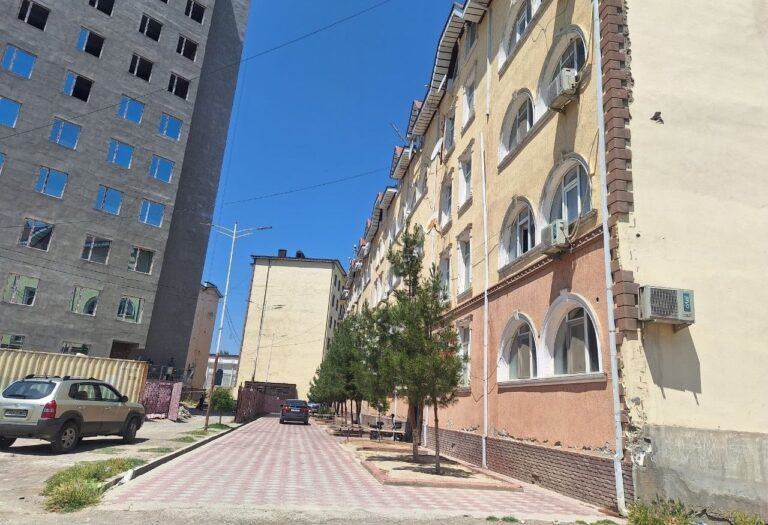
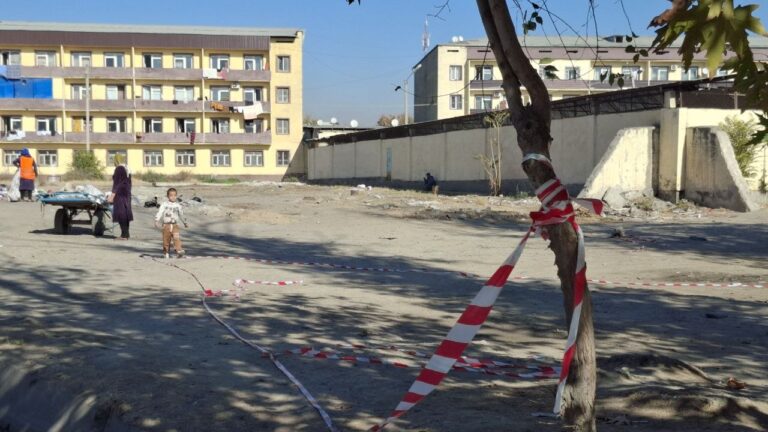
Land is in high demand around Dushanbe, as a growing number of people from across Tajikistan move to the capital in search of better jobs. A much-cheaper suburb in the Roudaki district has reportedly become the best place for many to settle. Some buy or rent houses, while others try to purchase land parcels to build their own homes.
An investigation by Radio Liberty’s Tajik Service revealed that the high demand has led to corruption in the distribution of land in Roudaki, despite measures announced by state to root out “illegal land sales” in the sought-after district.
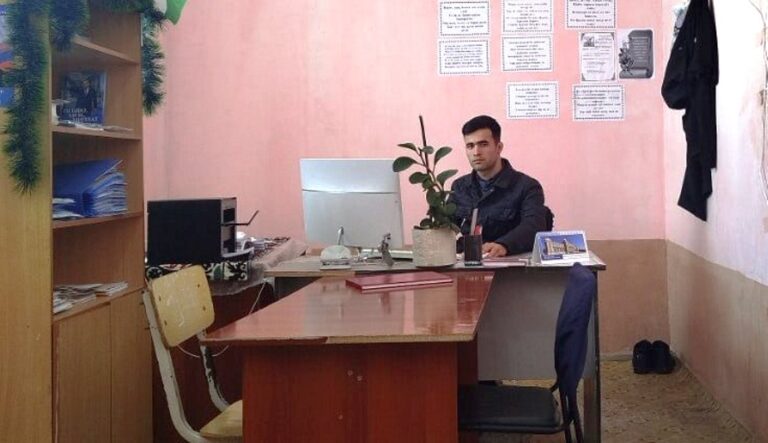
Multiple sources in Roudaki claim that former district head Rustam Akramzoda has fast-tracked several of his own relatives and acquaintances to obtain free land parcels.
Akramzoda, who was dismissed from his post in a reshuffle on November 24, however, denies any wrongdoing.
But documents obtained by RFE/RL reportedly indicate that at least 10 people with a connection to Akramzoda have jumped to the front of the line to receive land parcels in recent months. Others, meanwhile, wait for years before being offered land.
In Tajikistan, laws ban the private sale of land. Agricultural land can only be leased from the state. People can also receive a plot of land — free of charge — from their local government to build a home.
Only people who don't have their own home are eligible for a land parcel in the district where they are registered as a permanent resident.
Applications for the parcels of land are made to the district governor and the governor either approves the request, sends it to local authorities in each area for a final decision, or rejects the request if the applicant is deemed ineligible.
The application must be accompanied by a lot of documentation, including a letter from the local authorities in the applicant's home village or town to verify the applicant's account of their personal circumstances and their genuine need for land.
In Roudaki, officials told RFE/RL that there are currently about 300 approved applicants waiting to receive land plots. Authorities say the waiting time often takes between six months to one year. In reality, many families have been waiting several years.
Some applicants claimed that many people — some of whom are not even Roudaki residents and therefore ineligible for land in the district — received it in a very short period of time. Official documents obtained by RFE/RL confirm this claim.
The investigation also revealed that some those who got the land illegally have a personal connection to Akramzoda, who was appointed only two years ago to specifically fight illegal land deals, a longstanding problem in the capital's popular suburb.
With nearly 520,000 inhabitants and a total area of only 1,812 square kilometers, Roudaki is the most densely populated district in Tajikistan, as well as being the most populous in the country of some 9.5 million.
Roudaki's population has grown by 125,000 in the past decade and the government says migration from other districts is a key factor in the its rapid population growth.