EastFruit warns that the greenhouse business in Central Asia is in danger as tobamvirus threatens greenhouse vegetables in the region.
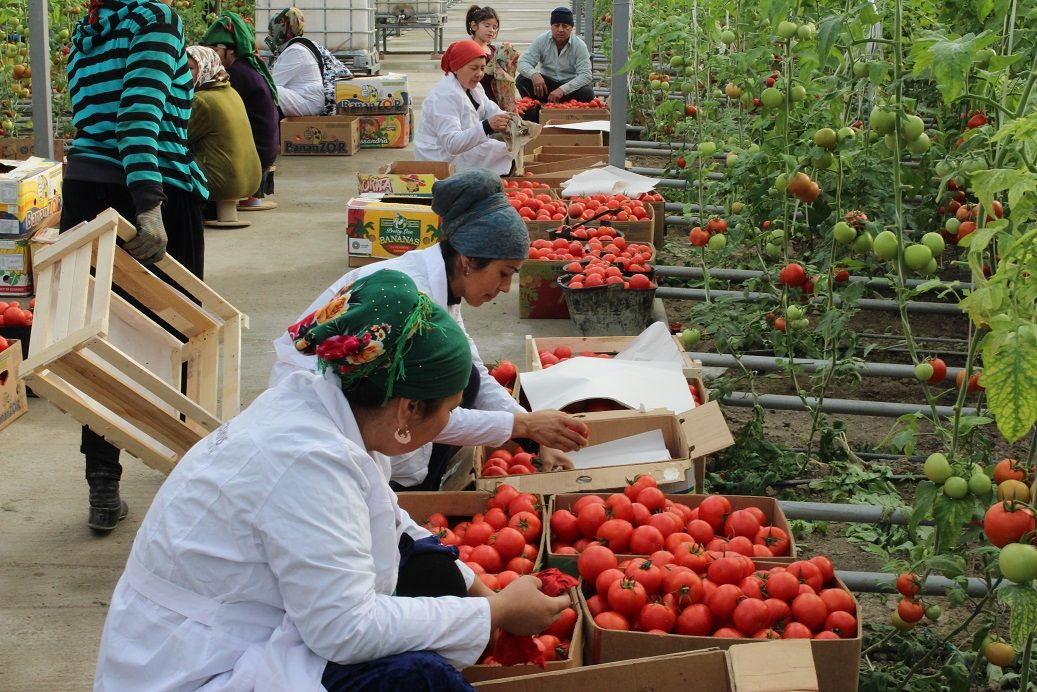
On November 26, Russia put ban on the import of greenhouse tomatoes and greenhouse peppers from Uzbekistan’s Fergana due to the detection of a quarantine object, in particular, Tomato brown rugose fruit virus (ToBRFV), in the products supplied from Fergana.
“Fergana region, according to our estimates, is one of the largest producers of greenhouse vegetables in Uzbekistan, being second only to Tashkent and Samarkand. Also, whereas the Tashkent region focuses on supplies to the capital of the country and the domestic market, Fergana is precisely an export-oriented production region. Therefore, this ban will undoubtedly negatively influence the greenhouse industry in the region and lead to lower domestic prices for greenhouse tomatoes and peppers,” explained Andrii Yarmak, an economist at the Investment department of the Food and Agriculture Organization of the United Nations (FAO).
Meanwhile, Ms. Marguerite Gailite, an international expert in greenhouse technologies warns that the situation can be dangerous for business in Central Asia’s nations.
“This virus persists in the soil and causes very serious crop losses. Its spread can lead to a significant reduction in tomato acreage in this region. And if infected tomatoes go to other regions, then the situation for producers will be worse than the covid situation,” the expert says.
Tajik researcher Qurbobali Partoyev says there are two ways to prevent the spread of tobamovirus in the republic: 1) to strengthen phytosanitary control over the supply of seeds of tomatoes cucumbers, peppers and other plants so that they have appropriate certificates; and 2) if a plant disease is already detected in greenhouses, they [plants] must be removed and incinerated immediately.
“Tobamovirus may be present in foreign-made seeds,” the researcher added.
Tobamovirus is a genus of positive-strand RNA viruses in the family Virgaviridae. Many plants, including tobacco, potato, tomato, and squash, serve as natural hosts. Diseases associated with this genus include: necrotic lesions on leaves. The name Tobamovirus comes from the host and symptoms of the first virus discovered (Tobacco mosaic virus).
There are four informal subgroups within this genus: these are the tobamoviruses that infect the brassicas, cucurbits, malvaceous, and solanaceous plants. The main differences between these groups are genome sequences, and respective range of host plants. There are currently 37 species in this genus including the type species Tobacco mosaic virus.