UNDP joins academia and civil society to engage youth in action against COVID-19 environmental risks

UNDP on December 2 kicked off a series of events to increase awareness and engage more than 3000 young people in Tajikistan in safe collection and disposal of personal protective equipment heavily being used during the COVID-19 pandemic. UNDP Country Office in Tajikistan says the campaign, held in partnership with public organization “Peshsaf” and the […]

UNDP on December 2 kicked off a series of events to increase awareness and engage more than 3000 young people in Tajikistan in safe collection and disposal of personal protective equipment heavily being used during the COVID-19 pandemic.

UNDP Country Office in Tajikistan says the campaign, held in partnership with public organization “Peshsaf” and the Ministry of Health and Social Protection of the Population (MoHSPP), mainly targets university students and is a part of UNDP’s effort to improve medical waste management practices among local citizens as well as medical institutions.

The pandemic reportedly has had a short-term positive impact on environment, including air and water quality, as the need for physical distancing and lockdowns caused reduced carbon emissions due to largest drop in demand for fossil fuels.  Yet, the COVID-19 crisis has also given unprecedented rise to use of PPE significantly increasing medical and hazardous waste.

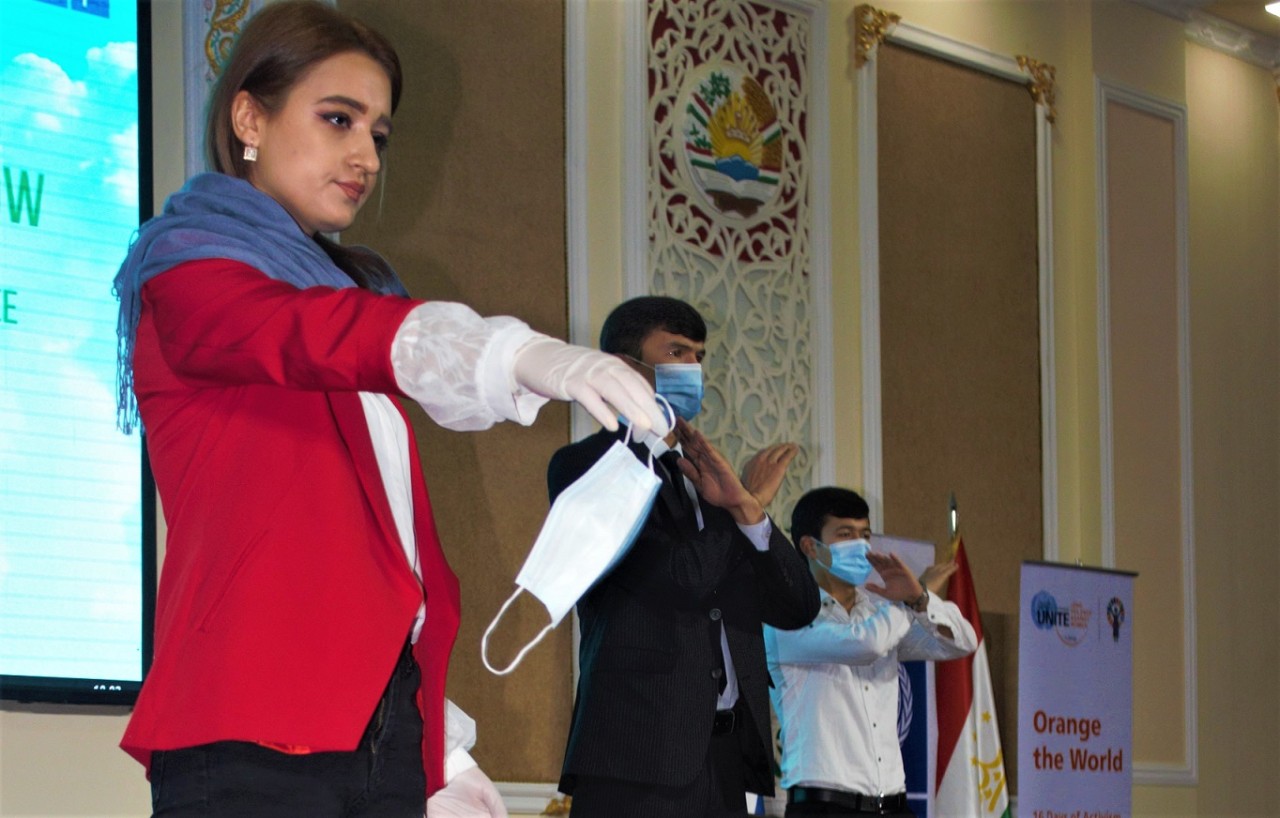
The campaign includes a series of open lectures to be held in universities across the country to discuss ways to address COVID19 environmental hazards and waste management issues in Tajikistan.  The first lecture was reportedly hosted by the Russian-Tajik Slavonic University in Dushanbe, featuring a learning session on COVID19 environmental and public health threats, interactive live performance on appropriate and environmentally friendly medical waste management practices among citizens and informative quiz on COVID19 prevention and response measures.  Special labeled containers were handed over to facilitate improved practices for safe collection and disposal of Personal Protective Equipment (PPE) in line with relevant guidelines.

UNDP Addressing COVID-19 Environmental Hazards through Improving Medical Waste Management Project aims to support the Government in enhancing healthcare waste management system through, in particular, management of COVID-19 contaminated medical waste and reduce human and environmental impact of the pandemic.

Join us on social media!

Article translations:

Related Article

Оби зулол
Оби зулол
Tenisi

Most Read

Коммерсбонк Точикистон

Recent Articles

RZD announces the restoration of passenger services between Moscow and Dushanbe

Direct rail services between the capitals of Russia and Tajikistan were suspended in March 2020 due to the COVID-19 pandemic.

#AP30/Stories. “Selam! Heller nichek?” How Tatars live today in Sughd province

On the 30th anniversary of "Asia-Plus," we continue to publish reports that remain relevant even after years. This story was told in 2021, and since then, little has changed in the life of the Tatar community in Tajikistan.

15,000 cameras, drones, and robots: how technology monitors pilgrims in Mecca and Medina

During Hajj 2026, Mecca and Medina were under unprecedented digital control.

Another child in Dushanbe removed from family and sent to boarding school

The Ministry of Internal Affairs reports that the parents did not pay adequate attention to the child.

Emomali Rahmon instructs to address issues in seed production following criticism of the industry

Issues have been noted with certification, seed quality, and the material and technical base of the industry.

Water, climate, and a $130 billion deficit: seven key outcomes of the Water Conference in Dushanbe

At the forum, countries and international organizations discussed new mechanisms for cooperation, investments, and technologies that are essential for addressing the global water crisis.

Eskhata Bank introduces a new generation children’s wallet

"Eshkata Bank" has created a full-fledged digital platform that helps children aged 7 to 16 learn how to manage money.