Tajikistan prepares to repatriate hundreds of its nationals from refugee camps in Syria

Tajikistan is preparing to bring home hundreds of its citizens from refugee camps in Kurdish-controlled parts of Syria — mostly Tajik wives and children of slain or imprisoned militants of the Islamic State (IS) terror group, according to Radio Liberty’s Tajik Service. Diplomats tell RFE/RL they expect the first group from among about 800 Tajiks […]

RFE/RL

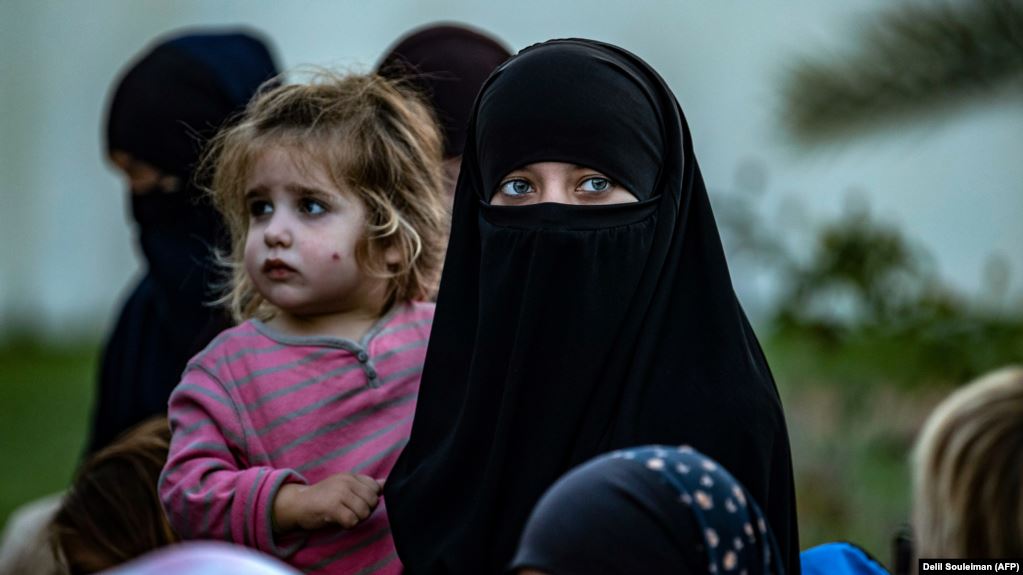
Tajikistan is preparing to bring home hundreds of its citizens from refugee camps in Kurdish-controlled parts of Syria — mostly Tajik wives and children of slain or imprisoned militants of the Islamic State (IS) terror group, according to Radio Liberty’s Tajik Service.

Diplomats tell RFE/RL they expect the first group from among about 800 Tajiks stranded in the camps to be repatriated “within weeks.”

Tajikistan's ambassador to Kuwait, Zubaidullo Zubaidzoda, visited the Al-Hawl and Al-Roj camps in northeastern Syria on December 8 and 9, meeting with hundreds of Tajik women and their children.

"We registered the names of some 200 Tajik nationals willing to return home in the voluntary repatriation program," Zubaidzoda told RFE/RL from Syria on December 9.

But Zubaidzoda said some of the Tajik women in the camps declined to meet with his entourage, saying they didn't want to return to Tajikistan.

During the past several days, Zubaidzoda has met with the Kurdish authorities who control the camps and has secured their permission for the repatriations.

Zubaidzoda also met with Syrian government officials and representatives of the International Federation of Red Cross and Red Crescent Societies to discuss Dushanbe's repatriation plans.

He said he hoped the first group will arrive in Dushanbe before New Year's Day or in early January.

The Tajik government has said it is determined to bring back home all Tajik women and children who are being held at prisons and refugee camps in Syria and Iraq.

Tajik authorities fear family members of IS fighters could pose security threats in the long term if they are left languishing abroad.

Some 2,000 people from Tajikistan have left the predominantly Muslim Central Asian country since 2014 to join IS militants in Syria and Iraq.

As part of a larger program since 2019, Tajikistan has repatriated dozens of children from Iraq, where their Tajik mothers were jailed for being members of the extremist group.  But that effort was suspended in 2020 when the coronavirus pandemic led to border closures and halted international travel.

Join us on social media!

Article translations:

Related Article

Tenisi
Оби зулол
Оби зулол

Most Read

Коммерсбонк Точикистон

Recent Articles

RZD announces the restoration of passenger services between Moscow and Dushanbe

Direct rail services between the capitals of Russia and Tajikistan were suspended in March 2020 due to the COVID-19 pandemic.

#AP30/Stories. “Selam! Heller nichek?” How Tatars live today in Sughd province

On the 30th anniversary of "Asia-Plus," we continue to publish reports that remain relevant even after years. This story was told in 2021, and since then, little has changed in the life of the Tatar community in Tajikistan.

15,000 cameras, drones, and robots: how technology monitors pilgrims in Mecca and Medina

During Hajj 2026, Mecca and Medina were under unprecedented digital control.

Another child in Dushanbe removed from family and sent to boarding school

The Ministry of Internal Affairs reports that the parents did not pay adequate attention to the child.

Emomali Rahmon instructs to address issues in seed production following criticism of the industry

Issues have been noted with certification, seed quality, and the material and technical base of the industry.

Water, climate, and a $130 billion deficit: seven key outcomes of the Water Conference in Dushanbe

At the forum, countries and international organizations discussed new mechanisms for cooperation, investments, and technologies that are essential for addressing the global water crisis.

Eskhata Bank introduces a new generation children’s wallet

"Eshkata Bank" has created a full-fledged digital platform that helps children aged 7 to 16 learn how to manage money.