Remittance flows to Tajikistan this year drop 7.0 percent compared to 2019, says Tajik central bank

As of December 20, the decline in remittance flows to Tajikistan compared to 2019 amounted to 7.0 percent, according to the National Bank of Tajikistan (NBT). According to Tajik central bank, the process of the drop in remittance flows to Tajikistan began in March due to the coronavirus crisis.    The pandemic has led to quarantine, […]

Asia-Plus

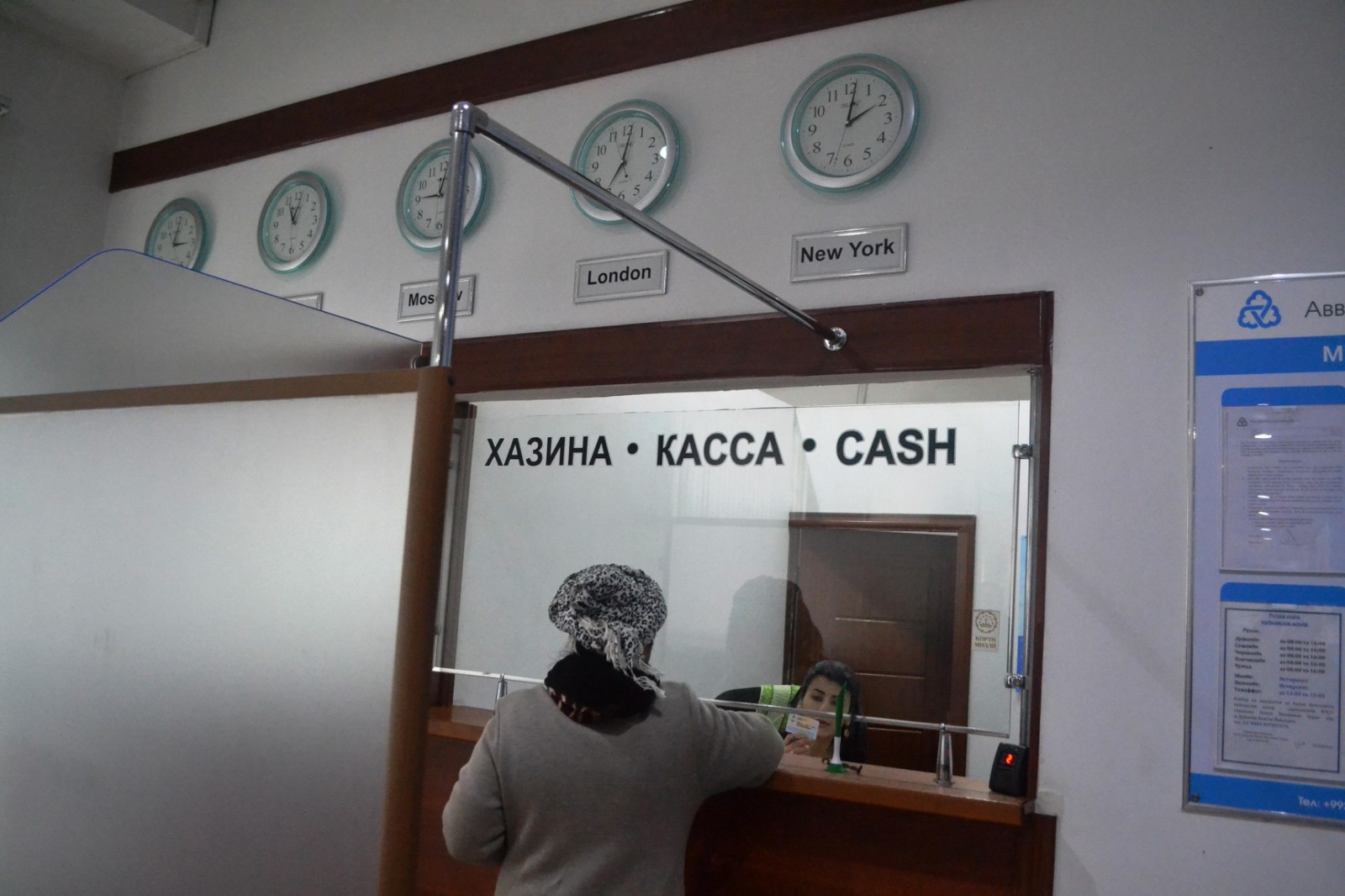
As of December 20, the decline in remittance flows to Tajikistan compared to 2019 amounted to 7.0 percent, according to the National Bank of Tajikistan (NBT).

According to Tajik central bank, the process of the drop in remittance flows to Tajikistan began in March due to the coronavirus crisis.   

The pandemic has led to quarantine, closure of borders, decline in oil prices and fall in the exchange rate of the national currencies in major trading partners of Tajikistan – Russia, Kazakhstan, Turkey and Uzbekistan, the NBT says.     

Over the first six months of this year, the remittance flows to Tajikistan have reportedly declined 14.8 percent.  

Meanwhile the Central Bank of Russia says that over the first nine months of this year, personal remittances to Tajikistan have dropped nearly 37 percent compared to the same period last year.  

Over the reporting period, US$1.224 billion were reportedly sent to Tajikistan from Russia through money transfer systems.  

Labor migrants are a critical component in the economy of Tajikistan as remittances keep many struggling families at home above the poverty line. 

Tajik seasonal workers travel abroad each year, primarily to Russia but also to neighboring Kazakhstan, Kyrgyzstan and Uzbekistan. 

According to the Asian Development Bank, migrant families use an overwhelming portion of remittances (94%) for private consumption, which is the most important component of GDP.  However, remittances are rarely used for investments or to save for future contingencies, leaving migrants continually dependent on overseas employment for livelihood.

ADB notes that remittances from labor migrants are equivalent to about a third of the country’s gross domestic product (GDP).  The World Bank says remittances from labor migrants last year were equivalent to 28.6 percent of GDP.  

Article translations:

Related Articles

Оби зулол

Most Read

Join us on social media!

Recent Articles

A school student saves a girl who jumped into the river in Dushanbe

The injured person was taken to the hospital, and the young man will be awarded.

Tajikistan ranked at the bottom of the global employment index

Only a third of working-age citizens in the republic have employment.

Kazakhstan Offered Flexible Grain Supplies to Tajikistan

The Republic plans to import up to 1.3 million tons of grain.

Torture, Death in Prisons, and Human Trafficking. What Did Tajikistan Authorities Say at the Geneva Meeting?

At the session of the Committee Against Torture, Tajik authorities disclosed statistics and measures, but a number of key issues remained unexplained.

“Amorat Inshoot”: a premium living space in one of Dushanbe’s most promising areas

The project is in the active construction phase, providing an opportunity to purchase property at a more attractive price at an early stage.

Tajikistan and Japan agree on the reconstruction of the bridge near Vahdat

The bridge on the "Dushanbe-Kulyab-Khorog-Kulma" highway will be reconstructed to reduce traffic congestion.

Kazakhstan tightens rules for obtaining RP: language exam and digital scoring introduced

The updated migration rules will also affect kandas — ethnic Kazakhs returning to Kazakhstan.