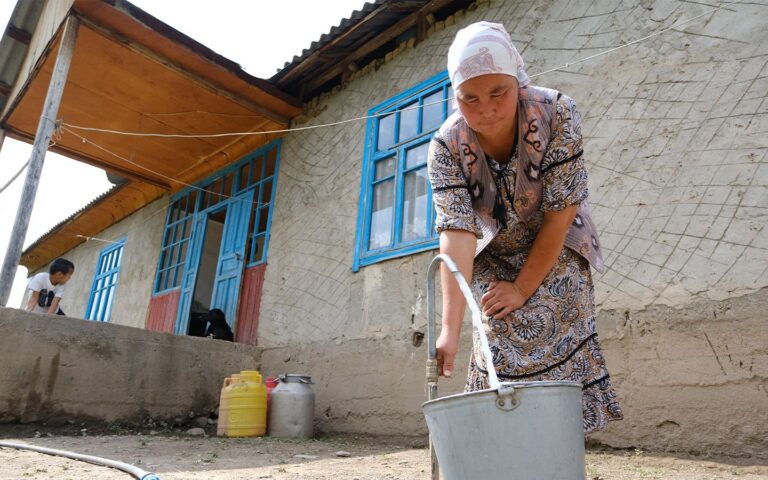
Accelerate Prosperity (AP) is a global initiative of the Aga Khan Development Network (AKDN) in Central and South Asia focusing on women and youth (age 16 to 30) in rural towns and peri-urban settings, where economic opportunities often remain insufficient. The initiative also targets entrepreneurs with low-income earnings, refugees and migrants, the unemployed and those who have not completed primary or secondary education.
Beneficiaries are reportedly supported non-financially and financially, and are introduced to innovative tools such as patient and tailored debt and quasi-equity. The initiative combines lean startup business modeling methodologies, mentorship, angel investment networks, a digital deal flow platform, blended learning and gender-lens and youth-lens approaches.
AKDN says that in most cases, AP services reinforce the Network’s wider efforts to address constraints to business growth in rural settings – for example, investments in energy, telecoms and infrastructure – and work on upgrading promising agricultural and non-agricultural value chains as well as employable and soft skills. These investments reduce business risks and expand opportunities for youth entrepreneurship and employment.
As of December 2020, AP expanded operations to three regions in Pakistan, four regions in Tajikistan and three regions in Kyrgyzstan, which makes it the only regional enterprise growth accelerator in Central and South Asia.
The initiative has reached over 12,200 aspiring and existing entrepreneurs – of which 43% youth.
In Tajikistan, Accelerate Prosperity reportedly expanded operations to the Gorno Badakhshan Autonomous Region (GBAO), Dushanbe, Khatlon and Sughd.
Founded in 2016, Accelerate Prosperity Tajikistan has gained business expertise in GBAO and Khatlon and built a network of mentors in the most promising industries, including commercial services, agri-business, tourism, ICT and textiles, and is currently scaling to new regions nationally.
Accelerate Prosperity Tajikistan has successfully partnered with the European Union to implement the Supporting Cooperation and Opportunities for Regional Economic Development (SCORED) project, to catalyze regional economic development and integration in the border regions of Afghanistan and Tajikistan. Besides, it secured two sub-grants in cooperation with the Aga Khan Foundation from USAID to promote Enhanced Integrated Socio-Economic Development in the cross-border districts of GBAO and Khatlon. The initiative has also worked with UNICEF Tajikistan and the Ministry of Education and Science of Tajikistan to reach vulnerable adolescent girls and boys in GBAO, such as those in institutions, in conflict with the law, or from poor families, to instill transferable skills, entrepreneurship and digital literacy.
Accelerate Prosperity is co-financed by the European Commission, USAID, GiZ, UNICEF, SECO, World Bank, the Aga Khan Foundation and the Aga Khan Fund for Economic Development’s Industrial Promotion Services.