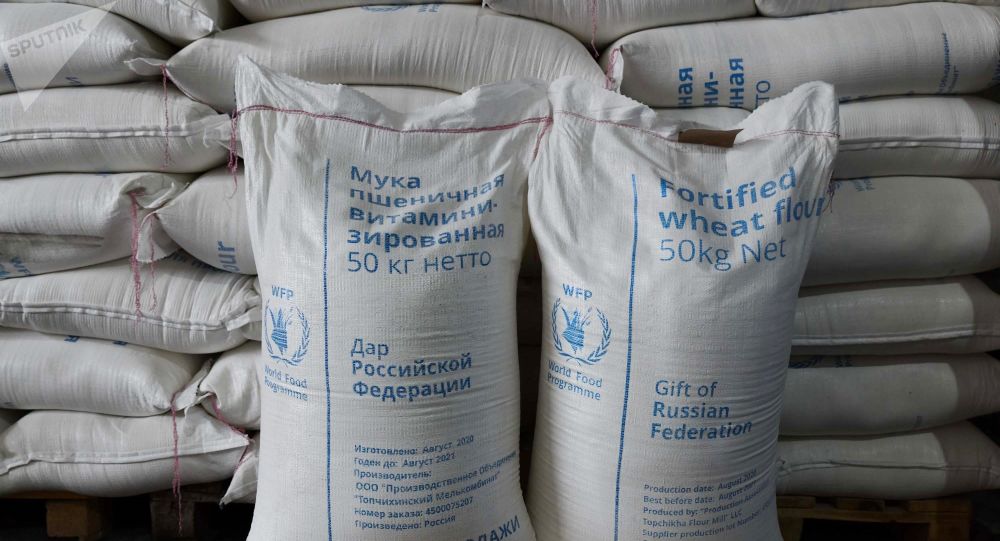
With the financial support of the Russian Federation, the United Nations World Food Program (WFP) has started delivering food items comprising fortified wheat flour and vegetable oil to the families of the most vulnerable schoolchildren in Khatlon province. Until the end of the month, families living in Sughd province and Gorno-Badakhshan Autonomous Region (GBAO), Roghun town as well as the districts of Rasht Valley (eastern Tajikistan) will receive similar support.
The WFP Office in Tajikistan says this assistance is made possible due to the allocation of additional US$1 million earmarked contribution to WFP by the Russian Federation. With this contribution 1,200 tons of wheat flour and 50 tons of vegetable oil were purchased. This will meet a one-month need of around 22,000 households in the country.
“For many years, Russia has been helping build an effective national school feeding system in Tajikistan. In the context of the coronavirus pandemic, it was important for us to provide additional targeted assistance to schoolchildren and their families who need it most. We believe that this will not only enrich their diet, but also contribute to their educational outcomes,” said the Russian Ambassador to Tajikistan Igor Lyakin-Frolov.
“We are thankful to the Russian Federation for its contribution to the WFP School Feeding Program. COVID-19 has impacted household food and nutrition security, especially among the vulnerable population. The additional contribution comes timely, which allowed us to deliver the food assistance at the peak lean season when household food insecurity is at its highest due to high food prices and limited income generating opportunities.” said WFP Deputy Country Director and Representative, a.i. in Tajikistan Mariko Kawabata.
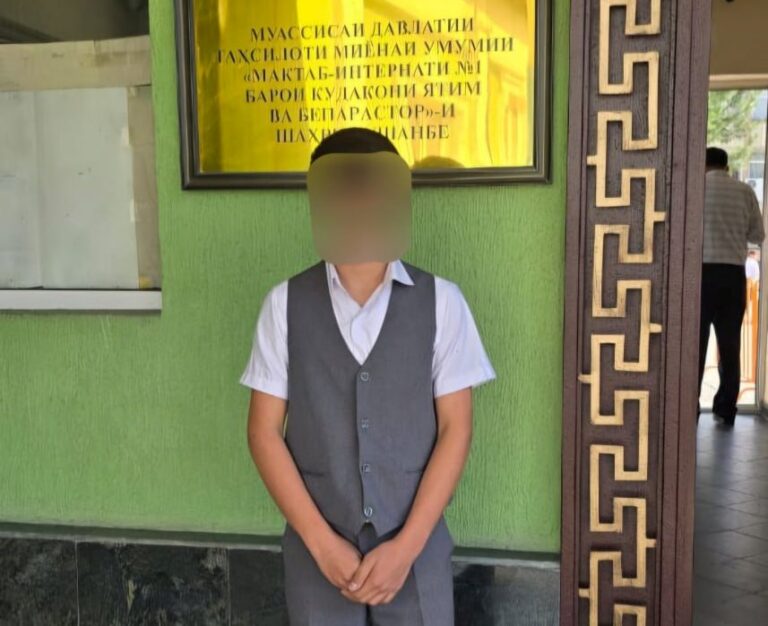
This food assistance remains part of the WFP School Feeding Program, reaching over 600,000 students from grades 1 to 4 in 2,000 schools across 52 rural districts and towns of Tajikistan. Schoolchildren served regular healthy and nutritious meal due to support from WFP and Russia.
In 2020, Russia reportedly allocated US$5 million to WFP to purchase 3,000 tons of fortified wheat flour and over 300 tons of vegetable oil for schools in Tajikistan. As part of its response to COVID-19, WFP provided one-off take-home food rations to 24,000 vulnerable families whose children benefit from WFP’s School Feeding Program.
In addition to providing food, the School Feeding Program is also supporting the technical modernization of Tajikistan's school feeding system, including the renovation and construction of school canteens, bakeries and greenhouses, for which the Russian Federation has allocated more than US$28 million since 2012.