Dushanbe, Tehran discuss bilateral cooperation

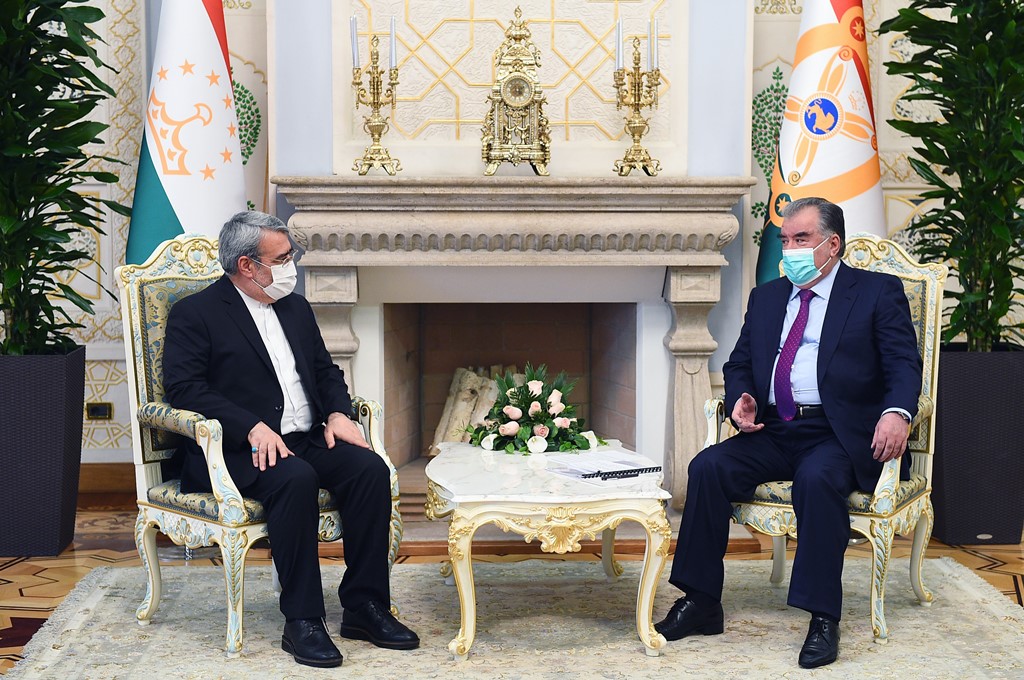
President Emomali Rahmon yesterday received Iranian Interior Minister Abdolreza Rahmani Fazli. The two sides discussed separate aspects of bilateral cooperation between Tajikistan and Iran, especially state and prospects of further expansion of bilateral cooperation between the two countries in the field of security, according to the Tajik president’s official website.    In this context, it was […]

President Emomali Rahmon yesterday received Iranian Interior Minister Abdolreza Rahmani Fazli.

The two sides discussed separate aspects of bilateral cooperation between Tajikistan and Iran, especially state and prospects of further expansion of bilateral cooperation between the two countries in the field of security, according to the Tajik president’s official website.   

In this context, it was stressed that so far, the two countries have signed more than 160 cooperation documents, including the memorandum on methods and frames of bilateral cooperation in the field of security. 

Tajik president, for his turn, reportedly emphasized the need for implementation of comprehensive documents signed between the two countries, the issue of which has paved suitable way for expansion of cooperation between executive bodies of the two countries.

Emomali Rahmon drew attention of the Iranian side to the significance of the active implementation of the provisions of this document, Tajik president’s official website said.  

Rahmon and Rahmani Fazli also discussed problems of global financial and economic crisis, which undoubtedly poses a serious threat to the current situation and the future of the region against the backcloth of the coronavirus pandemic.  

The sides reportedly also exchanged views on practical steps taken by the government of the two countries to combat the COVID-19 pandemic.  

Iranian Interior Minister Abdolreza Rahmani Fazli arrived in Dushanbe on Monday at the head of a high-ranking delegation.  According to Iran Press, Rahmani Fazli is accompanied by Mohammad Sadegh Motamedian, Governor of Khorasan Razavi, Babak Dinparast, Deputy Coordinator of Economic Affairs and Regional Development, and Rahim Saki, Director of the Information and International Affairs Center of the Ministry of Interior.

Iran was the first nation to establish an embassy in Dushanbe. It was also one of the first countries to extend diplomatic recognition of the newly independent Tajikistan in 1991.

Join us on social media!

Article translations:

Related Article

Оби зулол
Оби зулол
Tenisi

Most Read

Коммерсбонк Точикистон

Recent Articles

RZD announces the restoration of passenger services between Moscow and Dushanbe

Direct rail services between the capitals of Russia and Tajikistan were suspended in March 2020 due to the COVID-19 pandemic.

#AP30/Stories. “Selam! Heller nichek?” How Tatars live today in Sughd province

On the 30th anniversary of "Asia-Plus," we continue to publish reports that remain relevant even after years. This story was told in 2021, and since then, little has changed in the life of the Tatar community in Tajikistan.

15,000 cameras, drones, and robots: how technology monitors pilgrims in Mecca and Medina

During Hajj 2026, Mecca and Medina were under unprecedented digital control.

Another child in Dushanbe removed from family and sent to boarding school

The Ministry of Internal Affairs reports that the parents did not pay adequate attention to the child.

Emomali Rahmon instructs to address issues in seed production following criticism of the industry

Issues have been noted with certification, seed quality, and the material and technical base of the industry.

Water, climate, and a $130 billion deficit: seven key outcomes of the Water Conference in Dushanbe

At the forum, countries and international organizations discussed new mechanisms for cooperation, investments, and technologies that are essential for addressing the global water crisis.

Eskhata Bank introduces a new generation children’s wallet

"Eshkata Bank" has created a full-fledged digital platform that helps children aged 7 to 16 learn how to manage money.