
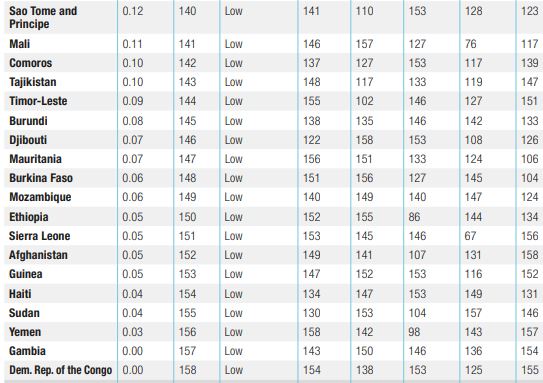
Tajikistan ranks 143rd among 158 nations in a “Readiness Index” developed by the Technology and Innovation Report 2021 released by the United Nations Conference on Trade and Development (UNCTAD) on February 25.
Tajikistan with 0.1 score is placed in the “Readiness Index” between the Comoros and East Timor.
The highest position among the countries of Central Asia is held by Kazakhstan, which ranks 62nd. Kyrgyzstan ranks 115th, while Uzbekistan and Turkmenistan are absent in the ranking.
Meanwhile, the report notes that recent developments in frontier technologies, including artificial intelligence, robotics and biotechnology, have shown tremendous potential for sustainable development. Yet, they also risk increasing inequalities by exacerbating and creating new digital divides between the technology haves and have-nots. The COVID-19 pandemic has further exposed this dichotomy. Technology has been a critical tool for addressing the spread of the disease, but not everyone has equal access to the benefits.
The report shows that frontier technologies already represent a US$350 billion market, which could grow to US$3.2 trillion by 2025. This offers great opportunities for those ready to catch this technological wave.
But many countries are unprepared to equitably use, adopt and adapt to the ongoing technological revolution, according to the report. This could have serious implications for achieving the Sustainable Development Goals.
The Technology and Innovation Report 2021 urges all developing nations to prepare for a period of deep and rapid technological change that will profoundly affect markets and societies. All countries will need to pursue science, technology and innovation policies appropriate to their development stage and economic, social and environmental conditions. This requires strengthening and aligning Science, Technology and
Innovation systems and industrial policies, building digital skills among students and the workforce, and closing digital divides. Governments should also enhance social protection and ease workforce transitions to deal with the potential negative consequences of frontier technologies on the job market. The report also calls for strengthened international cooperation to build innovation capacities in developing countries, facilitate technology transfer, increase women’s participation in digital sectors, conduct technological assessments and promote an inclusive debate on the impact of frontier technologies on sustainable development.