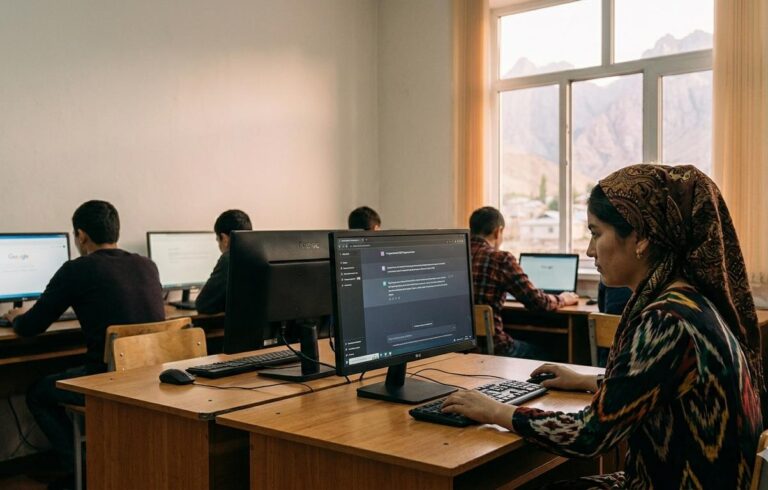
Bloggers in Tajikistan have until April 1 to show up at the tax service to register and pay taxes on any profits.
Radio Liberty notes that a tax-enforcement push looks like a "win" for Tajik authorities, who are always on the lookout for additional tax revenues while being equally wary of what's posted on the Internet in Tajikistan.
On the other hand, it reportedly looks like a losing proposition for many bloggers, some of whom complain that paying any taxes will spell the end of their days posting to globally relevant media like Facebook, Instagram, and YouTube.
Tax Committee official Shamsullo Kabirzoda told RFE/RL's Tajik Service, known locally as Radio Ozodi, that some popular local bloggers and others are posting videos to YouTube that carry advertising.
"They receive money by advertising products and products of large companies on their pages and channels, and therefore must pay taxes," Kabirzoda said.
Kabirzoda told Radio Ozodi there are currently 29 social networks or channels with audiences of between 3 million and 19 million subscribers.
Blogger Shoira Pulodova told Radio Ozodi, "We're a small country, and many people know each other. Often people will ask us bloggers, as friends, to advertise something for them. We don't get anything for these videoclips."
This remains the big question for many: If there are no profits, will they still be expected to pay something?
But most bloggers in Tajikistan have nowhere near that number of subscribers, and they say they're not seeing anything like huge revenues, according to RFE/RL’s Tajik Service.
In an article posted on CABAR.asia’s website on February 27, researcher Muslimbek Buriyev argued that Tajik authorities routinely "seek to introduce new taxes" to make up for budget shortfalls and cites PwC statistics that suggest Tajikistan now has among the highest taxes in the Central Asian region.
The decision to impose taxes on bloggers could simply be viewed as Tajik authorities leaving no stone unturned when looking for new sources of revenue.
But it also gives authorities more leverage over its citizens who are posting on social networks.
At least two criminal cases were filed against bloggers in 2019, one of whom was eventually fined.
Failure to pay taxes — in full or in part — has been used in the past as grounds to shut down many organizations, particularly independent groups and NGOs.
Decisions to shut down websites or exclude individuals from posting on social networks have more frequently been over content — often material that was critical of or embarrassing to the government or someone in the government.
But the new concern is that tax problems might be used by authorities to accomplish the same goal while providing them greater cover from decisions to cancel or ban such sites.