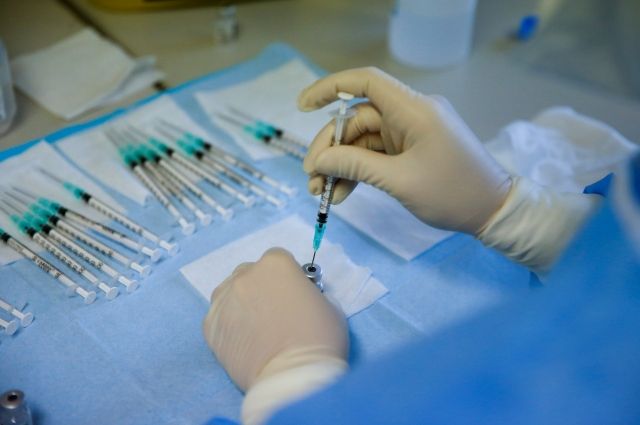
Tajikistan is making preparations for vaccination of the population against the novel coronavirus (COVID-19).
The Inter-Agency Standing Committee on COVID-19 Preparedness and Response (Standing Committee), chaired by the Prime Minister Qohir Rasoulzoda, has reportedly ordered the Ministry of Health and Social Protection of the Population (MoHSPP) to start preparations for vaccination of the population against COVID-19.
A MoHSPP, in particular, is ordered to draw up a list of vulnerable groups by age, according to the MoHSPP’s official
Besides, relevant agencies are ordered to solve a number of other issues on vaccination as soon as possible.
They, in particular, are ordered to develop the necessary regulatory document for vaccination and submit it for consideration to the government.
The Ministry of Foreign Affairs, the Ministry of Finance, the Ministry of Economic Development and Trade as well as the State Committee on Investment and State-owned Property Management (GosKomInvest) are ordered to take measures find additional funding sources to ensure a broad access of the population to the vaccine.
The MoHSPP must take necessary measures to ensure compliance with sanitary and anti-epidemic measures during vaccination.

Meanwhile, the first bulk of AstraZeneca vaccine, including 192 doses, was delivered in Tajikistan yesterday night. In all, 732,000 doses of AstraZeneca vaccine are expected to be delivered to Tajikistan in this month.
Navrouz Jaffarov, the head of MoHSPP Directorate for Sanitary and Epidemiological Security, Emergency and Urgent Medical Care told Asia-Plus on March 3 that Tajikistan has approved the use of AstraZeneca vaccine for people aged 60 and 74.
“20 percent of the population of Tajikistan are planned to be vaccinated with Astra-Zeneca. At first, the vulnerable groups of the population will be vaccinated: those who aged above 70, health workers, customs officers and border guards. Now a list of these persons is being compiled,” Jaffarov said.
At the second stage, people aged above 60 will be vaccinated, and after them, those aged above 50 will be vaccinated.
“The remaining 42.5 percent of the population will receive other vaccines that will be acquired by Tajikistan,” Tajik health official noted.
He further added that the World Bank would provide US$8 million to Tajikistan for purchase of covid vaccines.
Recall, starting from February 3, countries engaging in ground-breaking COVID-19 vaccine initiative (COVAX) may get acquainted with the interim distribution forecast, which was published by the World Health Organization (WHO) and its partners in accordance with the COVAX program.
In accordance with the COVAX program, the vaccine will be provided to 92 low and middle income countries and Tajikistan is expected to receive 732,000 doses of the AstraZeneca/Oxford jab.
According to the UN News Center, key workers and other vulnerable people in 145 countries should receive COVID-19 vaccines in the first half of this year.
Some 1.2 million doses of the Pfizer-BioNTech vaccine are to be delivered to 18 countries in the first quarter of the year, out of an agreed total of 40 million.
An additional 336 million doses of the AstraZeneca/Oxford jab are to be lined up for dispatch to nearly all countries that have signed up to the COVAX scheme, from Afghanistan to Zimbabwe – once it has been approved for use by the UN health agency. Low and middle income countries will pay approximately US$3.00 per dose.
The Oxford–AstraZeneca COVID-19 vaccine, codenamed AZD1222, is a COVID-19 vaccine developed by Oxford University and AstraZeneca given by intramuscular injection, using as a vector the modified chimpanzee adenovirus ChAdOx1. One dosing regimen showed 90% efficacy when a half-dose was followed by a full-dose after at least one month, based on mixed trials with no participants over 55 years old. Another dosing regimen showed 62% efficacy when given as two full doses separated by at least one month. On December 30, 2020, the vaccine was approved for use in the UK's vaccination program, and the first vaccination outside of a trial was administered on January 4, 2021.