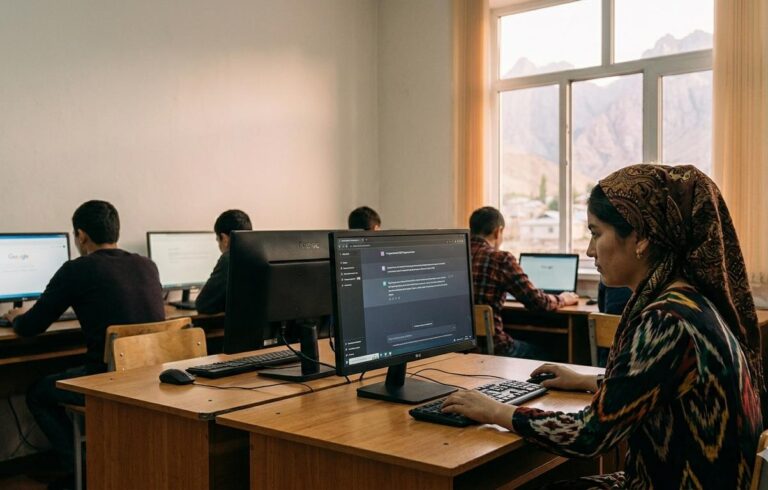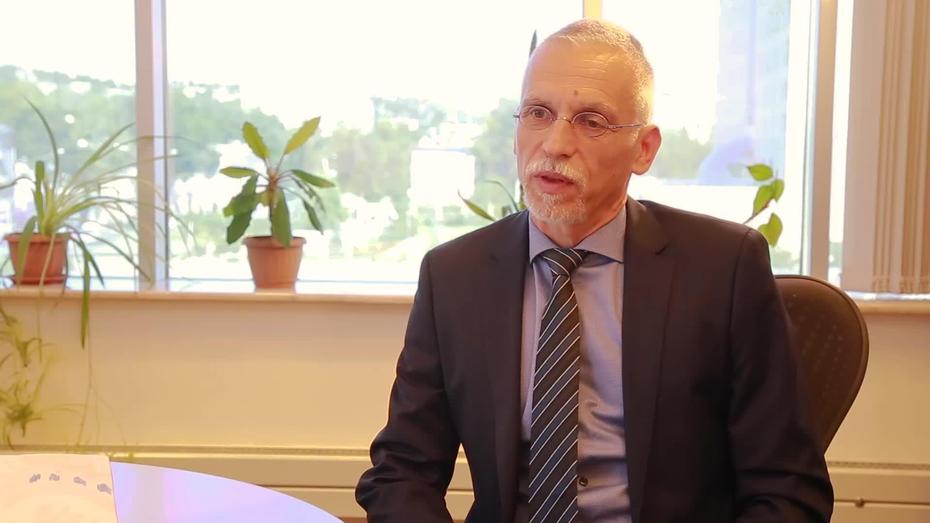
Mr. Jan-Peter Olters, World Bank Country Manager for Tajikistan, notes that Tajikistan today is suffering from limited access to, and high prices for, internet services, especially in rural areas, where more than 70 percent of the population lives. In 2019, far less than one in a hundred households had broadband internet access (primarily in urban areas), and only 35 percent had mobile internet access.
Similarly, only a handful of enterprises have broadband access and fewer than one percent offer digital services, according to him.
This limited use of the internet has reportedly hindered economic development, including the transformation of the country’s industrial sectors.
Mr. Jan-Peter Olters notes that the situation is aggravated by high prices for international connectivity, the high cost of public services, limited local connections, and weak content development.
According to him, Tajikistan has already seen the benefits of an advanced ICT industry. During 2000–15, it was one of the country’s fastest growing sectors, contributing to socio-economic development and, indirectly, to state budget revenues.
Through transparent licensing procedures and low licensing fees, Tajikistan reportedly translated effectively its economy’s relative weakness—low penetration rates—into an ability to attract reputable international operators.
“In early 2015, the telecom regulator reported ICT revenue growth rates of close to 15 percent,” said the World Bank country manager for Tajikistan. “Since then, however, gross revenues in the ICT sector have started to fall gradually, with the number of new subscribers having begun to decelerate.”
He further noted that the principal question is whether the changing regulatory environment and the lack of a level playing field in the market (given the dominance of the state-owned telecom company) have contributed to the worsening sector performance. Similarly, critical are the potential links between high tax margins and the ability to reinvest funds in 3G/4G infrastructure and general industry development.
“It is understood that, without the expansion of high-speed internet, digital transformation will not be possible in Tajikistan, and e-government services and mobile financial applications cannot be advanced. Without a focus on the required reforms, prices will remain among the highest in the world, even in face of limited access and low speeds,” Mr. Jan-Peter Olters said.
Recall, Speeds Global index in January ranked Tajikistan 129th among 140 nations in terms of mobile Internet speeds and 99th among 175 nations in terms of wired Internet speeds.
According to the statistical data from the Tajik communications service agency, there have been more than 3.3 million Internet users and more than 6 million mobile communications subscribers in Tajikistan as of January 1, 2021.