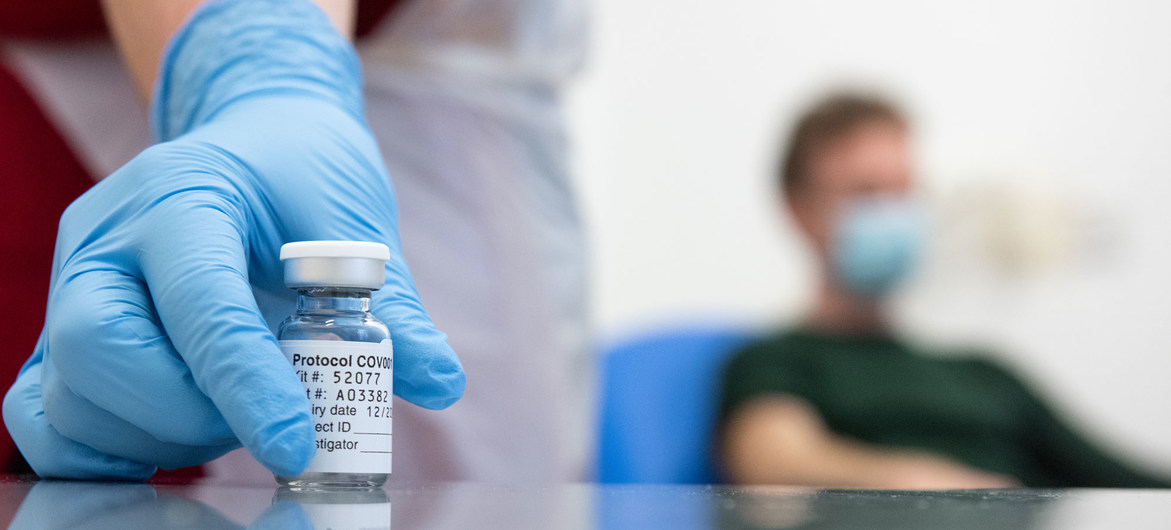
Speaking at the media briefing on March 15, the World health Organization (WHO) Director-General Tedros Adhanom Ghebreyesus, in particular, noted that since the last press conference on Friday (February 12), several more countries have suspended the use of AstraZeneca vaccines as a precautionary measure, after reports of blood clots in people who had received the vaccine from two batches produced in Europe.
According to him, this does not necessarily mean these events are linked to vaccination, but it is routine practice to investigate them, and it shows that the surveillance system works and that effective controls are in place.
“WHO’s Advisory Committee on Vaccine Safety has been reviewing the available data, is in close contact with the European Medicines Agency and will meet tomorrow,” said UN health agency head. “But the greatest threat that most countries face now is lack of access to vaccines.”
According to him, he receives calls from senior political leaders around the world, asking when their country will receive their vaccines through COVAX.
“Some of them are frustrated, and I understand why. They see some of the world’s richest countries buying enough vaccines to immunize their populations several times over, while their own countries have nothing,” Dr. Tedros Adhanom Ghebreyesus.
“No country can simply vaccinate its way out of this pandemic alone. We are all in this together,” UN health agency head added.
Recall, several countries, including Denmark, Iceland, Norway, France, Germany, Spain, Ireland, Thailand and some others have temporarily suspended their use of AstraZeneca’s coronavirus vaccine after reports that some people developed blood clots, although there is no proof that the shot was responsible. Denmark was the first country to halt its use of the AstraZeneca Covid-19 vaccine on March 11 after reports of blood clots in some people, including one person who developed multiple clots and died 10 days after receiving at least one dose. Norway, Iceland, Bulgaria, Thailand, and Congo soon followed suit.
Blood clots that form in the arms, legs or elsewhere can sometimes break free and travel to the heart, brain or lungs, causing strokes, heart attacks or a deadly blockage of blood flow.
The AstraZeneca vaccine has been approved for use in adults in more than 50 countries and has been proven to be safe and effective in research done in Britain, Brazil and South Africa. But there have been concerns raised about how the vaccine data have been released, and some European leaders have questioned the vaccine’s effectiveness.
Meanwhile, the first consignment of AstraZeneca vaccines manufactured in India, totaling 192,000 doses, was delivered to Tajikistan on March 8. Through COVAX, Tajikistan is expected to receive 624 000 doses by May 2021. The start date of vaccination in the country is not yet known.