



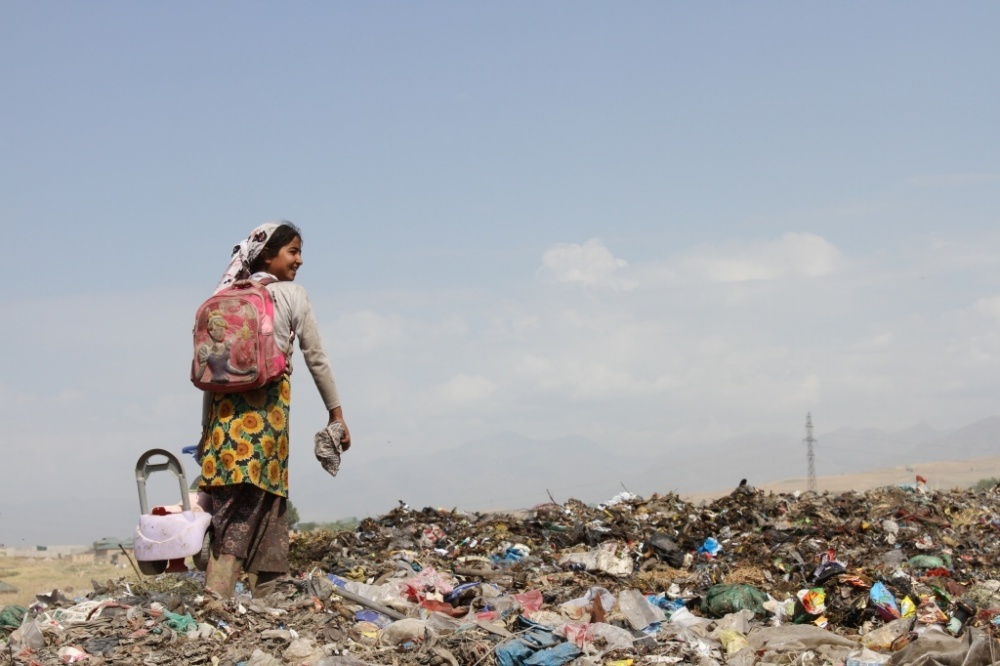
The participant of CABAR.asia School of Analytics Navrouz Karimov conducted a research on the issue of containment and recycling of waste in Tajikistan.
An article by him entitled Bury and Forget: How People “Struggle” with Growth of Landfills in Tajikistan notes that both the government and citizens are relentlessly ignoring the waste problem in Tajikistan. Meanwhile, landfills in Tajikistan are growing; household waste accumulates along highways and turns into open dumps. Recycling plants are not enough, some of them operate illegally.
According to the article, there are about 70 large landfills in Tajikistan. Due to the fact that the government does not have money for recycling, the garbage usually gets tramped and covered with sand, thus forming “layer-cake” of garbage and sand. For example, about 650-700 tons of litter are reportedly brought to the “Landfill of Municipal Solid Waste of Dushanbe” every day.
Buried waste becomes unusable. For years, it rots and secrete leachate – a poisonous liquid that gets into groundwater, and therefore into the drinkable water drainage system, according to the article. The Committee for Environmental Protection (CEP) in Dushanbe claims that the leachate at the Dushanbe landfill is pumped out and then settled in 2 pools before being dumped into the sewerage.
Meanwhile, the drainage systems in landfills in the regions do not work properly.
The article says landfills also generates landfill gas, which negatively affects people living nearby. Landfill gas contributes minimum 25 times more to global warming than CO2 emissions and is easily flammable, which is fires occurs so often on landfills.
The author notes that sanitary zones should be created around the landfills and the presence of people or animals should be prohibited in such zones.
Today, unauthorized landfills have become rather common in Tajikistan. Eco-activists are alarming about the extreme level of environmental pollution.
Only NGOs and eco-activists who promote the idea of reducing consumption and recycling of waste raise the issue of environmental pollution. New recycling plants will create new jobs, and garbage can be used as secondary raw materials for sustainable production. Reuse of waste will reduce the size of landfills and curb the harm they cause to the environment and people living in their vicinity.







