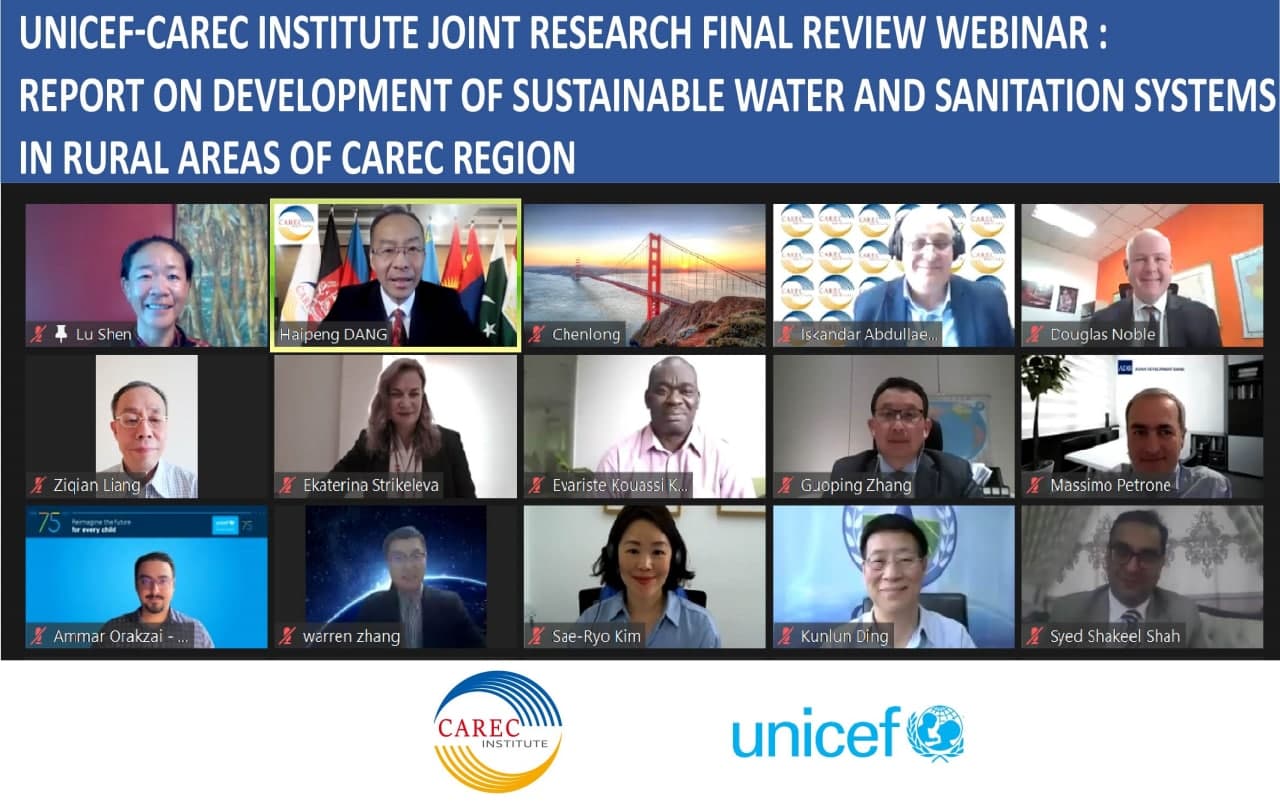
The CAREC Institute and UNICEF held a webinar on March 31, 2021 to share key takeaways from the research on development of sustainable water and sanitation systems in rural areas of China, Mongolia, Tajikistan, and Uzbekistan.
According to the CAREC Institute, the research team, representatives of multilateral development organizations, and government representatives deliberated on WASH (acronym that stands for “water, sanitation and hygiene”) policies, institutions and practices, financing and economic aspects, community-based water schemes, and recommendations for legal and institutional development of the WASH sector, capacity building needs, knowledge sharing, and innovative approaches to WASH management in the CAREC region.
The participants reportedly discussed how to ensure safe water and sanitation for vulnerable CAREC populations in the post-pandemic period. The COVID-19 pandemic brought the social infrastructure to the forefront and opened an opportunity for investment in CAREC region. The speakers elaborated on future cooperation needs, challenges, and priorities to support member countries in post-pandemic recovery.
Universal, affordable and sustainable access to WASH is a key public health issue within international development and is the focus of the first two targets of Sustainable Development Goal 6 (SDG 6). Targets 6.1 and 6.2 aim at equitable and accessible water and sanitation for all. "Access to WASH" includes safe water, adequate sanitation and hygiene education. Improving access to WASH services can improve health, life expectancy, student learning, gender equality, and other important issues of international development. This can reduce illness and death, and also affect poverty reduction and socio-economic development.