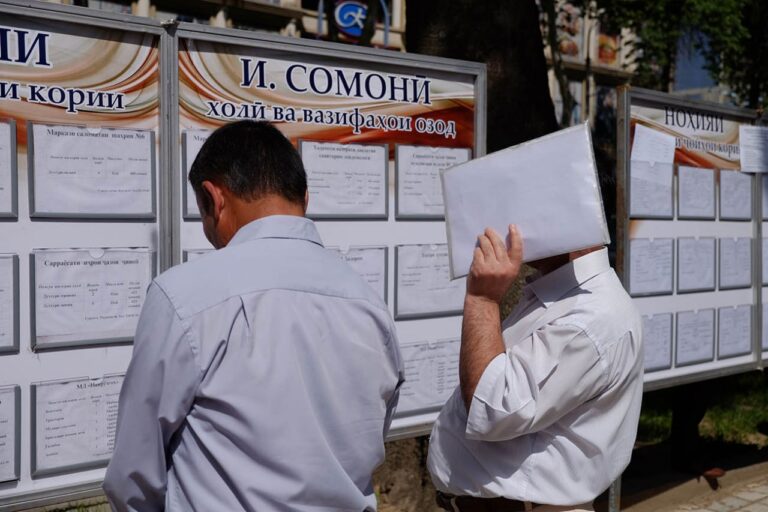
An article by Turar Bekbolotov entitled Round-the-clock Water Supply Changes Lives in Tursunzoda notes that access to clean water has long been a major challenge for most residents of Tajikistan. Tursunzoda, a city 60 kilometers west of the capital Dushanbe, has long been one of those population centers struggling to serve its residents with clean water.
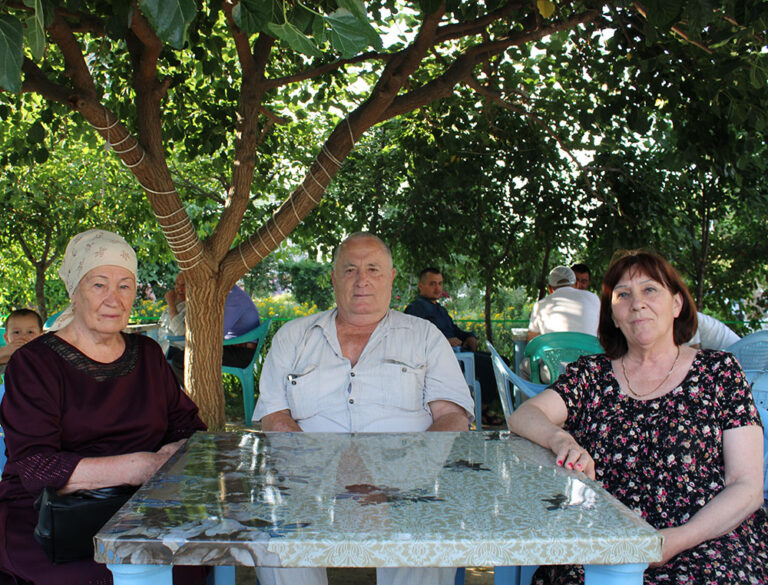
For the local population this meant challenging living conditions. One resident of Tursunzoda, 65-year-old Nurikhon Mirakhodjaeva, lives on the top floor of a four-story apartment building dating back to Soviet times. Since receiving her apartment in 1993, the poor water supply had affected her and her neighbors’ quality of life.
“We had water only for three to four hours in the evening or late at night,” recalls Nurikhon.
Later on, water supply was extended to five to eight hours a day, but it was still a daily chore to fill the family bathtub, all available buckets and plastic bottles with water. Every now and then, due to weak pressure, water did not reach anyone above the first floor in Nurikhon’s building.
There were times when she felt frustrated and wanted to move to a single-family house in a neighborhood where water was more readily available, although still intermittently.
“Some days my son and I carried the water we needed in bottles and buckets from the first floor neighbors’ apartment,” remembers Nurikhon.
She had to save water and use it only for cooking and basic hygiene. Washing clothes meant stocking up or carrying more water in containers the day before. On weekends, together with her son’s family, she had to go to her parents’ house to take a shower, do laundry and bath her grandchildren.
But since 2018 life has changed significantly for Nurikhon and the entire city when the Central Tajikistan Water Rehabilitation Project – supported by the EBRD, the European Union (EU) and the government – improved the city’s water infrastructure.
Under this project, the EBRD and EU provided funds to upgrade the water supply systems of four cities: Tursunzoda, Gissar, Shakhrinav and Somonyion. The total financing of US $18 million comprised an US$ 8.4 million grant from the EU, and a US$ 7 million loan and US$ 2.6 million grant from the EBRD.
In all four cities these funds were used to construct new water reservoirs and water intake facilities, renovate water networks, install water meters, and procure special equipment and vehicles for infrastructure maintenance.
In Tursunzoda, a new water intake facility was built. This involved clearing wells, constructing a water chlorination building and pumping station, replacing all pipes, old pumps and valves, as well as installing a substation with transformers for power supply and fencing the facility.
In addition, the project replaced 28.2 km of pipelines and installed over 13,600 water meters in households and commercial properties. It also helped install 218 manholes with control valves, and purchase special equipment and vehicles for regular maintenance of the water supply system and urgent repairs of pipe leakages.
The critically needed funding drastically improved the water supply and pressure, ensuring a reliable service for all customers, including those who live in multistorey apartments like Nurikhon.
“Now we have water 24 hours a day. We have installed a boiler and can have a bath every day. And we’ve finally been able to buy a washing machine,” shares Nurikhon happily.
Since 2004 the EBRD and donors, including the EU, Switzerland and the GEF, have invested in 11 water and wastewater improvement projects in Tajikistan covering 22 cities across the country, and worth over US$ 118 million, including US$ 50 million in loans and US $68 million in grants.
All these projects contributed to tackling the negative impact of the coronavirus pandemic in Tajikistan, as they helped to address public health issues at a time when water is most needed for sanitation and hygiene.
“In recent months I’ve felt safe and happy that I have an uninterrupted water supply at home, which means we can wash our hands frequently as instructed by public health officials,” said Nurikhon.