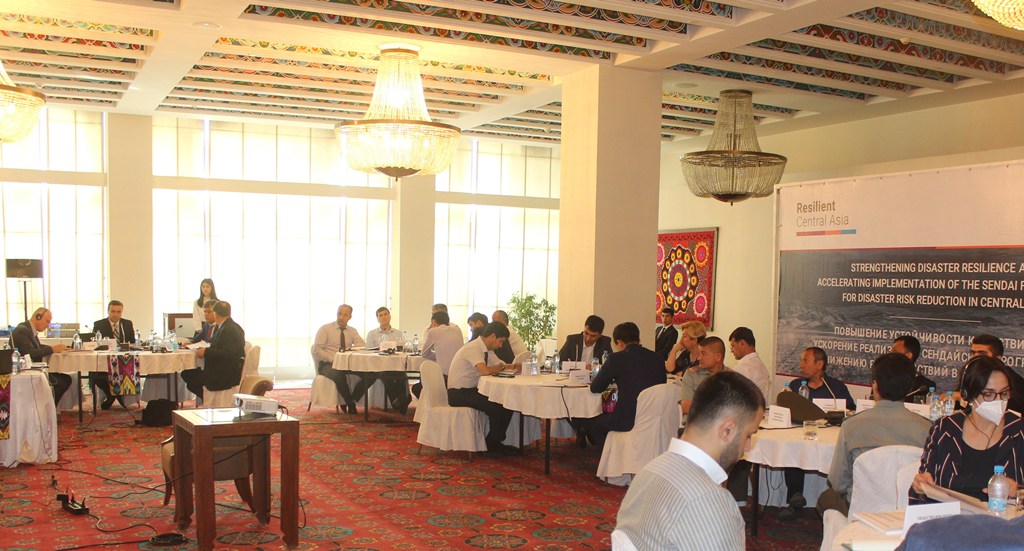
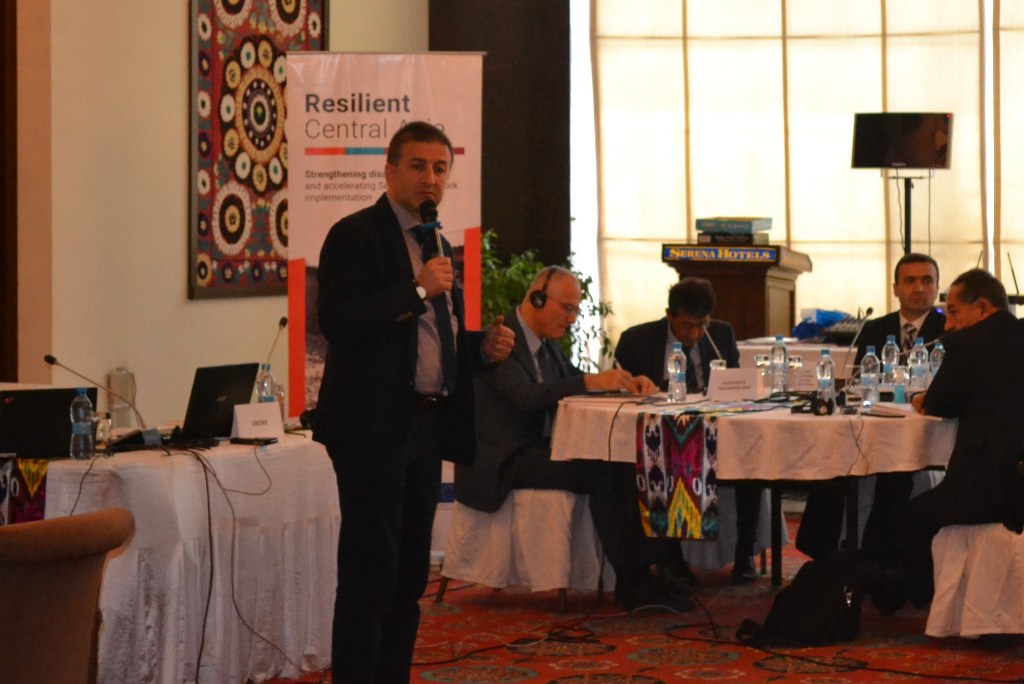
On Tuesday May 18, the Government of Tajikistan and the United Nations Office for Disaster Risk Reduction (UNDRR) organized a workshop with the stakeholders in reduction of risk of disasters.
According to press release issued by UNDRR, the objective of the meeting was in introducing the systemic approach in disaster risk reduction, approaches and methods for national capacity building as well as identifying the focus areas for strengthening governance in DRR.
The workshop reportedly brought together members of the Tajikistan National Platform for DRR, United Nations agencies, and other local and international stakeholders to discuss the application of a systematic approach to disaster risk reduction (DRR) in Tajikistan.
The event was conducted as part of the UNDRR Initiative, Strengthening Resilience to Disasters and Accelerating Implementation of Sendai Framework for Disaster Risk Reduction in Central Asia, funded by European Union.
The workshop comes at an important moment when the COVID-19 pandemic and increasing climate change impact have elevated the importance of the systemic approach to strengthening the resilience of the region and countries with regard to multi-dimensional risks. In addition, these developments have further underlined the importance of investment in disaster prevention.
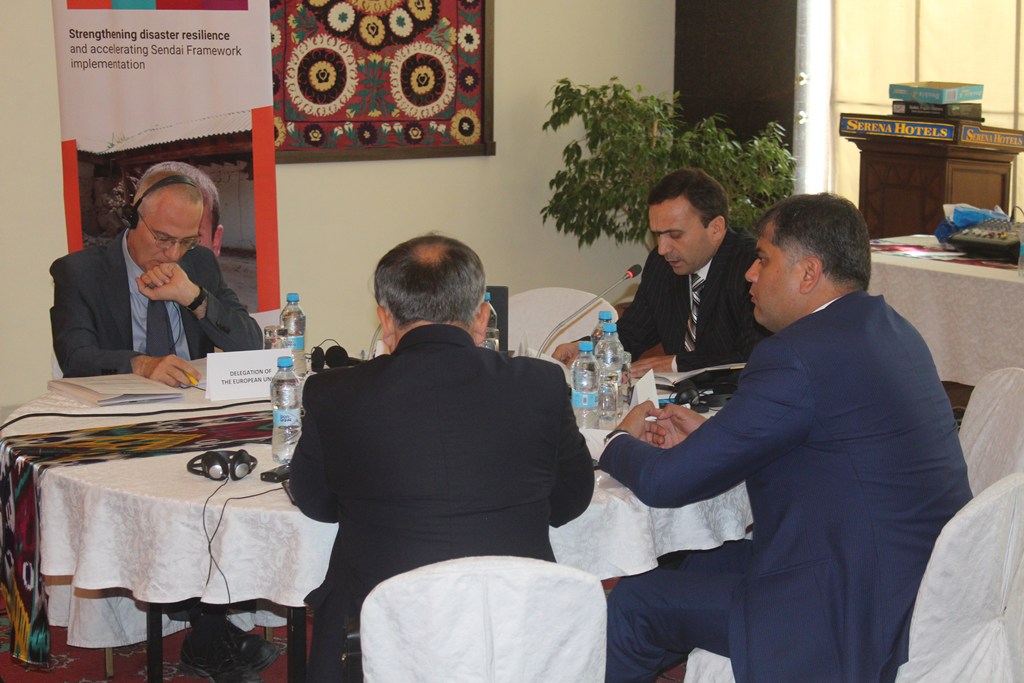
Mr. Tojiddin Mahmadov, the Head of the Radiation, Chemical and Biological Protection Department of the General Directorate for Protection of Population and Territories of the Emergencies Committee under the Government of Tajikistan said: “Taking advantage of the systemic approach to disaster risk reduction and the effective involvement of all stakeholders in risk management is designed to improve government coordination mechanisms as well as to strengthen regional cooperation in disaster risk reduction.”
Mr. Giuseppe Aristei, Program Manager of the EU Delegation to Tajikistan stressed: “The EU is committed to continue to support and to improve preparedness and planning, employing evidence-driven decision-making and innovative technologies, such as remote sensing in the context of disaster risk reduction. We encourage pursuing the effective implementation of the national strategy and the development of relevant tools such as the national disaster loss databases across the region.”
“The workshop today has once again shown the strong commitment of the Government of Tajikistan and the stakeholders to the inclusive, all-of-society approach in the implementation of the Sendai Framework and reducing disaster risks,” said Abdurahim Muhidov, the representative of UNDRR.
Over the past years, Tajikistan has significantly increased its capacity in disaster risk reduction to accelerate the accomplishment of the targets identified in the Sendai Framework. As part of these efforts Tajikistan adopted the National Strategy for Disaster Risk Management in 2010, established the National DRR Platform in 2012, and adopted the revised National Strategy for DRR in 2019 – a new document outlining the vision and commitments for DRR for the period until 2030. These major steps and the commitment of the Government of Tajikistan ensure that local resources and international partnerships are mobilized to pursue risk-informed sustainable development. As next steps Tajikistan plans to continue the work together with international partners in strengthening the national coordination and building capacity in information management.
The EU-funded project, Strengthening Disaster Resilience and Accelerating Implementation of Sendai Framework for Disaster Risk Reduction in Central Asia, implemented by the United Nations Office for Disaster Risk Reduction (UNDRR), aims to support countries of the region in implementing the Sendai Framework priorities. The project supports strengthening regional coordination, development of regional DRR strategy, national disaster loss accounting systems, and community level disaster risk reduction. On the local level, the project supports development of disaster resilience strategies of capital cities. For this project, the EU committed EUR 3,750,000 for the three-year implementation.