As 55% of the world’s population lives in urban areas, more than half of whom live in rapidly growing secondary cities and towns, managing urban growth in a way that improves quality of life for all residents is critical to sustainable development. It is also necessary to tackle inequality and address the lack of resources and critical infrastructure. Part of the solution lies in better planning villages and cities.
According to the Aga Khan Development Network (AKDN), the Aga Khan Agency for Habitat (AKAH) has developed a holistic approach to Habitat Planning combining urban and rural participatory planning techniques with international best practice and local expertise to help communities to design a better future. AKAH’s approach reportedly unites data-driven decision-making with the vision and voice of the community. AKAH works with communities to plan how to make their neighborhoods, villages and towns safer and resilient and create opportunity for future generations.
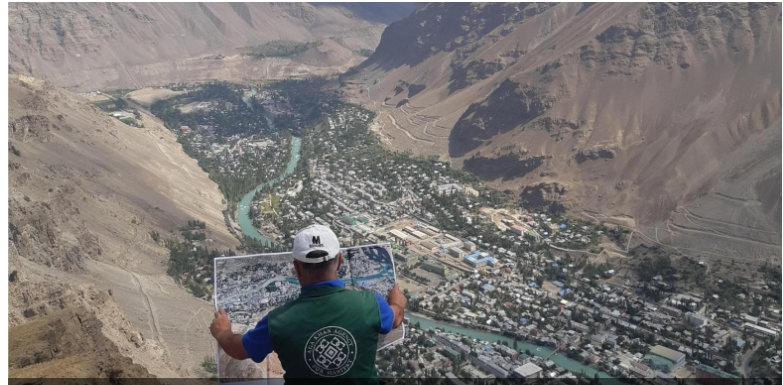
As one of the highest altitude urban settlements in Central Asia, Khorog, which is the administrative center of Tajikistan’s Gorno-Badakhshan Autonomous Oblast (GBAO), faces the challenges of multiple natural and environmental hazards compounded by rapid urbanization. AKDN notes that for a town built for 15,000 people with a current population of 40,000 projected to double by 2040, resilient urban planning is critical to securing its future.
The Khorog Urban Resilience Program is a five-year initiative designed to set up the structures, systems and capacity to transform Khorog into a model resilient city, promoting sustainable economic growth and investment. The program links the plans, structures and investments of the Government of Tajikistan to resilience building and planning initiatives of the community and national and international partners in Khorog.
With funding from the Swiss State Secretariat for Economic Affairs, the European Union and the Embassy of Japan, AKAH is working with the GBAO authorities to plan and mobilize resources for a 15-year program of work to upgrade aging economic, social and health infrastructure. This includes collaboration with Tajikistan’s Committee of Architecture and Construction and UN-HABITAT to upgrade the existing Government approved town plan. AKAH has also completed several key infrastructure projects including extending water supply to underserved areas; reinforcing flood-prone portions of Khorog’s riverbank; and constructing or upgrading schools, playgrounds and a youth center
AKAH is working in over 100 settlements across its five countries of operation to develop habitat plans ranging from urban hubs to regional or provincial capitals to remote villages.