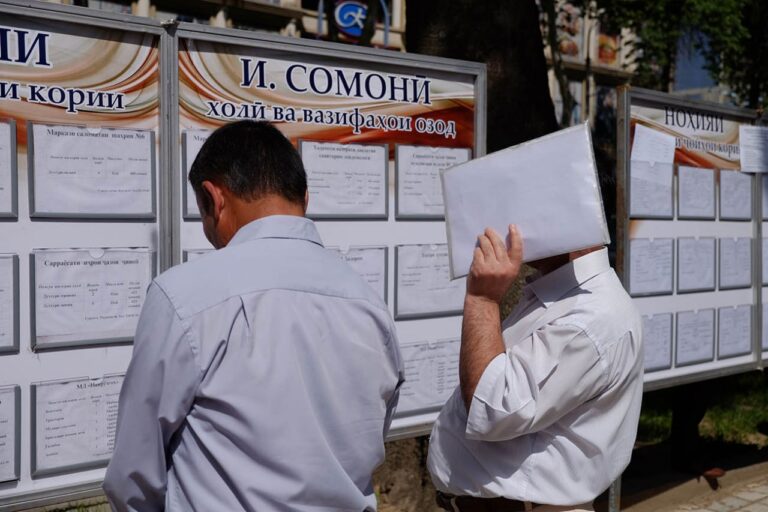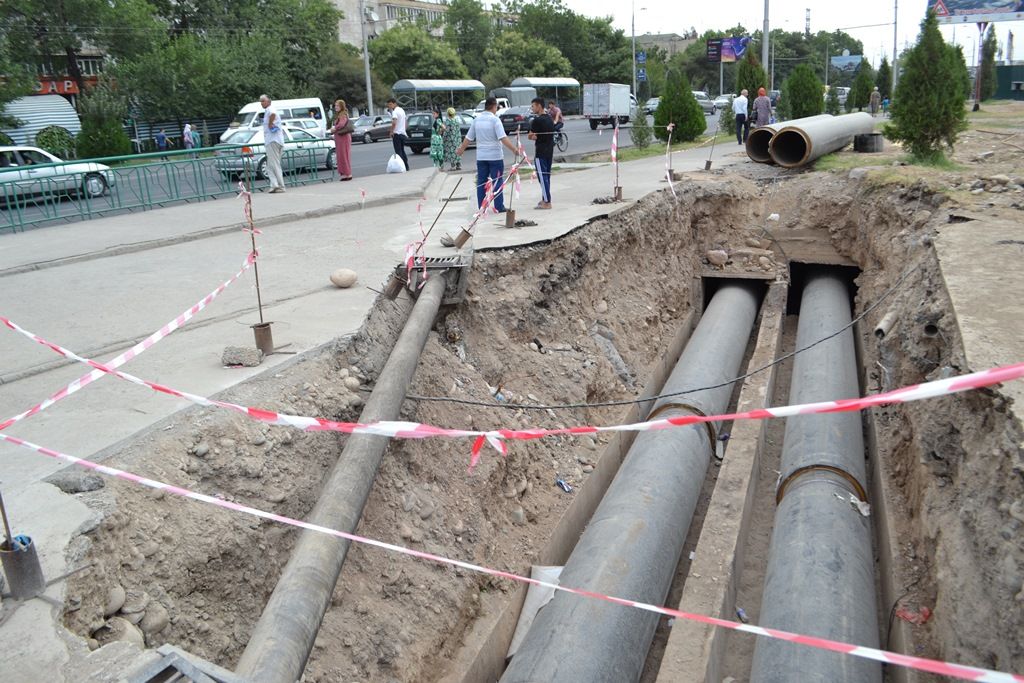
Sadoi Mardum newspaper, a mouthpiece of Tajik parliament, says that according to the preliminary data, more than 500,000 residents of the Tajik capital will be provided with heat supply in winter due to upgrading the city’s heating network
The member of Tajikistan’s lower chamber (Majlisi Namoyandagon) of parliament, Abduhalim Ghafforov, says a grant agreement on upgrading Dushanbe’s heating network was signed between Tajikistan and the European Bank for Reconstruction and Development (EBRD) on April 14, 2021.
The parliamentarian noted that implementation of the project will allow reducing heat losses, increasing the quantity and quality of supplied thermal energy, reducing the number of inspectors, and reducing the cost of current and major repairs of heating networks in Dushanbe.
According to Ghafforov, 93 percent of the project funds will be used for development of the infrastructure and the remaining 7.0 percent will be used to cover unforeseen and other expenses.
The EBRD Dushanbe Resident Office says the project has a significant climate impact through CO2 reductions and water savings. The Bank is committing funds to overhaul the district heating system in Dushanbe, the capital of Tajikistan. The country’s first project under the EBRD Green Cities program will reduce the environmental impact of the municipal utility.
A financing package of up to US$10 million, consisting of a US$ 5 million sovereign loan and a US$ 5 million grant, will be provided to the District Heating Company of Dushanbe. The package will be used to restore, upgrade and extend the existing district heating network and to overhaul pumping stations.
As part of the project, and for the first time in Tajikistan, Dushanbe will introduce apartment-level metering on a pilot basis and procure operational and maintenance machinery and other specialized equipment.
EBRD Green Cities is providing Dushanbe with support to develop a Green City Action Plan (GCAP), a crucial tool in helping cities to set out their sustainable development visions and strategic objectives, in addition to actions and investments to address priority environmental issues. With a population of more than 800,000, Dushanbe is the largest municipality in Tajikistan. The EBRD’s Shareholder Special Fund finances the development of the Dushanbe GCAP.
Once implemented, the project will have a significant climate impact by reducing annual greenhouse gas emissions by around 39,000 tons of CO2 equivalent. It should also achieve annual water savings of around 100,000 cubic meters.
The project is part of the EBRD’s recently announced plan to scale up its climate and environmental finance and to make more than 50 percent of its annual investment green by 2025.
The EBRD Green Cities program, set up in 2016, now supports 45 cities in the economies where the Bank invests and aims to increase that number to 100 by 2024. It has so far secured more than €2.5 billion in funding from the Bank’s own resources, as well as concessional and technical cooperation funding from donors.