



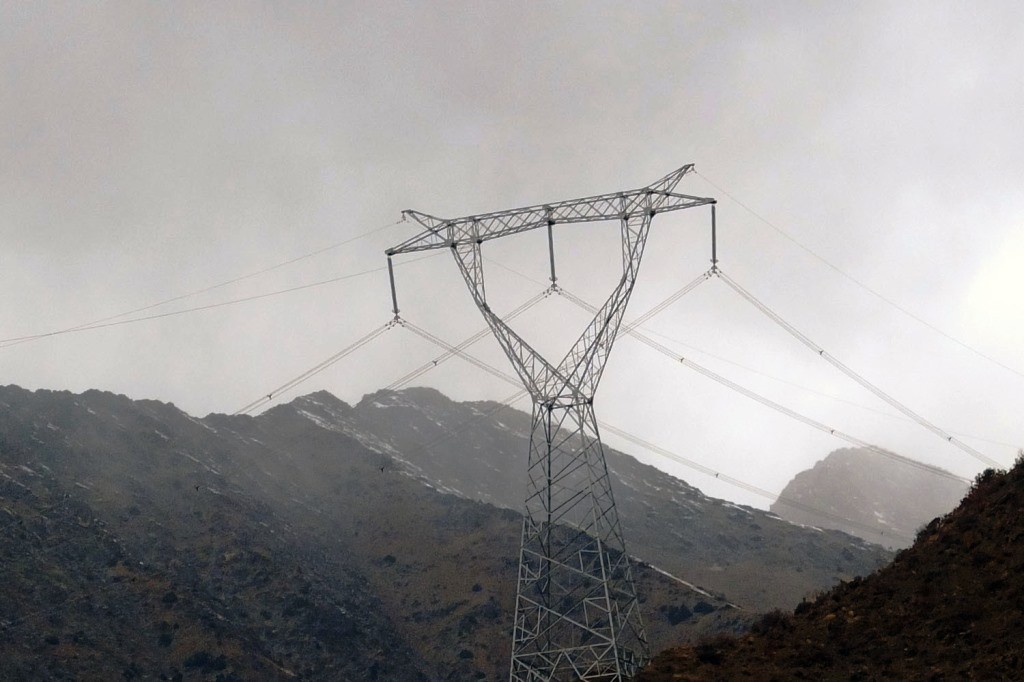
Despite the difficult political situation in Afghanistan, Tajikistan is continuing to supply electricity to this country, the Minister of Energy and Water Resources Daler Juma told reporters in Dushanbe on July 12.
According to him, the power companies of the two countries have signed an agreement on the supply of about 1.5 billion kWh of electricity from Tajikistan to Afghanistan in 2021.
“There has been no lag behind the electricity supply schedule so far; the export of electricity is carried out within the framework of the plan,” the minister said.
He further added that Tajikistan supplies surplus electricity to neighboring countries during a spring-summer period (from May through September).
According to data from the Ministry of Energy and Water Resources (MoEWT), Tajikistan has supplied more than 917 million kWh of electricity to the neighboring countries over the first six months of this, which was 5.0 percent more compared to the same period last year.
Over the first six months of this year, Tajikistan’s power plants have reportedly generated more than 10 billion kWh of electricity, which is 170 million kWh more than in the same period last year.
Electricity reportedly accounts for 65 percent of Tajikistan's export to Afghanistan. Last year, Tajikistan supplied about US$45 million worth of electricity to Afghanistan.
Tajikistan supplies electricity to Afghanistan at the rate of 3.0 cents per 1 kWh through the 110 kV power transmission line and at the rate of 4.5 cents per 1 kWh through the 220 kV power transmission line.
In accordance with the reached agreements, Tajikistan reportedly supplies electricity to neighboring countries (Afghanistan and Uzbekistan) only during the April-October period.
Tajikistan has sufficient summer-time (defined as May 1 to September 30) hydropower surpluses to export to the neighboring countries.
It is to be noted that although Afghanistan’s border with Tajikistan is practically now in Taliban hands and the border is officially shut, the Taliban are reportedly facilitating trade through the Sher Khan Bandar crossing with the tacit understanding of Tajik border guards. Customs revenues are now accruing to the Taliban. Truckers are still crossing the border through the Sher Khan Bandar crossing. One long-distance trucker, Farrukh, told Eurasianet that he had personally returned from Sher Khan Bandar on July 8. “On the whole, it is like it was before. Just some of the border and customs staff have changed. And that’s it,” he said.
Tajik truckers are mostly only going as far as Sher Khan Bandar, to drop off or pick up goods, although nobody is explicitly forbidding them from going further, according to Eurasianet.






