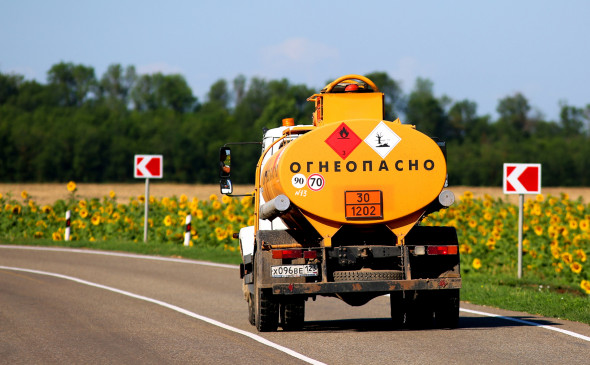
Russian media reports say Russia is ready to introduce a ban on gasoline exports as soon as next week amid record-high wholesale prices on the exchange.
On Thursday the price for a ton of 95-octane gasoline exceeded 60,000 rubles for the first time in the history of the St. Petersburg International Mercantile Exchange, according to RBC. If this persists, Russia “will start the process of banning gasoline exports” next week, Energy Minister Nikolay Shulginov said in a statement.
Interfax notes that it’s not the first time this year a ban has been discussed. In mid-April the government discussed the such action to rein in growth in retail gasoline prices, yet a couple of weeks later Deputy Prime Minister Alexander Novak said there was no need, and such a measure is only an extreme option. Exchange prices for the fuel have risen about 30% this year.
For now, the Ministry of Energy doesn’t expect the current rise in wholesale exchange-traded gasoline prices to have “a significant impact” on retail prices at fuel stations, Shulginov said. An increase in gasoline supplies, once planned maintenance of refineries are completed by the end of this month, will help stabilize prices on the exchange, according to the minister.
Russia may also consider signing agreements with oil companies on regulating volumes and wholesale price levels, as well as raising the minimum quantity of gasoline sold by oil companies on the exchange to 15% of produced fuel, Shulginov said. In June Novak said that level will expand by an additional 1% from current 11%, Interfax reported.
According to LUKOIL Vice-President Leonid Fedun, gasoline prices in Russia depend on the exchange rate of the Russian ruble against foreign currency, therefore, price reduction is possible in case of strengthening of the Russian currency, RBC says.
It is to be noted that Russia provides the bulk of Tajikistan’s fuel imports.
Since 2013, more than 90 percent of all petroleum products have been imported into Tajikistan from Russia on concessional terms.
In accordance with amendments made to the government-to-government agreement between Tajikistan and Russia on petroleum product deliveries to Tajikistan, Tajikistan should provide its proposals on formation of the indicative fuel balances to Russia every year until September 5
Relevant bodies of the two countries should coordinate Tajikistan's internal fuel consumption volumes for the next year and sign indicative balances until October 1.
Besides, Tajikistan should provide information on implementation of indicative balances for nine months and the expected implementation of them during the current calendar year to Russia every year until November 15.
The sides can change the volumes of provided duty-free petroleum products for the current year until August 20 taking into account the reasonable change of internal consumption in Tajikistan.
Recall, Tajikistan was exempted from paying Russian tariffs on oil and gas exports from 1995-2010 and Russia cancelled Tajikistan’s tax exemption on May 1, 2010 that resulted in gasoline prices rising in the country.
The agreement on duty-free Russian oil product deliveries to Tajikistan was signed between the governments of Russia and Tajikistan in Moscow on February 6, 2013
Under this agreement, the sides consider and endorse the indicative fuel balance for the next calendar before October 1 of each year. Fuels delivered in addition to the indicative fuel balance will be liable to export duty.
Russian petroleum products delivered to Tajikistan in the volumes not exceeding those agreed on indicative balance are not subject to re-export to the third countries.
In particular, Tajikistan can receive 260,000 tons of gasoline, 310,000 tons of diesel fuel, 40,000 tons of jet fuel, 30,000 tons of fuel oil, 40,000 tons of bitumen, 100,000 tons of petroleum coke and 50,000 tons of liquefied natural gas (LNG) duty-free.
Tajikistan annually requests 830,000 tons of petroleum products, but actual fuel imports, according to the official statistics, do not reach even 600,000 tons.