AKDN supports development of sustainable architecture in Asia and Africa

Sustainable architecture" is now well known, especially as a reaction to the risks inherent in climate change, but the Aga Khan Award for Architecture has been giving out its prize to projects that are good for people and the planet for at least 40 years. The Aga Khan Development Network (AKDN) notes that although selection […]

Asia-Plus

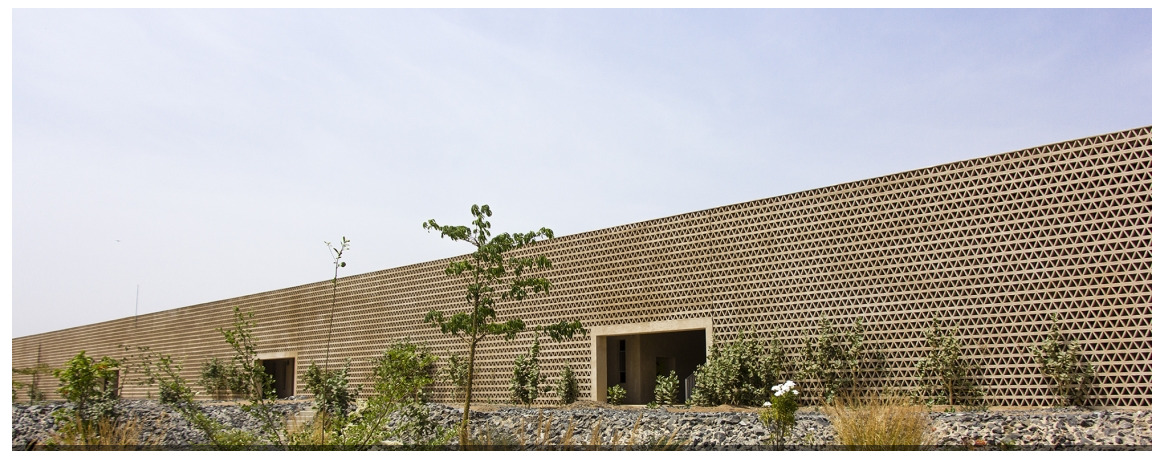
Sustainable architecture" is now well known, especially as a reaction to the risks inherent in climate change, but the Aga Khan Award for Architecture has been giving out its prize to projects that are good for people and the planet for at least 40 years.

The Aga Khan Development Network (AKDN) notes that although selection is always based on the principle of excellence, the independent Master Jury has nonetheless chosen many projects that are eco-friendly.

Sustainable architecture that has received the Award ranges from Ken Yeang's ground-breaking bioclimatic office building in Malaysia (1995) – a "high-rise in the tropics – with a difference" – to a primary school in Burkina Faso whose "clay walls are topped with a double roof structure of adobe and tin that blocks the heat of the sun" designed by architect Diébédo Francis Kéré (2004).  It includes the Wadi Hanifa Wetlands project in Saudi Arabia (2010), which incorporates an "environmentally sensitive wastewater treatment facility that provides additional water resources", and an amphibious school in Bangladesh designed by Saif Ul Haque (2019) "that does not disrupt the river environment, but adapts in response to flooding in the monsoon season with the innovative use of traditional local building methods and materials".

Sustainable architecture is architecture that seeks to minimize the negative environmental impact of buildings by efficiency and moderation in the use of materials, energy, development space and the ecosystem at large.  Sustainable architecture uses a conscious approach to energy and ecological conservation in the design of the built environment.


Article translations:

Related Articles

Оби зулол

Most Read

Join us on social media!

Recent Articles

Nexign and TelecomDaily: the telecommunications market in Tajikistan grew by 13.7% in 2025

A study showed that the country's communications market has grown to 4.9 billion somoni, and the dynamics are influenced by an increase in the subscriber base, growth in internet traffic, and expansion of mobile and fixed network coverage.

Tajikistan’s Parliament approves organized recruitment of migrants to Russia

The paperwork will be transferred to the home country, and employers will select employees in advance.

Creativity as an asset: why marketing in Central Asia is reaching a new level

Business expert in international projects for the support and development of media companies, Svetlana Lebedeva, on marketing and the media market.

European Immunization Week starts in Tajikistan

Information and awareness-raising activities are being conducted across the country to increase trust in vaccination and combat misinformation.

The plan to launch the CASA-1000 project in 2027 discussed in Dushanbe

The Ministry of Energy of Tajikistan, Afghan DABS, and other project participants held a series of meetings.

Axios: Iran agrees to continue talks with the US, but the date remains uncertain

At the same time, the truce between the countries is set to expire within the next 24 hours.