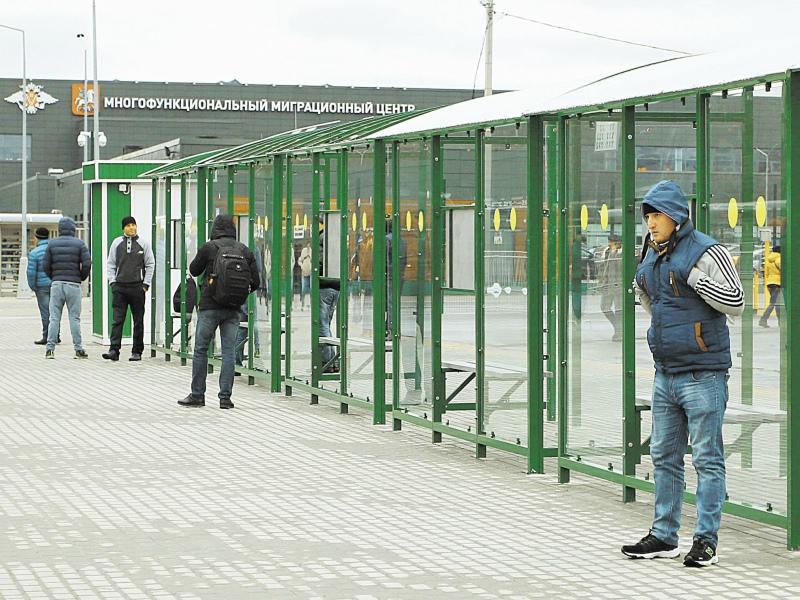
Migrants make enormous development contribution to their host and origin countries. The number of those seeking better employment opportunities in the Russian Federation remains high in Tajikistan.
Meanwhile, many migrant workers, especially those working in low-skilled sectors are subject to labor exploitation and abuse. One way to protect migrant workers’ rights is to provide access to information on living and working abroad and organize pre-departure training for them.
As far as Tajik labor migrants are concerned, they are seeking better employment opportunities primarily in the Russian Federation.
Russia plans to launch three pre-departure training centers for labor migrants in three main labor resource donor countries, namely Kyrgyzstan, Uzbekistan and Tajikistan, from 2022 to 2025.
Citing Russia’s Deputy Minister for Economic Development, Dmitry Volvach, Fergana news agency says citizens of these countries will be able to receive a full complex of migration services and “enter Russia with a full package of documents for living and working in the territory of the country.”
According to him, within the framework of Russian government’s strategic initiative “Russia is Attractive Country for Study and Work”, the Russian authorities will take measures to simplify entry into the Russian labor market that will allow increasing the number of legally working foreign nationals to 3.5 million by 2030.
One of the measures provides for the formation of a digital space for employment of foreign nationals in Russia and other member nations of the Eurasian Economic Union (EAEU).
Some sources say that between January and September 2021, Russia’s Interior Ministry reportedly registered 2,025,712 Tajik citizens entering the country – 1.6 million of them, or about one-quarter of Tajikistan’s working-age population, with work as their official purpose.
Meanwhile, Uzbek media reports say Uzbekistan and Russia signed an agreement on the creation of a mechanism for pre-departure training of migrants with the participation of Russian employers on October 26.
According to UzDaily.com, the proposed mechanism may include support and control of professional training and certification, teaching the Russian language and the basics of legislation, as well as confirmation of the willingness of candidates to work on the conditions specified by the employer.
In addition, the parties reportedly agreed to develop a mechanism for conducting video interviews with the provision of an opportunity for employees to briefly demonstrate their work skills, as well as accompany employers and workers in the process of organized recruitment.