Over the first nine months of this year, Tajikistan has produced gold 8.2 percent more compared to the same period last year, according to the Ministry of Industry and New Technologies (MoINT).
The ministry, however, did not disclose the amount of gold produced in the country over the reporting period because this information reportedly refers to state secrets.
A source close to a MoINT had earlier noted that gold production in Tajikistan increased more than four times in five years — from 2 tons in 2014 to almost 8.1 tons in 2019.
There is no information about gold production in the country last year. According to some sources, gold production slowed down last year due to the coronavirus (COVID-19) pandemic.
The Main Geology Directorate under the Government of Tajikistan is continuing to search for new gold deposits.
Last year, Tajik geologists reportedly implemented a number of projects sponsored by the government.
They, in particular, carried out works on geochemical prospecting for gold in the Qaratogh-Luchob watershed, exploring gold deposits at the Shing-Magian fields (Panjakent in Sughd province), prospecting for gold at the Oshoba field (Asht district in Sughd province), and prospecting for alluvial gold in the Chashmai Latif – Shohkamon watershed.
The Main Geology Directorate had earlier noted that a total volume of Tajikistan’s gold reserves is about 500 tons.
Meanwhile, according to data from the MoINT, Tajikistan has 137 deposits with estimated reserves of industrial gold and 127 deposits of non-industrial gold. Tajikistan plans to increase annual production of gold to 17 tons beginning on 2022.
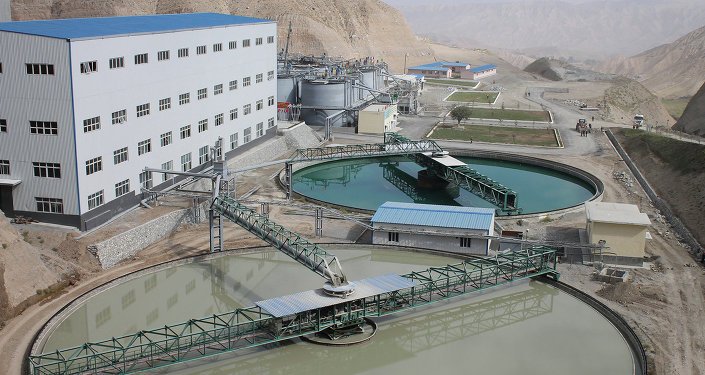
Four large gold mining companies now operate in Tajikistan: Tilloi Tojik; Tajik-Chinese JV Zarafshon; Tajik-Canadian JV Aprelevka; and China Nonferrous Gold Limited, which is the first foreign company to obtain 100% ownership of a mining and exploration project in Tajikistan. Besides, enterprises such as Odina, Nazira, Ganj, Barakat and Istiqlol are engaged in gold production in the country.
Most of gold comes from the Jilau deposit operated by Tajik-Chinese joint venture, Zarafshon, which reportedly accounts for more than 70 percent of the total amount of gold produced in Tajikistan.
In 2018, Tajikistan produced about 6.5 tons of gold. Tajikistan produced 5,500 kilograms of gold in 2017 and 5,000 kilograms of gold in 2016. In 2015, Tajikistan produced about 4,200 kilograms of gold, which was nearly 32 percent more than in 2014.
Meanwhile, Tajikistan was forced to sell part of its gold reserves because of decline in currency inflow resulting from decline in migrants’ remittances.
According to official data, Tajikistan exported US$690 million worth of precious metals in 2020 and US$709 million worth of precious metals over the first quarter of this year. The government suspended the export of precious in April.