Eurasianet says this year has seen a jump in the number of Tajiks arriving in Russia. According to the Interior Ministry in Moscow, 1.6 million people – a quarter of Tajikistan’s working-age population – entered Russia this year intending to work.
Tajik officials meanwhile freely admit that schools, which were already straining to deliver an acceptable education, are being decimated by the teacher exodus.
The top education official in the southern province of Khatlon, Ashourali Olimi, said in September that 750 teachers in that region had quit their jobs this year. He pinpointed their “difficult financial position” as the cause.
Deputy Education Minister Nourali Sobirzoda acknowledged later the same month that the situation was becoming critical across the country.
Tajikistan has seen prices for food rise precipitously since the coronavirus pandemic began.
The sudden collapse in migration remittances – typically equivalent to between a quarter and a third of GDP – after Russia shut its borders last year weakened the Tajik national currency, the somoni, and bolstered inflation.
Supply-chain interruptions and gas-price spikes underpin cost increases for everyday goods.
Inflation has continued despite Russia reopening to migrants this spring – a decision that sparked desperate scenes as migrants gave up livestock and borrowed money to purchase air tickets sold at sky-high prices by a company tied to Tajikistan’s ruling family.
Kazakhstan’s decision to raise wheat prices by a quarter to compensate farmers for losses during the region’s long and severe drought is expected to further boost rising flour prices at markets in Tajikistan.
Many teachers in Tajikistan reportedly quit over the summer to search for work in Russia, and Tajik schools are currently experiencing an acute shortage of teachers.
Teachers’ salaries were always horribly low in Tajikistan but living costs have soared since the pandemic began.
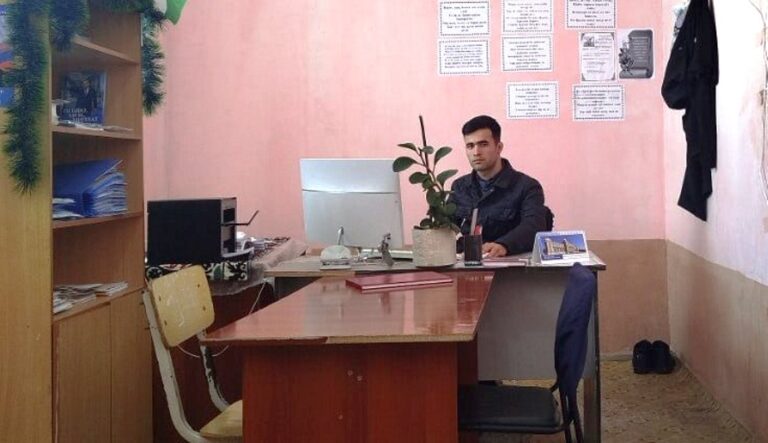
Thus, Eurasianet notes that Irosfil (his real name is not used) worked for 10 years as a teacher in Vahdat Township before finding that his salary could no longer stretch to feed his family of six.
He now works as a street cleaner and delivery worker in Moscow.
The math that motivated his decision is well known to most citizens in Central Asia’s poorest country. Menial work in Moscow reportedly can reap up to $800 per month. Irosfil shares a two-room flat in the Russian capital with nine other Tajiks, which allows him to keep his monthly living costs to around 15,000 rubles ($210). He sends roughly the same amount home and can save any money left over for the future.
As a deputy school director in Vahdat, Irosfil was paid $180 per month – almost twice as much as most of his colleagues, whose salaries hover closer to the $100 mark, according to Eurasianet.
Irosfil reportedly estimates that he was one of seven teachers that quit his school the same month out of a total teaching staff of 56.
The government has raised teacher salaries three times in the last five years, most recently in 2020. But Munira Inoyatova, who served as education minister from 1994 to 2000, told Eurasianet that incremental pay increases were no match for rising living costs.
“Now is such a time that even if a teacher earns 3,000 somonis ($270) he or she will not have enough [to live on],” Inoyatova said.
According to official statistics, there are over 98,000 teachers in Tajikistan with higher-education qualifications, a further 30,000 with vocational training and a further 1,800 who took up their posts immediately after leaving high school.
Inoyatova and other experts fear a rapid deterioration in standards if the trend continues.