In the Central Asian region, Tajikistan is considered the most vulnerable to desertification. The country is suffering not only from rising temperatures and droughts but also from the consequences of natural disasters.
CABAR.asia says the problem of desertification or soil degradation in Tajikistan has existed since the first years of independence. Almost all agricultural lands of the country are reportedly subject to degradation, and gross blunders in land use aggravate the process of desertification.
In the mid-90s, massive privatization of collective and state farms took place in Tajikistan, and more than 75,000 ha of arable land were distributed among the rural population so that it could provide itself with food. Numerous dehqon farms (DF) appeared in place of the reorganized collective farms.
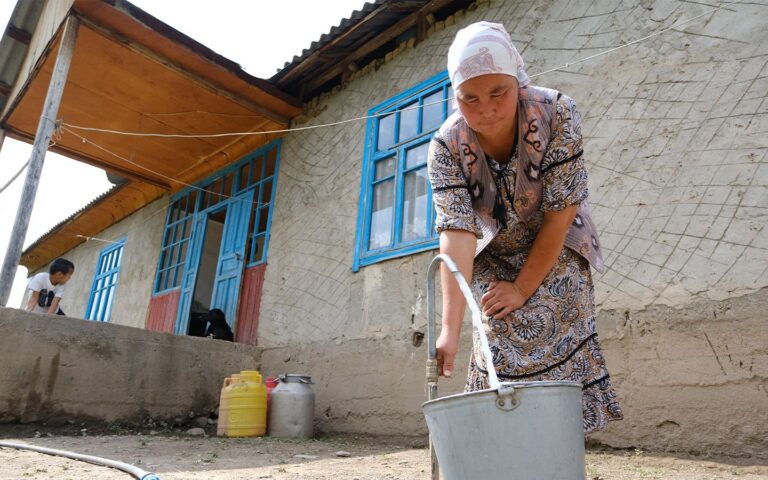
When distributing collective farmland, the most important things were forgotten. The entire water supply system – hydro-technical constructions, pumping stations, irrigation canals – remained ownerless. Soon they all fell into disrepair, the canals were filled with litters, pipes and trays disappeared, the pumping stations were partially plundered, and the surviving part was rusted and worn out completely. As a result, most of the irrigated fields turned into dryland – lands left without irrigation due to the fact that outdated pumping stations stopped supplying water.
For many years, the main canals and mudflows were not cleared, their banks were not strengthened, the water began to wash away the fertile layer of land. The process of degradation of irrigated fields reportedly became widespread and lasted until about 2015 when the country began to implement the state program to return degraded lands to agricultural use.
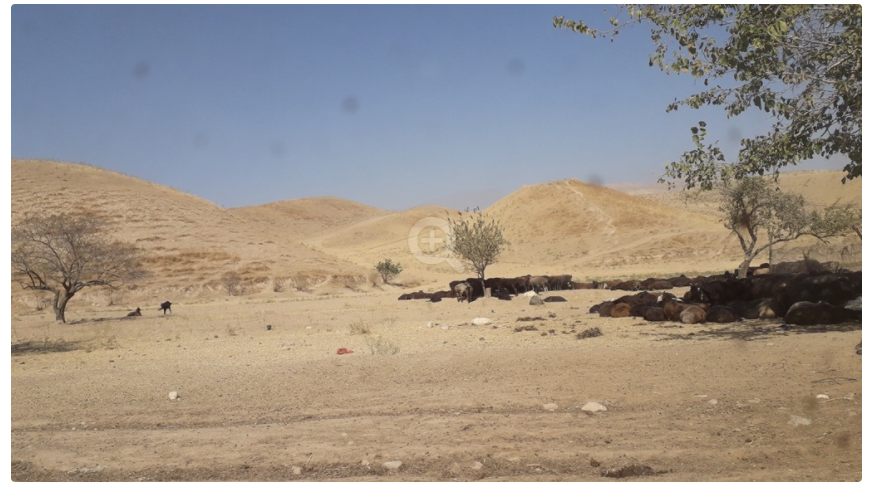
In Tajikistan, rainfed lands and pastures are the most prone to desertification. According to the National Program of Action to Combat Desertification, due to erosion, soil washout is from 27 to 372 tons per hectare, depending on the relief.
This is a very large figure,” says Qurbonali Partoyev, Doctor of Sciences in Agriculture. “Pastures and rainfed lands are losing their grass cover and degrading, if not taken measures, they can turn into lifeless deserts.”
According to official statistics, in Tajikistan in all categories of farms in 2020, the number of great cattle amounted to more than 2.5 million, and the total head of small-size livestock – about 6 million. In total, Tajikistan has about 4 million hectares of pastures, which is not enough for grazing all animals.
According to Partoyev, the number of herds, which graze on pastures is above measure, leading to the destruction of meadows and the formation of deserts.
Scientists of the Institute of Botany, Plant Physiology, and Genetics of the Academy of Sciences of the Republic of Tajikistan recommend grazing livestock in one place only once every 3-4 years. Otherwise, the vegetation cover will disappear, the lithogenic base of the soil will be destroyed.
Director of the NGO “Little Earth” Timur Idrisov points to another cause of desertification – the massive tree logging.
Ecologist Akram Qurbonov, speaking about the environmental consequences of desertification, noted that it can lead to the destruction of vegetation cover, the expansion of sand-covered areas, and the deterioration of human health. According to him, the desertification process has already strongly affected the territory of southern Tajikistan, where forests are almost completely destroyed and large wild animals have disappeared. They have survived only in specially protected areas.
Desertification has a negative impact on the economy, as it covers irrigated land of cotton fields, winter pastures, and forest areas. Experts estimate that each hectare of lost land could bring at least $1,000 in profit.
At the moment, with the strengthening control over land use and with the help of projects by international organizations, it has been possible to slow down the rate of degradation and return abandoned land to agricultural use.
Meanwhile, Tajik officials note that at least US $750 million would be needed to restore the entire irrigation system in the country.
However, the problem can’t be solved through watering and the improvement of land reclamation alone. The matter is climate change, which requires land users to take a completely different approach than before. Now it is necessary to switch to growing crops under coverage, using greenhouses and films, to switch to drip irrigation, and the government should establish the selection of plant varieties adapted to new conditions.