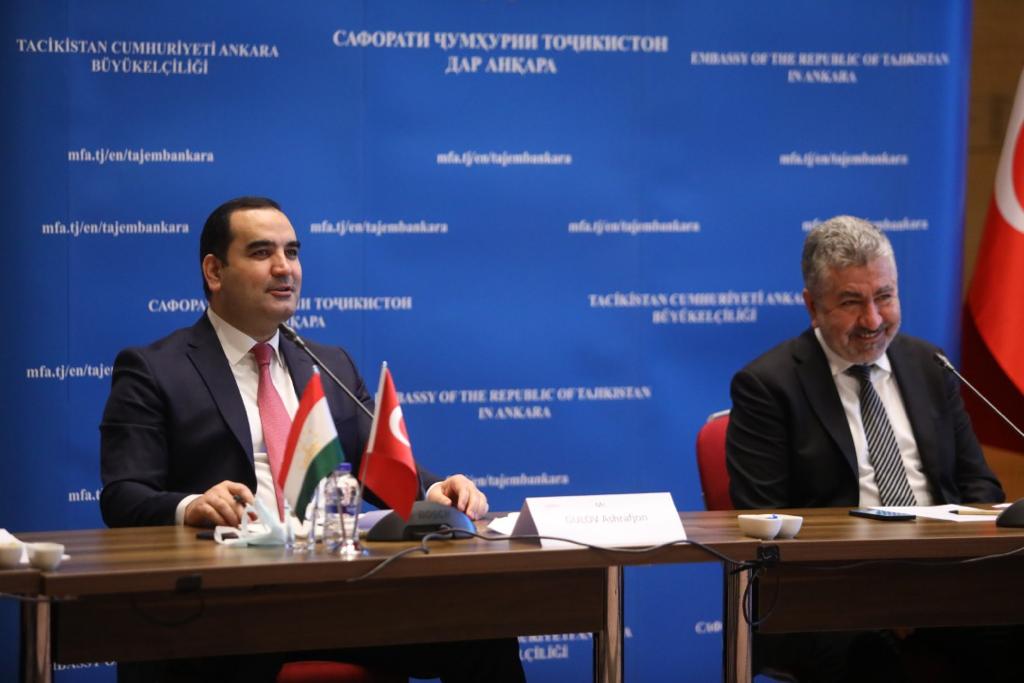
A working meeting was held in Ankara on November 17 at the initiative of the Embassy of Tajikistan in Ankara to discuss issues related to implementation of agreements reached at the 11th meeting of Tajikistan-Turkey joint commission for trade and economic cooperation and the search for timely and effective ways to implement the Joint Action Plan, according to the Tajik MFA information department.
Deputy Minister of Industry and New Technologies of Tajikistan Umed Solehzoda and Deputy Minister of Industry and Technology of Turkey Chetin Ali Donmez reportedly participated in the meeting, which was also attended by representatives of ministries and agencies, as well as diplomatic missions of the two countries in online and offline formats.
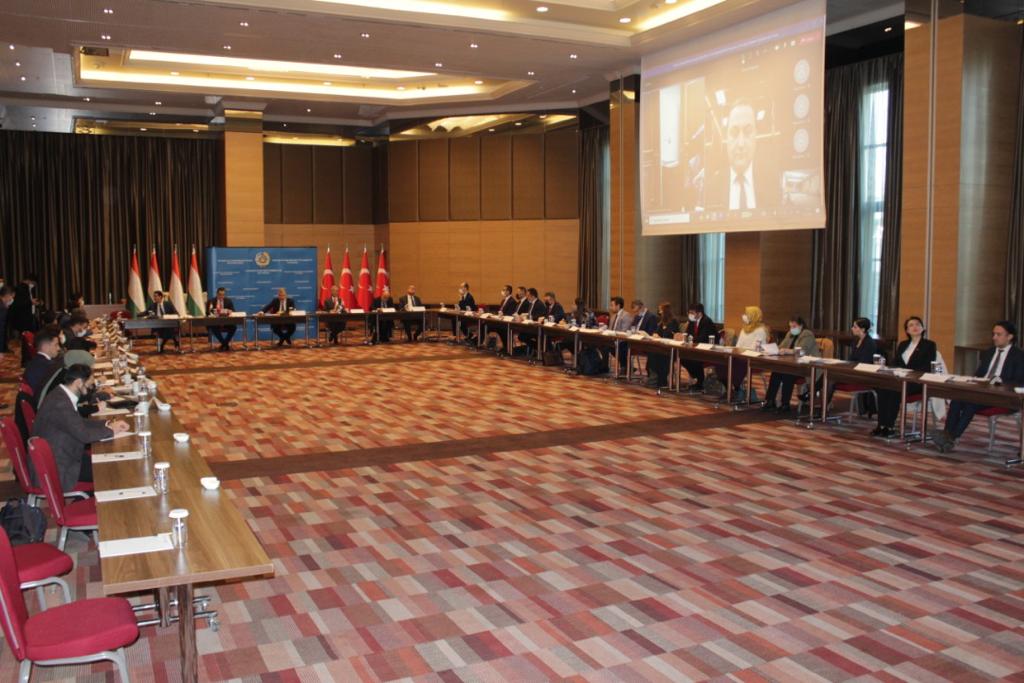
The meeting participants reportedly discussed ways of implementation of the relevant points of the mentioned Joint Action Plan on topical issues of bilateral cooperation, including in the fields of trade and investment, transport, industry, education and science, agriculture, migration, energy, healthcare, culture and tourism, as well as documents signed in the framework of the Commission meeting and the Industrial and Economic Forum of Tajikistan and Turkey.
During the meeting, it was noted that one of the highest goals for the near future in the field of trade and economic cooperation between Tajikistan and Turkey is to increase the bilateral trade between the two countries up to 1 billion U.S. dollars by establishing cooperation in priority sectors of the economy such as textile industry (creation of textile cluster in Tajikistan) and aluminum processing, including production of final goods.
Meanwhile, the Eurasian Research Institute, which is a branch of Khoja Akhmet Yassawi International Kazakh-Turkish University, reporting on trade between Turkey and Central Asia, in particular, noted that Tajikistan’s imports from Turkey increased from US$47 million in 2005 to US$173 million in 2020.
At the same time, the Eurasian Research Institute says 2015 and 2020 indicators of Tajikistan demonstrate reduction compared to 2010. In 2020, imports from Tajikistan decreased to $149 million from $284 million in 2010.