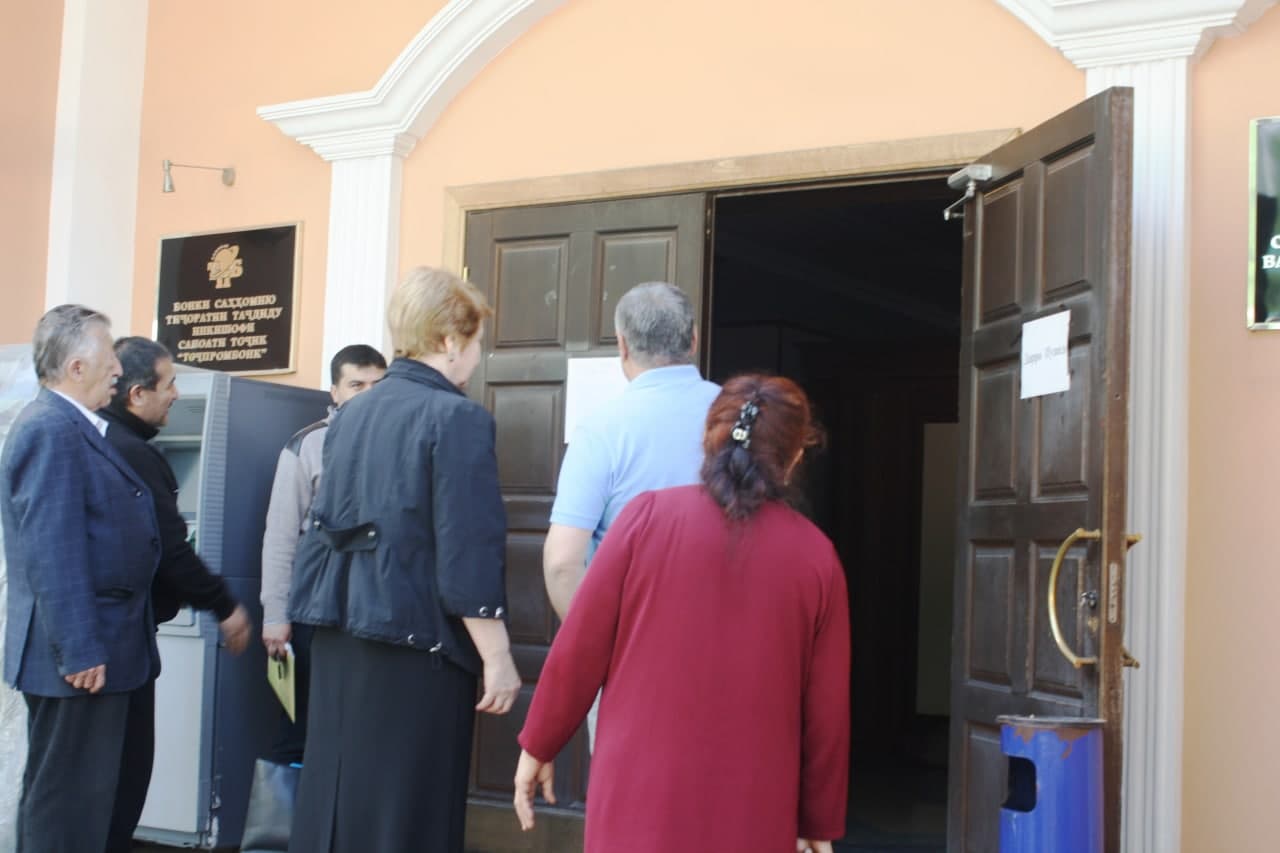
The issue of repayment of deposits to Tajprombank’s customers will be resolved within the next few years.
Hokim Kholiqzoda, the head of the National Bank of Tajikistan (NBT), stated this at a meeting with reporters on the sidelines of a regular sitting of Tajikistan’s lower house (Majisi Namoyandagon) of parliament that took place on December 8.
According to him, the debt of Tajprombank in liquidation to its private depositors has decreased to 40 million somonis (equivalent to 3.5 million U.S. dollars).
“To-date, Tajprombank has repaid more than 200 million somonis to its customers,” said NBT head. “I am sure that this issue will be completely resolved within the next few years.”
“The remaining debt will be repaid in stages as the property of the bank in liquidation is sold,” Kholiqzoda noted.
The main problem in the process of liquidation of Tajprombank is the fact that the special administration of bank cannot find buyers for its property.
Depositors, for their part, say they refuse from the property of the bank because it is offered at inflated prices.
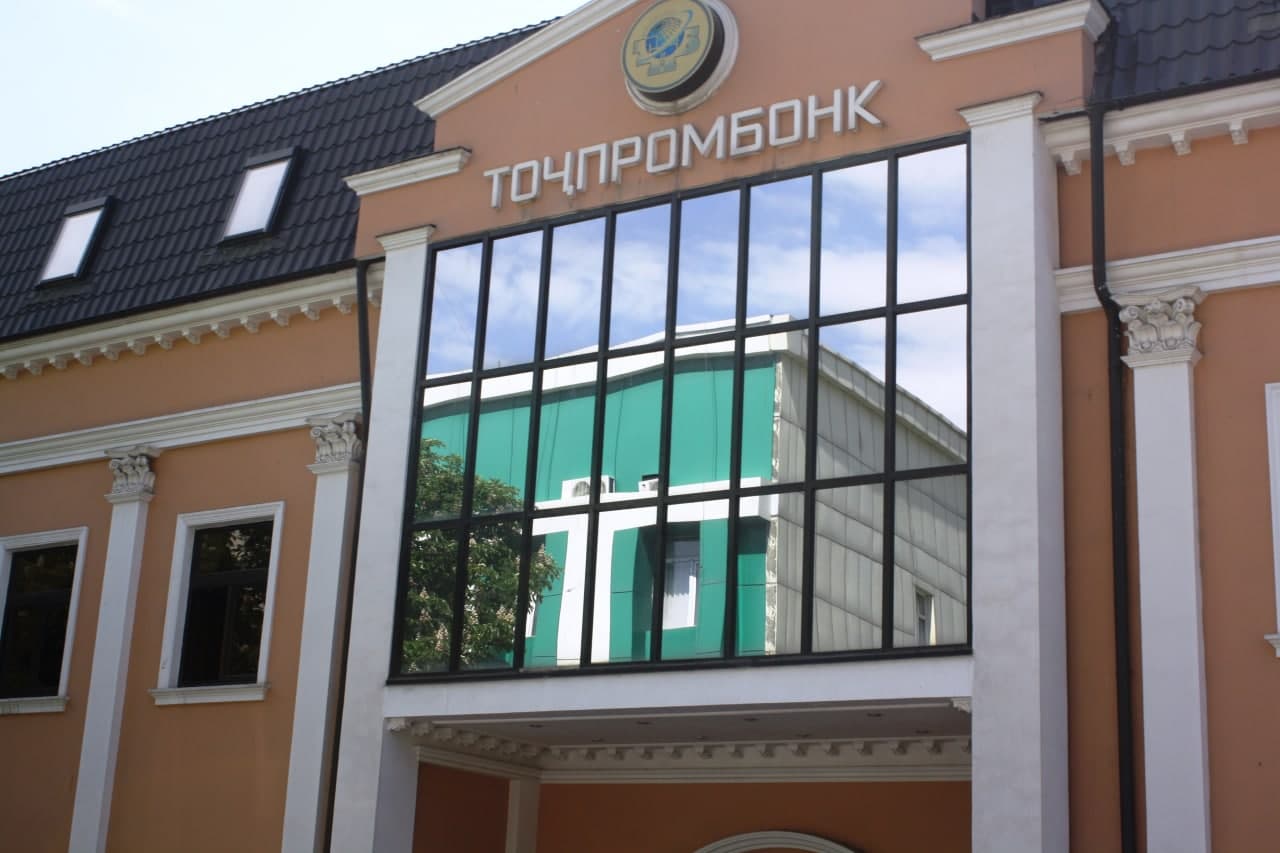
Founded in October 1995 as an all-purpose retail bank, Tajprombank, with headquarters in Dushanbe, has 21 branches, 11 departments and 15 money-transfer offices across the country. The controlling shares of the company were held by Jamshed Ziyoyev.
Assets on Tajprombank’s books include dozens of offices and an unspecified number of residential properties.
Signs the lender was in distress began to emerge in 2015. In the middle of 2016, Ziyoyev was removed as head of the bank, which was placed under the crisis administration. In December, the National Bank declared it was refinancing Tajprombank to the tune of 450 million somonis ($56 million) and reappointed Ziyoyev to his old job and ordered him to restore the lender to health. The bailout money was raised through the emission of somoni-denominated sovereign bonds that were converted into liquid cash by the National Bank.
But then two months later, the National Bank performed yet another about-face and decided to shutter Tajprombank, together with another recipient of bailout funds, Fononbank.
Tajprombank reportedly had over the years accumulated a number of high-stakes delinquent debtors.
One such person, Jamshed Abdulov, a businessman involved in the cotton industry, was detained by authorities over unpaid debts, according to Eurasianet. Two companies belonging to him – Cotton Textile and Olim Textile – collectively owed Tajprombank 39 million somoni (equivalent to 4.4 million U.S. dollars). After paying off his liabilities in the form of solid assets, Abdulov was reportedly released on bail.
Eurasianet says sources familiar with the situation have told that companies affiliated to Ziyoyev and his son owed another 13 million U.S. dollars to the bank.
Tajprombank reportedly also has liabilities before the state — US$13 million with the Finance Ministry and another US$15 million with the National Bank. Under Tajik law, the bank is required to settle its debts to the state before it pays out retail customers.
Jamshed Ziyoyev, ex-chairman of Tajprombank, was arrested on April 24, 2018. Criminal charges were brought against him under the provisions of two articles of Tajikistan Penal Code: Article 245 – embezzlement and misappropriation and Article 247 – fraud, and he was sentenced to 8 ½ years in prison.