The time of delivery of equipment and auxiliary tools for construction of the Tajik section of the 1000 Electricity Transmission and Trade Project for Central Asia and South Asia (CASA 1000) has been extended to July 31, 2023, reads the Tajik government resolution.
India’s Kalpataru Power Transmission Limited (KPTL) is engaged in the delivery of equipment and necessary tools for construction of the Tajik section of the CASA-1000 Project.
This company began constructing the Tajik section in 2018 and the construction was expected to be completed by the end of this year.
Kalpataru Power Transmission Limited (KPTL) is amongst the leading Engineering, Procurement, and Construction (EPC) companies with proven experience and expertise spanning over three decades. KPTL is executing marquee projects with comprehensive capabilities that delivers complete solutions covering design, testing, fabrication, erection and construction of transmission lines, oil and gas infrastructure and railways projects on a turnkey basis. KPTL has established its footprints in 63 countries spread across five continents.
Recall, the Deputy Minister of Energy and Water Resources, Jamshed Shoimzoda, told reporters in Dushanbe on July 12 that the construction of the Tajik section of the CASA-1000 Project will be completed before the end of this year.
According to him, the coronavirus pandemic and the unstable situation in Afghanistan have not affected the construction process in the framework of the CASA 1000 Project.
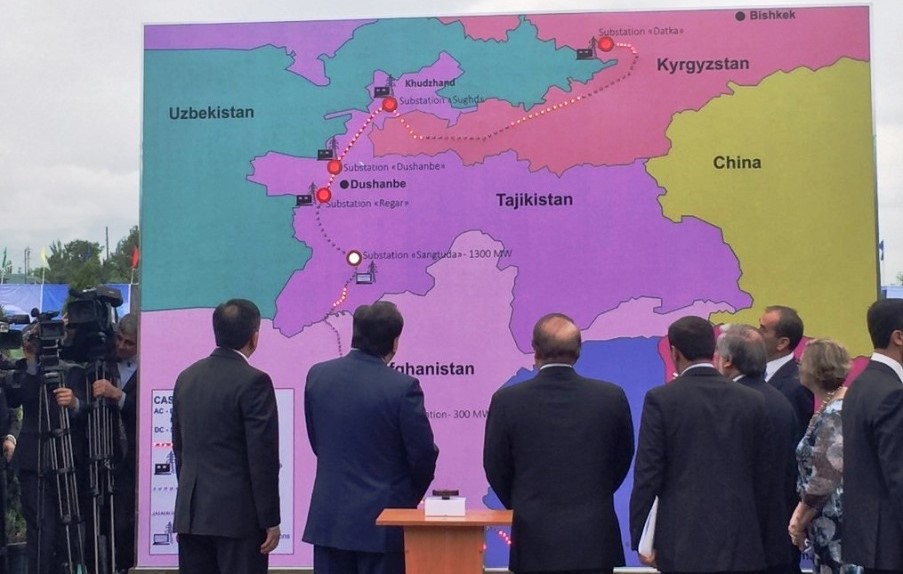
The CASA-1000 project aims at developing energy corridor and land connectivity between Tajikistan, Afghanistan and Pakistan.
The Central Asia South Asia Electricity Transmission and Trade (Casa-1000) Project demonstrates landmark cooperation among Kyrgyzstan, Tajikistan, Pakistan, and Afghanistan. The modern and efficient CASA-1000 electricity transmission system will help transform the region and signify an important step toward realizing the planned Central Asia-South Asia Regional Electricity Market (CASAREM). The CASAREM initiative will help not only these four countries, but also improve the electricity systems and develop inter-regional cooperation between Central Asia and South Asia.
A total cost of the project is more than 1 billion U.S. dollars. Of this amount, 314 million U.S. dollars have been spent for construction of the Tajik section of the regional power transmission line which will bring electricity from Tajikistan and Kyrgyzstan to Afghanistan and Pakistan.
The necessary funds have been allocated by the World Bank, the Islamic Development Bank, the European Investment Bank and the European Bank for Reconstruction and Development.
The Project is expected to develop the necessary physical infrastructure and create the institutional and legal framework to transmit surplus power available from existing generation facilities in Tajikistan and Kyrgyzstan to Afghanistan and Pakistan. The physical infrastructure for CASA 1000 includes: a 500 kV high voltage direct current (HVDC) transmission system between Tajikistan and Pakistan through Afghanistan; an AC transmission link from Kyrgyzstan and Tajikistan to connect to the HVDC line from Tajikistan to South Asia; and the necessary electricity sub-stations in Kabul (Afghanistan), Peshawar (Pakistan) and Sangtuda (Tajikistan).