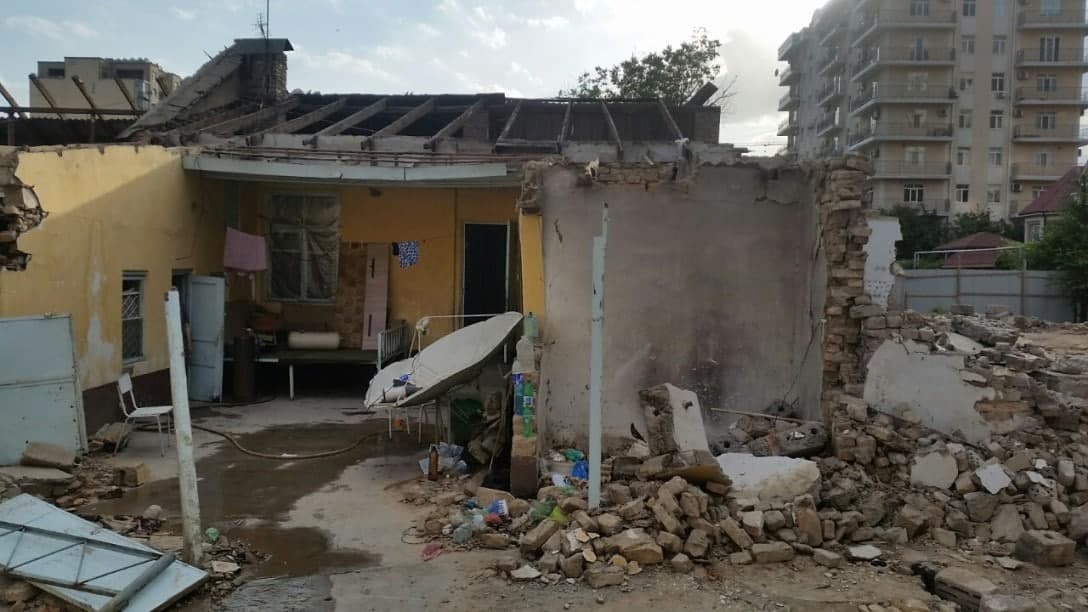
The Dushanbe-based human right organization, The Independent Center for Human Rights, has called on the Tajik authorities to announce moratorium on demolition of residential buildings during the pandemic.
The Center has published the findings of its survey on the situation with the right for adequate housing in Tajikistan during the COVID-19 pandemic
The then-UN Special Rapporteur on the right to adequate housing, Ms. Leilani Farha, in 2020 listed ten priorities that should guide governments’ activities in the issue of eviction. The priorities, in particular, include stoppage of all types of evictions until the end of the COVID-19 pandemic and within a reasonable time after it, collection and publication of data on COVID-19 and its impact on the right to adequate housing.
The survey notes that although some measures, determined by a residential decree extending several COVID-19-related measures, have facilitated the enforcement of the right to adequate housing, the majority of recommendations of the UN Special Rapporteur on the right to adequate housing have not found their normative reflection.
The survey authors have developed their recommendations.
First of all, they propose to announce moratorium on demolition of residential buildings and evictions during the COVID-19 pandemic, because demolition of residential buildings, evictions and seizure of land plots for state needs during the pandemic negatively affect the whole society.
People without a safe place and home could potentially spread the virus, and then everyone will suffer.
The Center also proposes to adopt the country’s new Housing Code as soon as possible.
It also proposes to develop mechanisms and procedures of independent assessment and reassessment of residential premises at the market price.
The Independent Center for Human Rights has surveyed people in various regions of the country and found out that many of those surveyed were unhappy with the compensation the developers paid them.
Those surveyed have also noted that it is useless to go to the courts on this issue.
The Center also notes that the issue of the availability of the redevelopment municipal plans to the population is also topical.
The survey was reportedly conducted from March 30, 2020 to October 11, 2021 under support of the Open Society Foundation Eurasian Program.