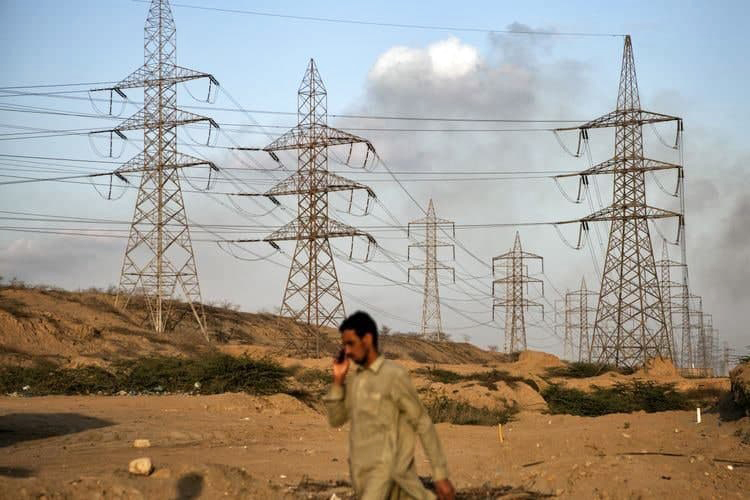
In winter period Tajikistan delivers electricity to Afghanistan in small volumes, “solely for the safety of the power transmission lines and other equipment,” a source within Barqi Tojik (Tajikistan’s power utility company) told Asia-Plus Thursday afternoon.
“In winter period, we supply electricity to Afghanistan at the rate of 600.000-700,000 kWh per day,” the source said noting that that amount does have any impact on the power supply in Tajikistan.
In May-September, Tajikistan will deliver electricity Afghanistan at the rate of up to 9.6 million kWh of electricity per day, the source added.
As it had been reported earlier, the national power utility companies of Tajikistan and Afghanistan signed an agreement on the supply of electricity from Tajikistan to Afghanistan in 2022 in the Uzbek capital city of Tashkent on December 26, 2021.
According to information posted on the official website of Barqi Tojik (Tajikistan’s national power utility company), the document was inked by Barqi Tojik Director-General Mirzo Ismoilzoda and Da Afghanistan Breshna Sherkat (DABS – Afghanistan’s national power utility company) CEO Hafiz Mohammad Amin.
Under this agreement, Tajikistan will deliver daily up to 400 megawatt (MW) of electricity to Afghanistan from May to September next year.
Barqi Tojik emphasizes that the agreement is only of economic nature.
Tajikistan over the first eleven months of last year exported about US$94 million worth of electricity, which, according to the Agency for Statistics under the President of Tajikistan, was 80 percent more than in the same period 2020.
Tajikistan now supplies electricity to Uzbekistan and Afghanistan within the framework of contracts concluded with power utility companies of these countries.
At the beginning of 2020, the power companies of Tajikistan and Afghanistan signed an agreement on the supply of about 1.5 billion kWh of electricity from Tajikistan to Afghanistan in 2021.
Tajikistan reportedly supplies electricity to Afghanistan at the rate of 3.0 cents per 1 kWh through the 110 kV power transmission line and at the rate of 4.5 cents per 1 kWh through the 220 kV power transmission line.
The Tajik supply is used mostly in Afghanistan’s northeast, historically home to a large ethnic Tajik population.
In accordance with the reached agreements, Tajikistan reportedly supplies electricity to neighboring countries (Afghanistan and Uzbekistan) only during the May-September period.
Tajikistan has sufficient summer-time (defined as May 1 to September 30) hydropower surpluses to export to the neighboring countries.
In January-November last year, Tajikistan has reportedly generated 18.7 billion kWh of electricity, which is 5.7 percent more than in the same period of 2020.
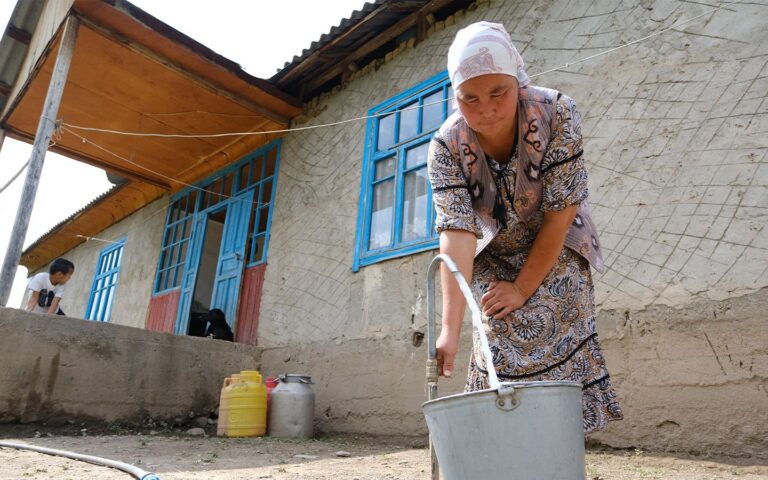
However, electricity rationing is usually imposed in Tajikistan in the autumn and winter, especially after a dry summer. During these months, water levels are low and electricity consumption rises. Residents of rural areas experience extensive electricity shortages during the winter.