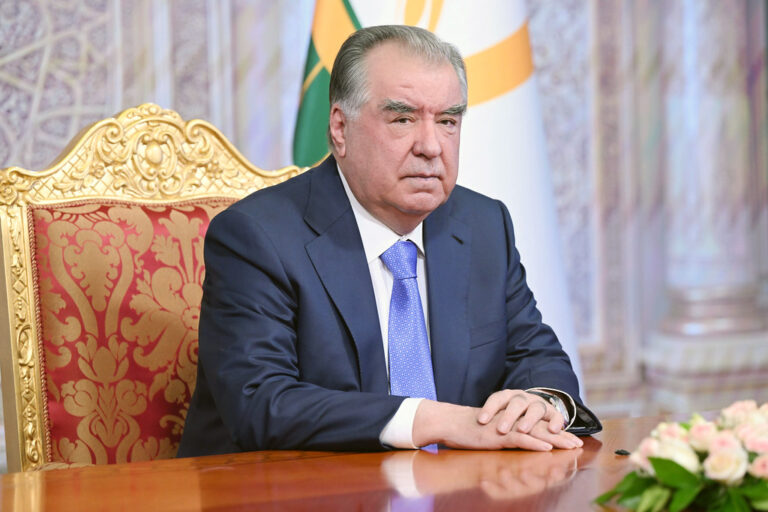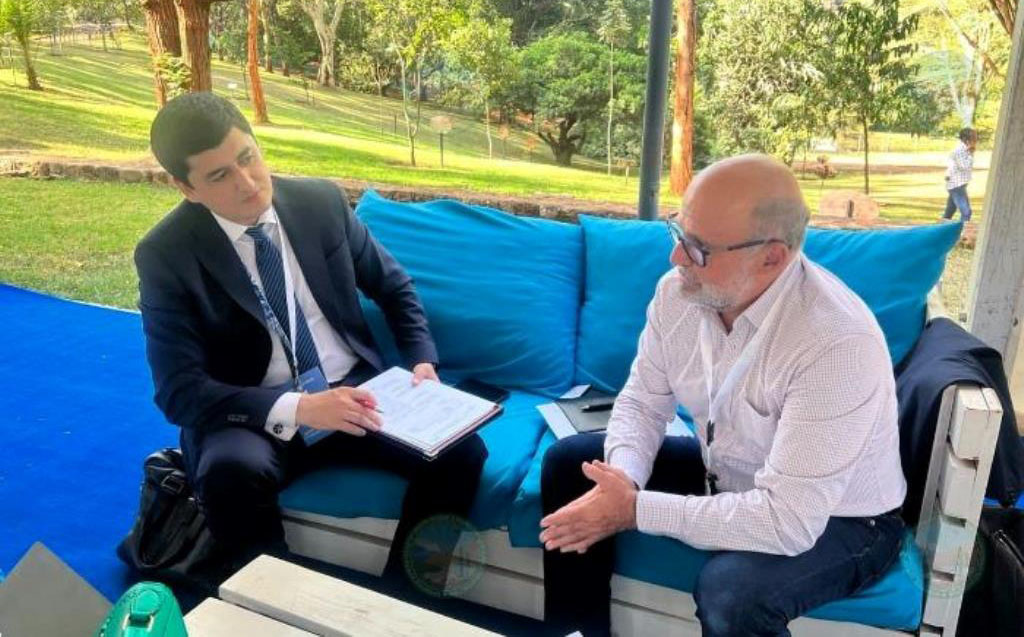
On March 4, Mr. Bahodour Sheralizoda, Chairman of the Committee for Environmental Protection under the Government of Tajikistan, met in Nairobi with Mr. Carlos Manuel Rodriguez, CEO and Chairperson of the Global Environment Facility (GEF), according to the Committee for Environmental Protection (CEP) press center.
During the meeting that took place on the sidelines of the Special Session of the Assembly of the United Nations Environment Program, the parties reportedly discussed cooperation to ensure sustainable and equitable use of resources without degrading the environment.
A particular attention was given to the issue of transition to “green” energy.
Mr. Sheralizoda, in particular, noted that more than 96 percent of electric power in Tajikistan is generated from environmentally friendly and renewable energy sources.
According to him, more than 9 million trees have been planted in Tajikistan over the past 5 years, which increases the country’s capacity to absorb carbon.
The parties also discussed the issues related to increasing GEF funding in Tajikistan in accordance with national priorities and enhancing interaction between the parties to solve environmental problems in Tajikistan.
Global Environment Fund (GEF) is a global alternative asset manager established in 1990 to invest in high-growth clean energy, energy and resource efficiency, environmental, and sustainable natural resource management industries throughout the world. Our investments finance innovative businesses that deploy proven technologies, products and services that incrementally make the world economy run with less energy, utilize fewer raw materials, promote improved environmental quality and more efficient use of natural resources. The business models of such companies “lighten the footprint” of traditional industries by delivering tangible reductions in energy consumption, environmental and greenhouse gas emissions, or by making the economy more environmentally sustainable. In addition, the technologies employed by our businesses may address and reduce key environmental safety and security threats. To date, GEF has invested approximately US$1.0 billion in companies operating in these sectors worldwide, both directly from its own balance sheet and through the investment funds it manages.