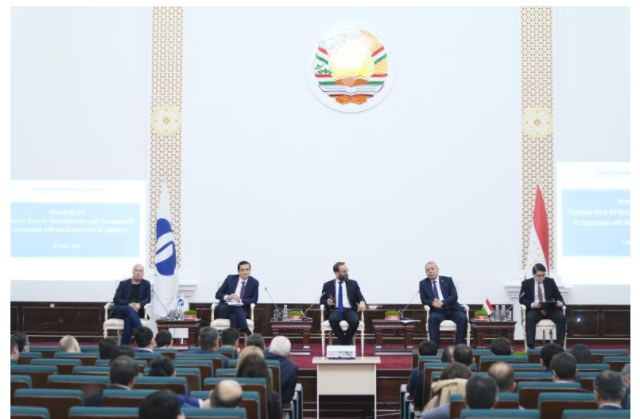
On Thursday March 10, the European Bank for Reconstruction and Development (EBRD) in cooperation with the Government of Tajikistan presented its Transition Report 2021-2022.
The EBRD’s flagship publication – Delivering the Digital Dividend – explores how economies in the EBRD regions can deliver the digital dividend, both during the COVID-19 pandemic and beyond. Building on rich sources of data, it introduces a new index of digital transformation and highlights digital divides across and within countries. The report looks at how addressing these divides will be vital to the success of economies.
The EBRD also shared its macroeconomic growth expectations both for Central Asia and Tajikistan. The region is expected to continue growing by around 4.8 percent in 2022 thanks to continued expansionary policies and strong external demand for key exports and labor resources.
Last year’s growth in Central Asia was driven by the normalization of domestic activities following a gradual relaxation of COVID-19 restrictions. Increased lending to businesses and households, encouraged by temporary forbearance measures introduced by central banks, was another major factor.
Rising commodity prices reportedly benefited exporters of oil, gas and metals such as Kazakhstan, Mongolia, Turkmenistan, and, to a lesser degree, Uzbekistan. At the same time, commodity importers such as Tajikistan and Kyrgyzstan saw increased demand for migrant workers in Russia and subsequently higher remittance flows.
The abundant liquidity was driving credit expansion and asset price inflation across the entire region. Consumer price inflation were also on the rise in all Central Asian countries, according to the report.
The economy of Tajikistan is expected to grow by 6.2 percent in 2022 and this growth will be supported by remittances, which will positively affect private consumption as wells as continued investment into key infrastructure projects such as Roghun HPP.
Nearly 90 percent of US$63 million EBRD investment in Tajikistan in 2021 was classified as green. The EBRD supported vital infrastructure upgrades, local banking sector and women entrepreneurship and helped SMEs with access to green technologies.