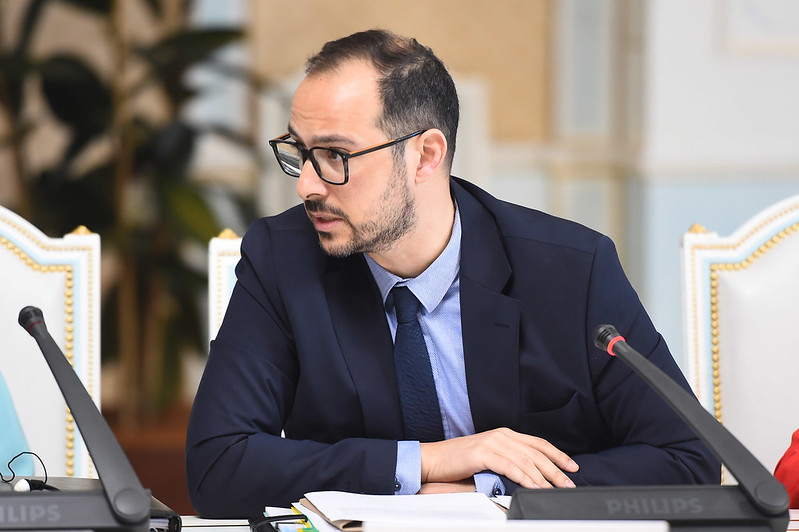
Speaking at the 22nd Session of the Consultative Council on Improvement of Investment Climate in Dushanbe, Mr. Ozan Sevimli, World Bank Country Manager for Tajikistan, noted on March 16 that the current crisis, resulting from the war in Ukraine and sanctions against Russia, is disrupting commodity and financial flows globally, putting pressure on Tajikistan’s GDP, as the economy remains interconnected with remittances, food and energy imports from Russia.
“As a result of this exposure, we are already experiencing rising prices of energy and food products in the country due to higher international commodity prices and the exchange rate depreciation. We know that people’s living standards will deteriorate, as household purchasing power is being eroded, having an inevitable impact on the purchasing power of the population,” he said.
To mitigate the adverse impacts, the authorities have already started developing an anti-crisis plan and the World Bank Group is reportedly supporting the Government of Tajikistan with a crisis response package that focuses on: protecting vulnerable segments of the population, including returning migrants and their families through social safety nets; supporting food security; and addressing the macroeconomic policy framework, including continued discussions on a crisis-response budget support operation.
While urgent actions are needed to mitigate the crisis, strengthening the resilience of the economy and facilitating private-sector-led growth are becoming even more important, he stressed.
According to him, one of the key challenges for e-commerce development in Tajikistan is insufficient and costly digital connectivity, which is a necessary prerequisite for any online transaction.
The World Bank is reportedly in discussions with the Government of Tajikistan on a broad digital transformation agenda that focuses on critical interventions that would ensure the following:
1. international connectivity transit routes in Tajikistan need to be diversified for greater digital resiliency and capacity;
2. national telecom networks are expanded and densified to reach the unconnected and to avoid network congestion;
3. the institutional and policy environment is made more conducive (i.e., transparent and predictable) to attract local and foreign investments, including by adapting the sectoral governance to key national priorities and international good practices and ensuring the independence of the sectoral regulator;
4. enhancing cybersecurity and data protection capacity of the country amid increased cyber-attacks globally. This would include avoiding single points entries through which the traffic flows and which can impact the whole digital infrastructure in the country in case of a cyber-attack.
According to him, the World Bank is ready to support these measures, including through investments targeting expanded digital infrastructure and inclusion, while improving policy and regulatory environment in the digital economy that are expected to generate significant positive socioeconomic and financial impacts.
Mr. Sevimli also pointed to the necessity of collectively working to enable environment of e-commerce sector.
The World Bank’s support would also include the implementation of the data protection norms and regulatory acts, which are key to provide traders and consumers with confidence in using online services, he noted.
“All in all, the current crisis presents risks, but also opportunities for the entire economy of Tajikistan, including in the e-commerce segment—opportunities to reevaluate the situation, understand key vulnerabilities and accelerate critical structural reforms as well as pro-market and pro-competition policies, particularly in the domain of ICT and digital economy,” Mr. Sevimli said.