The European Union (EU) Delegation to Tajikistan says the European Union, German Federal Ministry for Economic Cooperation and Development (BMZ), Deutsche Gesellschaft für Internationale Zusammenarbeit (GIZ) GmbH in cooperation with the State Institution “Republican Educational and Clinical Center of Family Medicine” (RECCFM) of the Ministry of Health and Social Protection of the Population of the Republic of Tajikistan (MoHSPP) conducted a series of events dedicated to the World Health Day (WHD).
The activities of the RECCFM are reportedly supported by “BaSIC – Building a System on Integrated Primary Health Care in Tajikistan” project, co-financed by the EU and BMZ and implemented by GIZ.
The BaSIC project is part of the Health Development Program of the European Union in the Republic of Tajikistan for the period 2021-2025.
World Health Day, which is a global health awareness day, was celebrated yesterday. World Health Day is celebrated every year on April 7, under the sponsorship of the WHO, as well as other related organizations. In 1948, the WHO held the First World Health Assembly. The slogan “Health for all” has been a guiding vision for more than seven decades. Therefore, every year the World Health Day is held under a specific slogan and is meant to raise the awareness about ongoing health issues that concern people across the world. The day is also used as an opportunity to spread awareness about the overall health and well-being of people.
Within its framework, the BaSIC Project supported the RECCFM to conduct a series of public events dedicated to the World Health Day.
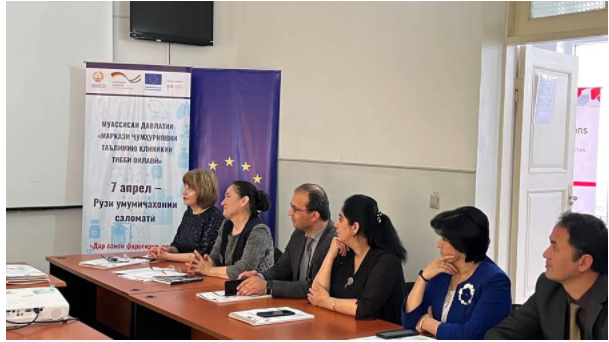
In anticipation of World Health Day, on April 6, BaSIC Project supported the RCTCFM financially, to conduct a round table with family medicine trainers and medical workers, to discuss achievements, barriers and further steps towards Universal Health Coverage (UHC).
Universal health coverage (UHC) means that all people have access to the health services, when and where they need them, without financial hardship. It includes the full range of essential health services, from health promotion to prevention, treatment, rehabilitation, and palliative care.
Achieving UHC was one of the Millennium Development Goals (MDGs), 2000 – 2015. However, this goal was reaffirmed by many countries at the United Nations General Assembly in 2019 and is now part of the Sustainable Development Goals (SDG), 2015 – 2030.
Improving the health coverage and health outcomes depends on the availability and accessibility of health facilities, its medical staff and their ability to deliver high quality and people-centered integrated health care services. According to the WHO, over 18 million additional health workers need to be mobilized globally to meet the health workforce needs to achieve the SDGs and UHC by 2030.
On April 7th the BaSIC Project supported the RECCFM in organizing and conducting the Youth Campaign for school children.
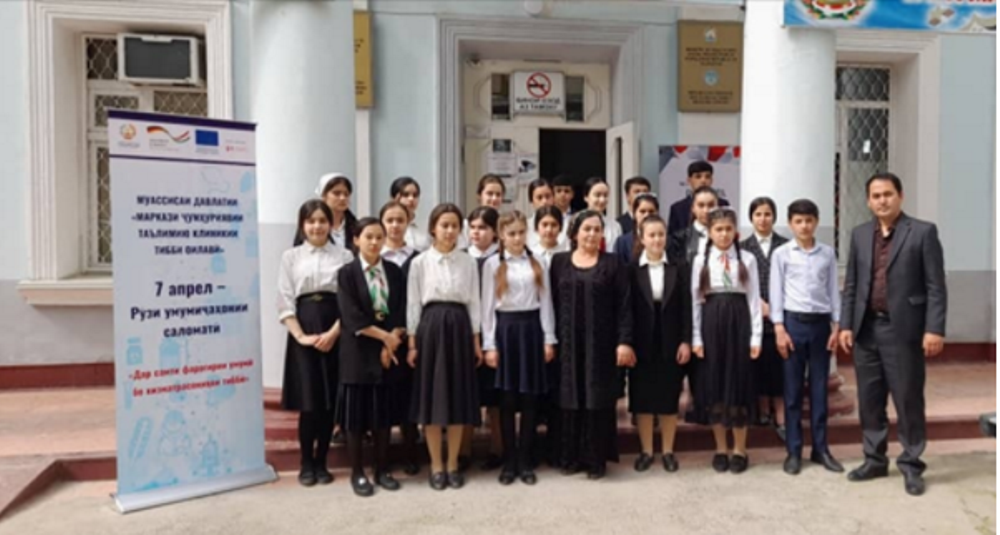
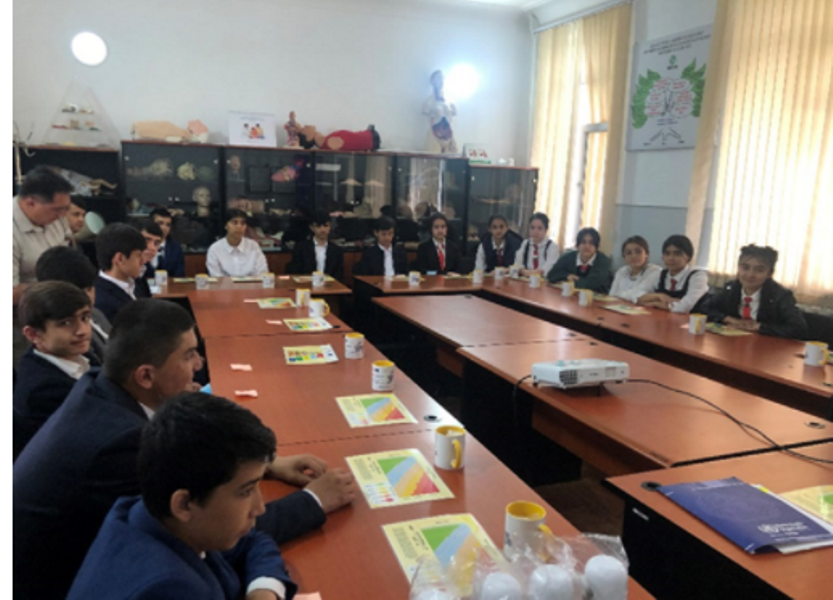
As part of the event, a quiz on health issues and session on healthy lifestyle were conducted. There were interesting discussions about healthy food and existing trends towards fast food. The percentage of obesity is increasing rapidly, which affects the health status among the entire population. Schoolchildren were presented with WHO nutrition recommendations, which include maintaining proper energy metabolism and normal weight, switching from saturated to unsaturated fats, avoiding trans-unsaturated fats, as well as to increase the consumption of fruits, vegetables, legumes, nuts, and whole grain foods. To limit the intake of sugar and iodized salt was also a topic. School children and teachers were trained to determine and calculate Body Mass Index (BMI), and to determine their own BMI.