Eurasianet says that during two months in spring (April-May and two months in autumn (October-November), Tajik men of serving age are routinely hauled off streets or taken from their homes and forced into cars by plainclothes law enforcement, according to .
Locally, this practice is known as ‘oblava’ (raid).
Legal changes that went into effect last year have reduced the scope for dodging military service and boosted the army’s capacity to shape the seasonal call ups.
Men aged between 18 and 27 and deemed healthy must now either accept a grim two- or one-year stint in the armed services or pay a hefty sum – set at the equivalent of around US$2,000 – to take a month-long course in military preparedness instead.
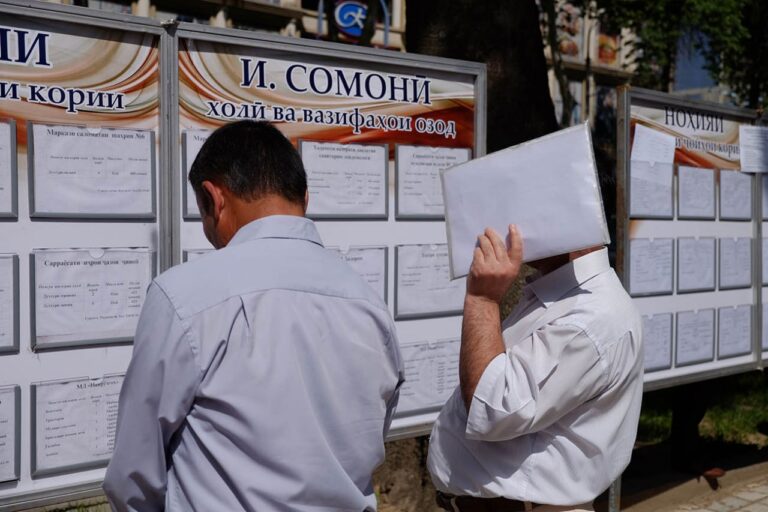
To take the paid one-month basic reserve service, Tajik young men must pay an amount equivalent to 450 calculating indicators (estimate). This year, the calculating indicator has been set at 64.00 somonis.
The amendments to military service rules were put forward in early 2021 and Eurasianet says that since then, the prospects of soldiers seeing real fighting have grown.
To the south, Dushanbe has reportedly yet to establish any public relationship with the Taliban, and has done little to disguise its distaste for the Islamists.
To the north, there is the growing arms race with Kyrgyzstan, after a conflict at the pair’s disputed border escalated beyond precedent last year and left dozens dead, Eurasianet noted.
Eurasianet says compulsory military service has its roots in the Soviet Union, while the tradition of oblava stretches back to the civil war in the 1990s, when the army began hauling unwilling men off the streets to fight the United Tajik Opposition (UTO).
For their service, conscripts earn the equivalent of a few dollars per month and are highly likely to experience hazing – bouts of violence dished out to new recruits by older soldiers.
They reportedly also forgo for two years the more lucrative opportunity of migrating to Russia in search of work, journeys that hundreds of thousands make each year, sometimes specifically to dodge the draft.
Two military experts who spoke to Eurasianet on condition of anonymity said that the conscription target for 2022 had grown by a quarter compared to last year to reach 20,000.
Meanwhile, usual annual conscription target in Tajikistan, according to the Ministry of Defense, is some 15,000-16,000.
The two-month-long effort seeking to enlist young men aged 18-27 for the one- or two-year compulsory military service takes place twice a year, in the spring and in the autumn
Young Tajiks can avoid or postpone military service if they are ill, studying at university, an only son, or if they have two children.
However, the Tajik authorities reportedly sometimes still use military recruitment raids to fulfill conscription campaign.
A ‘hunt’ for persons of draft age, more commonly known as ‘raid’, which is sometimes used to catch young people, is a violation of the law. The Tajik authorities do not admit the use of raids, but ordinary citizens and analysts have repeatedly expressed concern about the forced recruitment of young people, and other illegal methods used in recruiting campaigns.