Tajikistan, Belarus discuss prospects for bilateral inter-parliamentary cooperation

On Wednesday May 25, Majlisi Namoyandagon (Tajikistan’s lower chamber of parliament) Speaker Mahmadtoir Zokirzod met here with the Council of Republic (Belarusian upper house of parliament) Speaker Oleg Belokonev, who heading a parliamentary delegation arrived in Dushanbe on a working visit.   The Majlisi Namoyandagon press center says the two countries have been expanding intensively […]

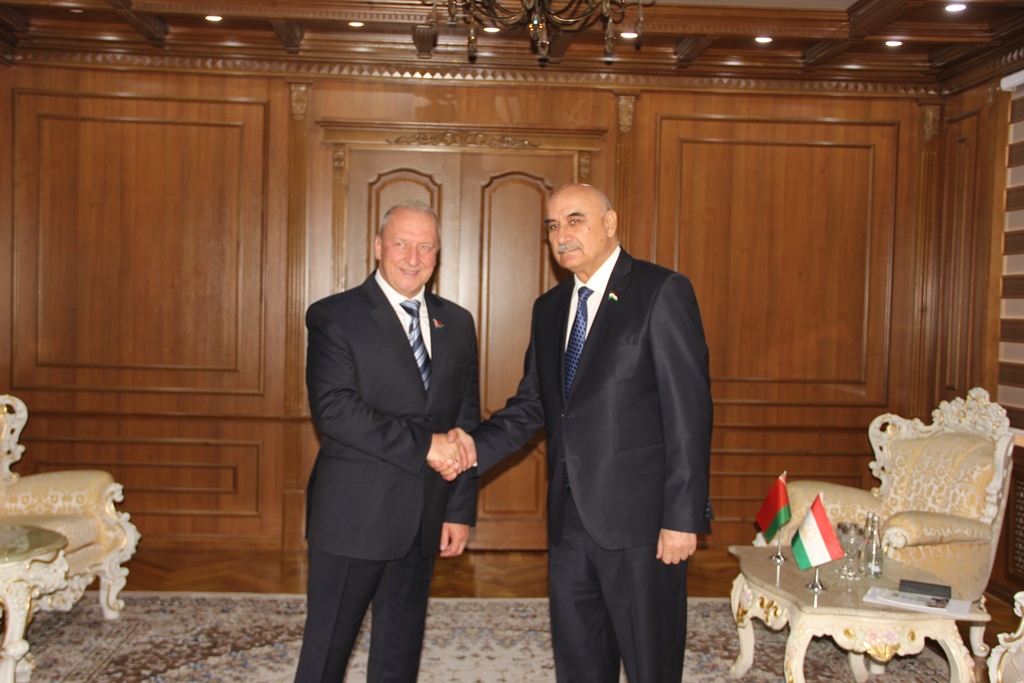
On Wednesday May 25, Majlisi Namoyandagon (Tajikistan’s lower chamber of parliament) Speaker Mahmadtoir Zokirzod met here with the Council of Republic (Belarusian upper house of parliament) Speaker Oleg Belokonev, who heading a parliamentary delegation arrived in Dushanbe on a working visit.  

The Majlisi Namoyandagon press center says the two countries have been expanding intensively cooperation between their regions.

In this context, the parties, in particular, noted that trade and economic cooperation agreements had been signed between Vitebsk region of Belarus and Tajikistan’s Sughd province, between Minsk and Dushanbe, between Gomel region of Belarus and Tajikistan’s Khatlon province, between Tajikistan’s Yovon district and Belarusian Uzden district, between Mogilev region of Belarus and Tajikistan’s Sughd province, and between Belarusian city of Mogilev and Tajikistan’s city of Khujand, according to the Majlisi Namoyandagon press center.  
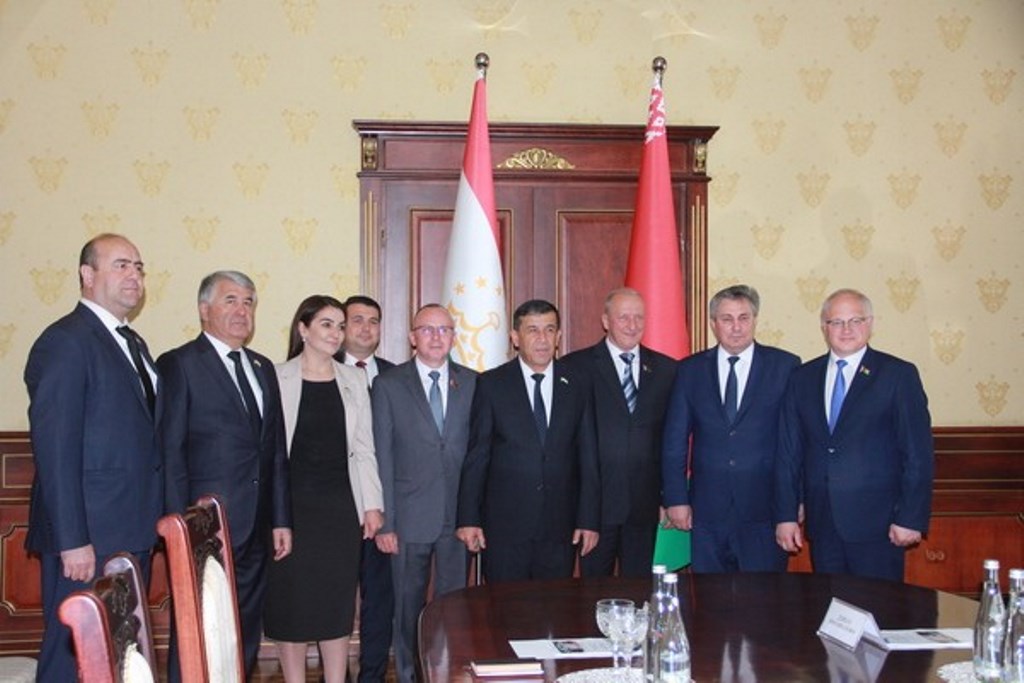
Currently, the parties are discussing the possibility of singing similar agreements between other regions as well educational institutions of Tajikistan and Belarus.

The Majlisi Namoyandagon is the lower house of Tajikistan’s bicameral parliament (Majlisi Oli).   Members of the Majlisi Namoyandagon are elected by two methods; 41 members are elected in single-member constituencies using the two-round system, whilst 22 are elected by proportional representation in a single nationwide constituency, with an electoral threshold of 5%.

The Council of the Republic is the upper chamber of the parliament (National Assembly) of Belarus.  The Council consists of 64 members, and the representation is based geographically, with most of the elected members come from civil society organizations, labor collectives and public associations in their jurisdiction.  Each oblast (six) and the city of Minsk (the national capital) are represented by eight members, and an additional eight members are appointed to the council via presidential quota.  It was established after the Constitution of Belarus was amended in 1996, replacing the Supreme Council of Belarus.
Join us on social media!

Article translations:

Related Article

Оби зулол
Оби зулол
Tenisi

Most Read

Коммерсбонк Точикистон

Recent Articles

RZD announces the restoration of passenger services between Moscow and Dushanbe

Direct rail services between the capitals of Russia and Tajikistan were suspended in March 2020 due to the COVID-19 pandemic.

#AP30/Stories. “Selam! Heller nichek?” How Tatars live today in Sughd province

On the 30th anniversary of "Asia-Plus," we continue to publish reports that remain relevant even after years. This story was told in 2021, and since then, little has changed in the life of the Tatar community in Tajikistan.

15,000 cameras, drones, and robots: how technology monitors pilgrims in Mecca and Medina

During Hajj 2026, Mecca and Medina were under unprecedented digital control.

Another child in Dushanbe removed from family and sent to boarding school

The Ministry of Internal Affairs reports that the parents did not pay adequate attention to the child.

Emomali Rahmon instructs to address issues in seed production following criticism of the industry

Issues have been noted with certification, seed quality, and the material and technical base of the industry.

Water, climate, and a $130 billion deficit: seven key outcomes of the Water Conference in Dushanbe

At the forum, countries and international organizations discussed new mechanisms for cooperation, investments, and technologies that are essential for addressing the global water crisis.

Eskhata Bank introduces a new generation children’s wallet

"Eshkata Bank" has created a full-fledged digital platform that helps children aged 7 to 16 learn how to manage money.